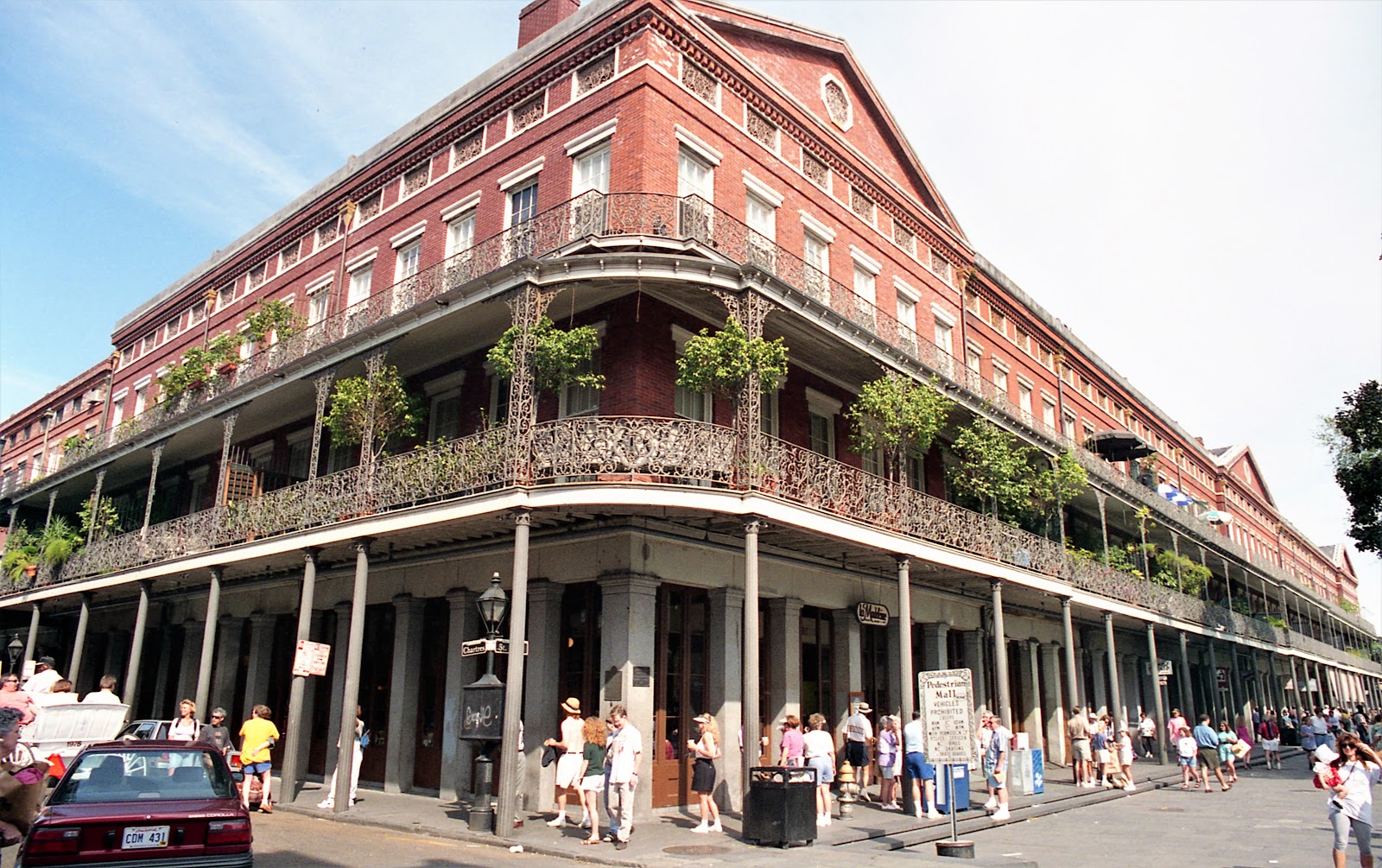
You're on Royal Street near the four hundred block. Somewhere around here — the exact address is debated, but most historians say four thirty-seven — a pharmacist named Antoine Peychaud changed what Americans drink. Entirely by accident.
Peychaud was born in Saint-Domingue — what's now Haiti — around eighteen oh-three. His family owned a coffee plantation near Cap-Francais. When the Haitian Revolution began — enslaved people rising up against French planters — the Peychaud family fled. They arrived in New Orleans as refugees around seventeen ninety-five. They carried a family recipe — an herbal tonic made from gentian root, anise, and Caribbean botanicals.
In the eighteen thirties, Peychaud opened a pharmacy on this street and started mixing that tonic with Sazerac-de-Forge cognac, sugar, and water. He served it to fellow Freemasons during lodge meetings at the pharmacy. He was a high-ranking Mason — Worshipful Master, Grand Orator, the works. His lodge met at his drugstore, and he s
erved them what he called medicine.
It was not medicine. It was a cocktail.
New Orleans loves to tell you that Peychaud also invented the word cocktail. The story goes that he served the drinks in French egg cups called coquetiers, and English speakers mangled the pronunciation. It's a beautiful story. It's almost certainly wrong. The word cocktail appears in print as early as eighteen oh-three