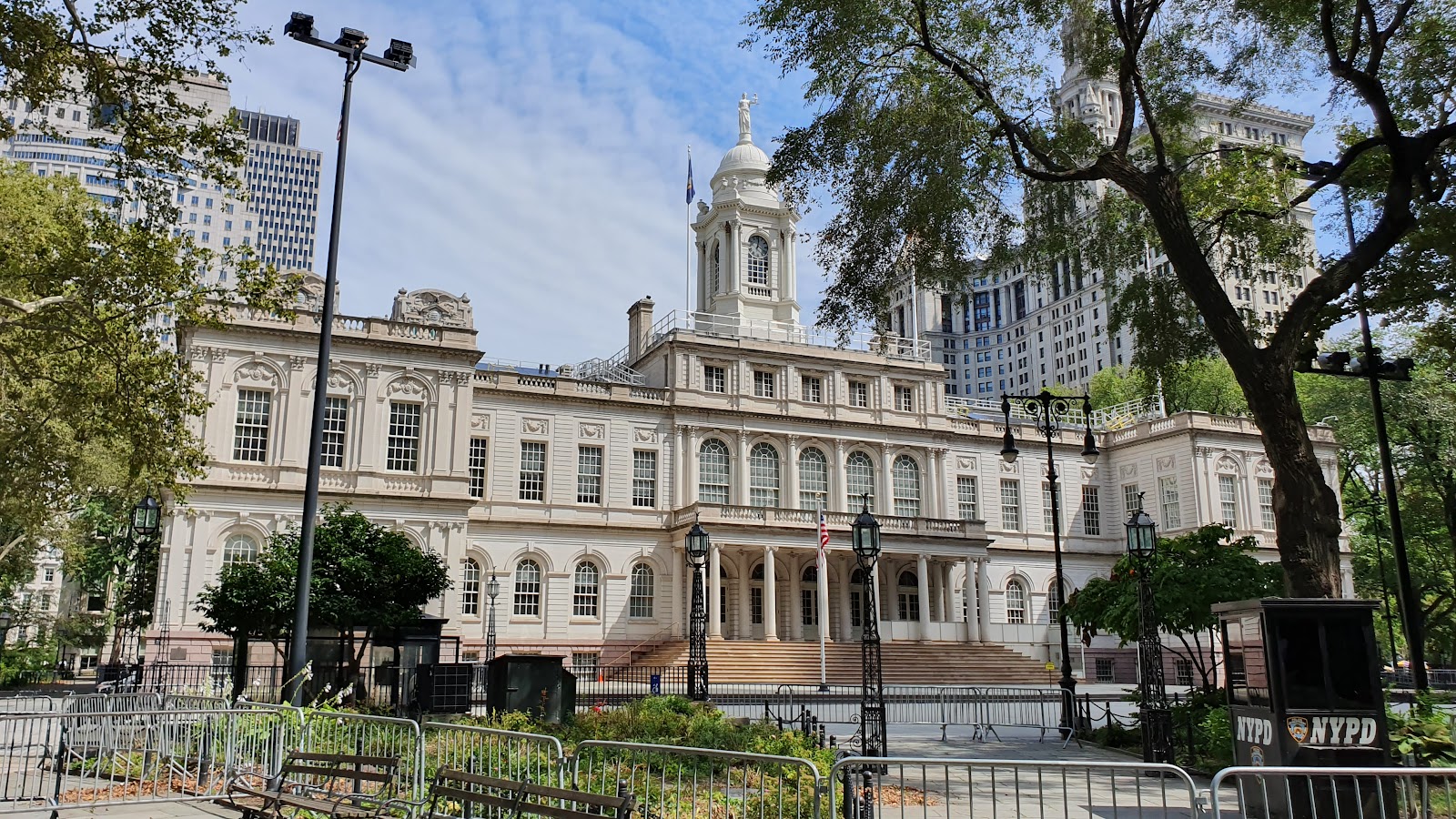
City Hall Park. Open ground, benches, a fountain, City Hall set back behind the trees. This has been public land longer than the United States has existed, and for most of that time it was not remotely a park.
For most of the seventeen hundreds this was the Common, out at the edge of town. On it: a pasture, a poorhouse, a jail, and a gallows. If you were brought to this ground in seventeen sixty, it was because you had nowhere to sleep, or somewhere much worse to be.
Then it became the place where New York argued.
In seventeen sixty-six, to celebrate the repeal of the Stamp Act, the Sons of Liberty put up a tall wooden pole on this ground. British soldiers cut it down. They put up another. The soldiers cut that one down too. This happened FIVE times, until the Sons of Liberty sank a pole in a stone-packed hole and wrapped the bottom of it in iron bands.
Grown men, on both sides, spending four years on a stick.
In January seventeen seventy it stopped being funny. Soldiers blew the
pole up with gunpowder and stacked the pieces outside a Sons of Liberty tavern. The street fight that followed came six weeks before the Boston Massacre, and some New Yorkers will tell you the first blood of the Revolution was spilled over a pole in this park. They will keep telling you for as long as you stand there.
Hamilton missed all of that. He landed in America in seventeen seventy-two, int