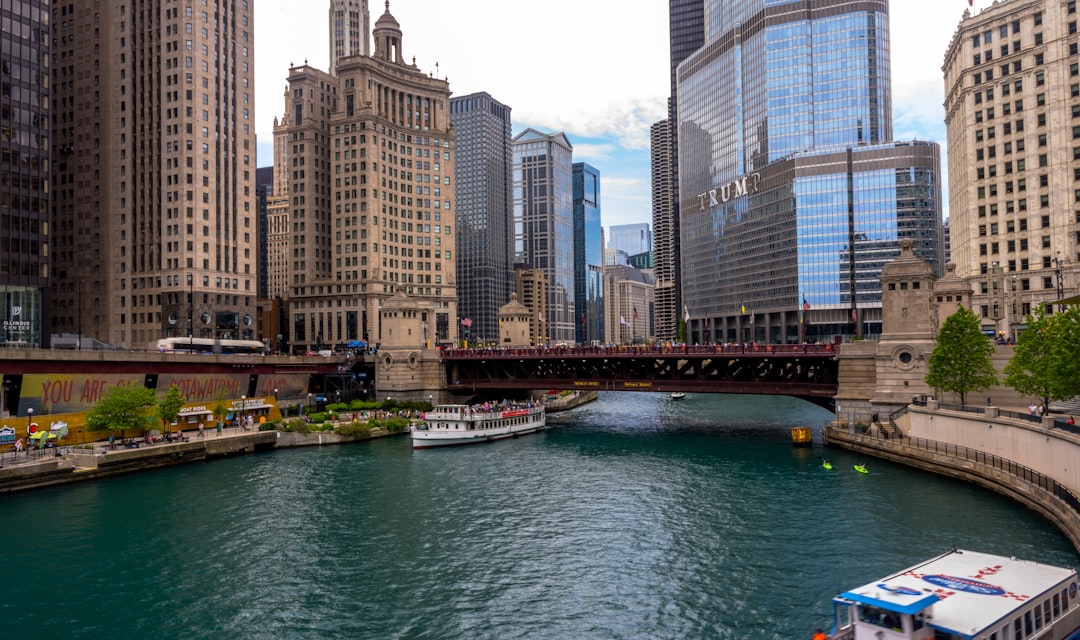
Four little stone houses sit at the corners of this bridge, and there are bronze plaques set flat into the pavement. This is the mouth of the Chicago River. Everything you can see from here grew out of one property that stood on this ground before there was a city to put it in.
In the seventeen eighties, a trader named Jean Baptiste Point du Sable built a homestead right here. He was born in the French colony that became Haiti, of African and French descent. He married a Potawatomi woman named Kitihawa, and they raised two children at the point where a slow, marshy river met a very large lake — in a place the local Algonquian speakers called something like shikaakwa. Wild onion. That's what Chicago is named after. Onions.
And this was not a rough cabin. We know that in detail, because when he sold up and left in eighteen hundred, somebody wrote down the contents. A main house forty feet long. Two barns, a bakehouse, a dairy, a smokehouse, a workshop. Inside, furniture of French walnu
t, mirrors on the walls, and more than twenty paintings.
Sit with that. The first permanent household in Chicago was a Black Haitian immigrant and his Potawatomi wife, hanging art in a trading post, hundreds of miles past the edge of anything a European map bothered to draw. And the reason he could run the main trading post between the Great Lakes and everything south was her family's standing. H