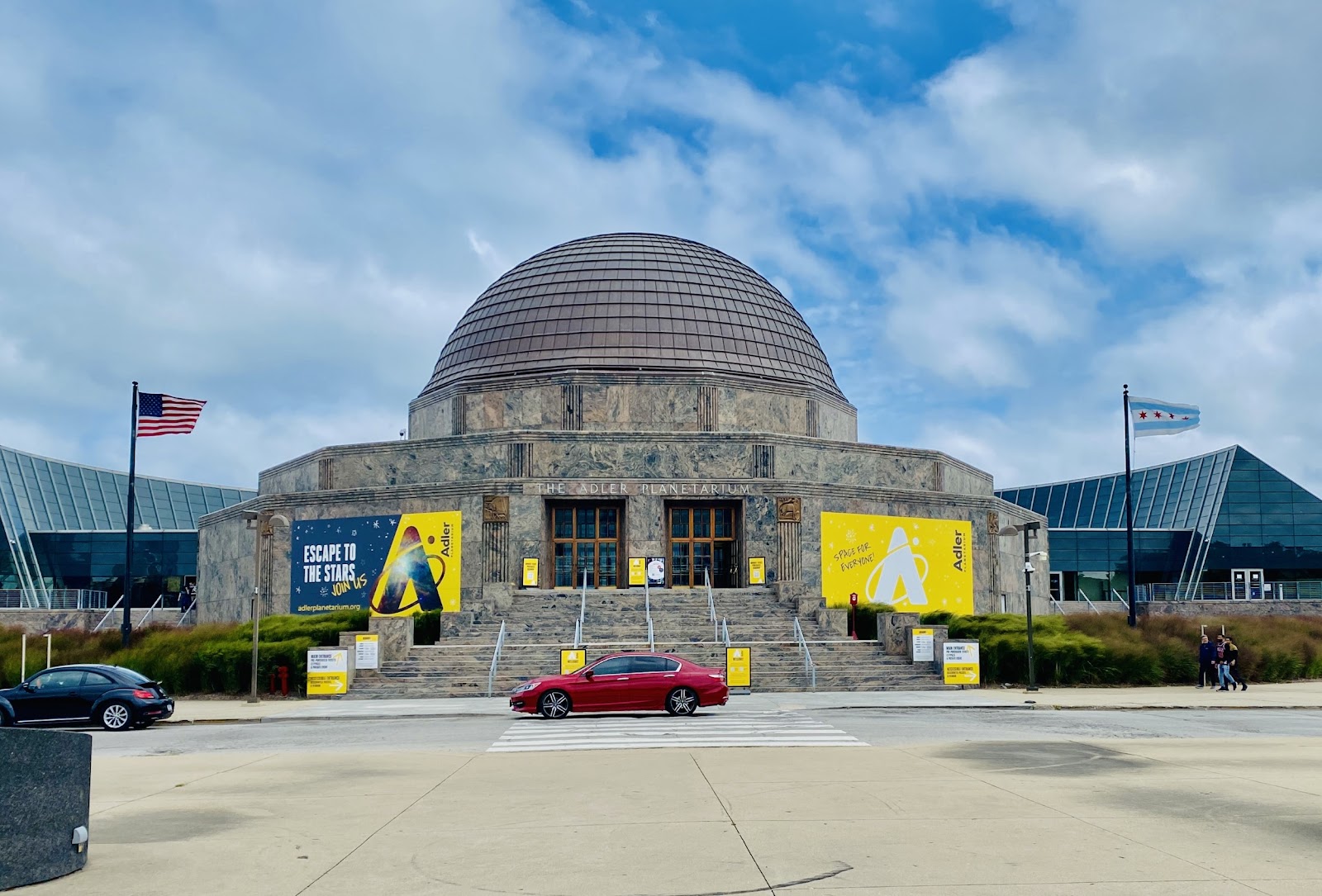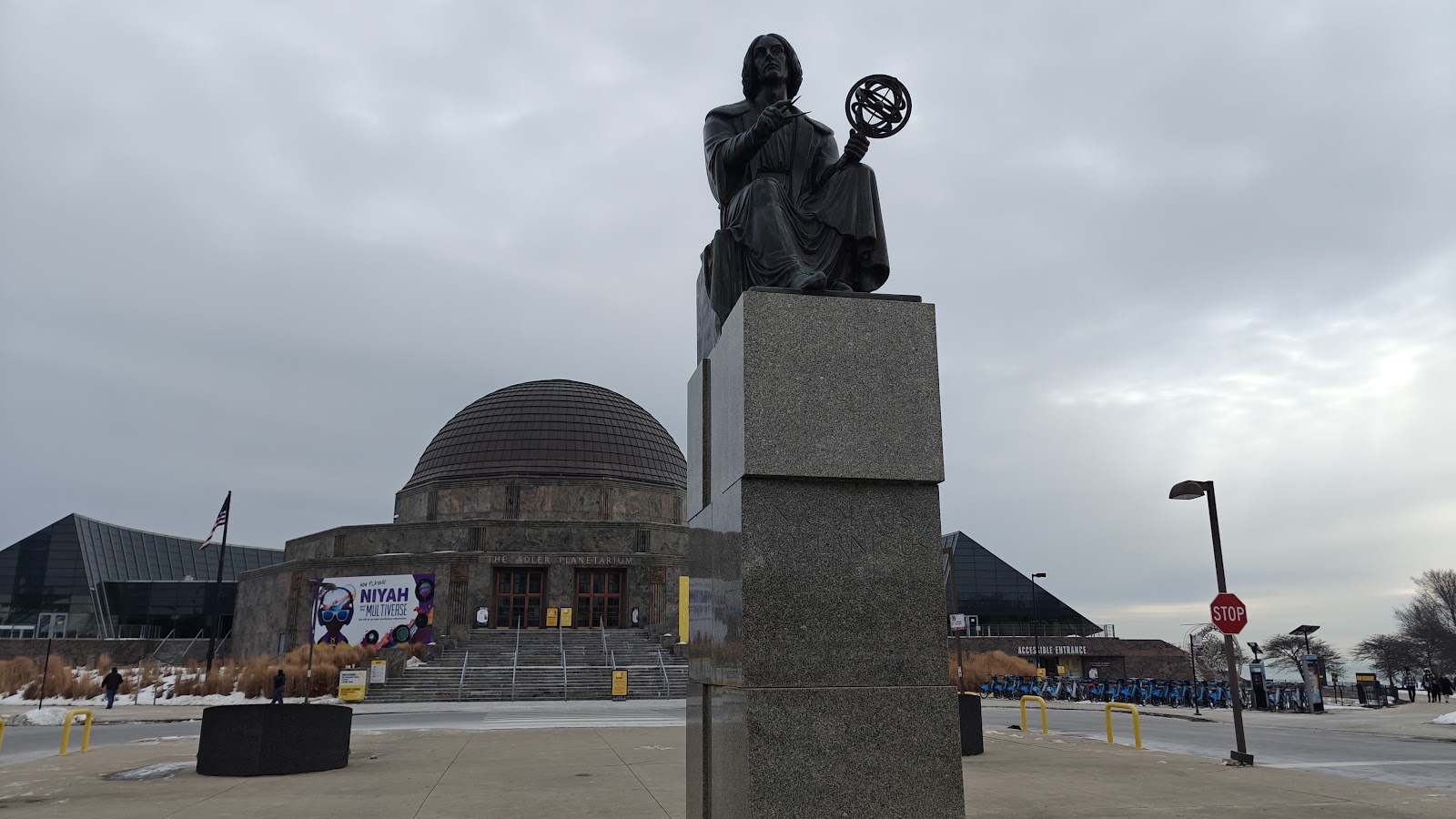
The causeway running out toward the planetarium is called Solidarity Drive, and there are three bronze men standing in the median of it. All three were made for somewhere else. All three got moved. This is the most well-traveled strip of grass in Chicago.
The one seated with a compass in his hand is Nicolaus Copernicus, the astronomer who took Earth out of the center of the universe. Chicago's version went up in nineteen seventy-three, five hundred years after he was born, and it's a copy of a famous monument in Warsaw carved by the Danish sculptor Bertel Thorvaldsen.
That original had a bad war. It stood through the Warsaw Uprising, took damage, and then the occupying Germans decided the bronze was worth more as metal than as a Polish national symbol. They loaded Copernicus onto a truck and hauled him southwest toward Silesia to be melted down. They ran out of time. The war turned, the Germans pulled back, and the statue was found sitting in a town called Nysa, intact. Poles brought
him home to Warsaw in July of nineteen forty-five.
So the seated figure out here is cast from a monument that survived being stolen for scrap. And he's aimed straight down the causeway at the first planetarium in the Western Hemisphere, which is either excellent planning or the luckiest coincidence on the lakefront.
The man on the horse is Tadeusz Kościuszko — say it Kosh-CHOOSH-ko. He was a Po