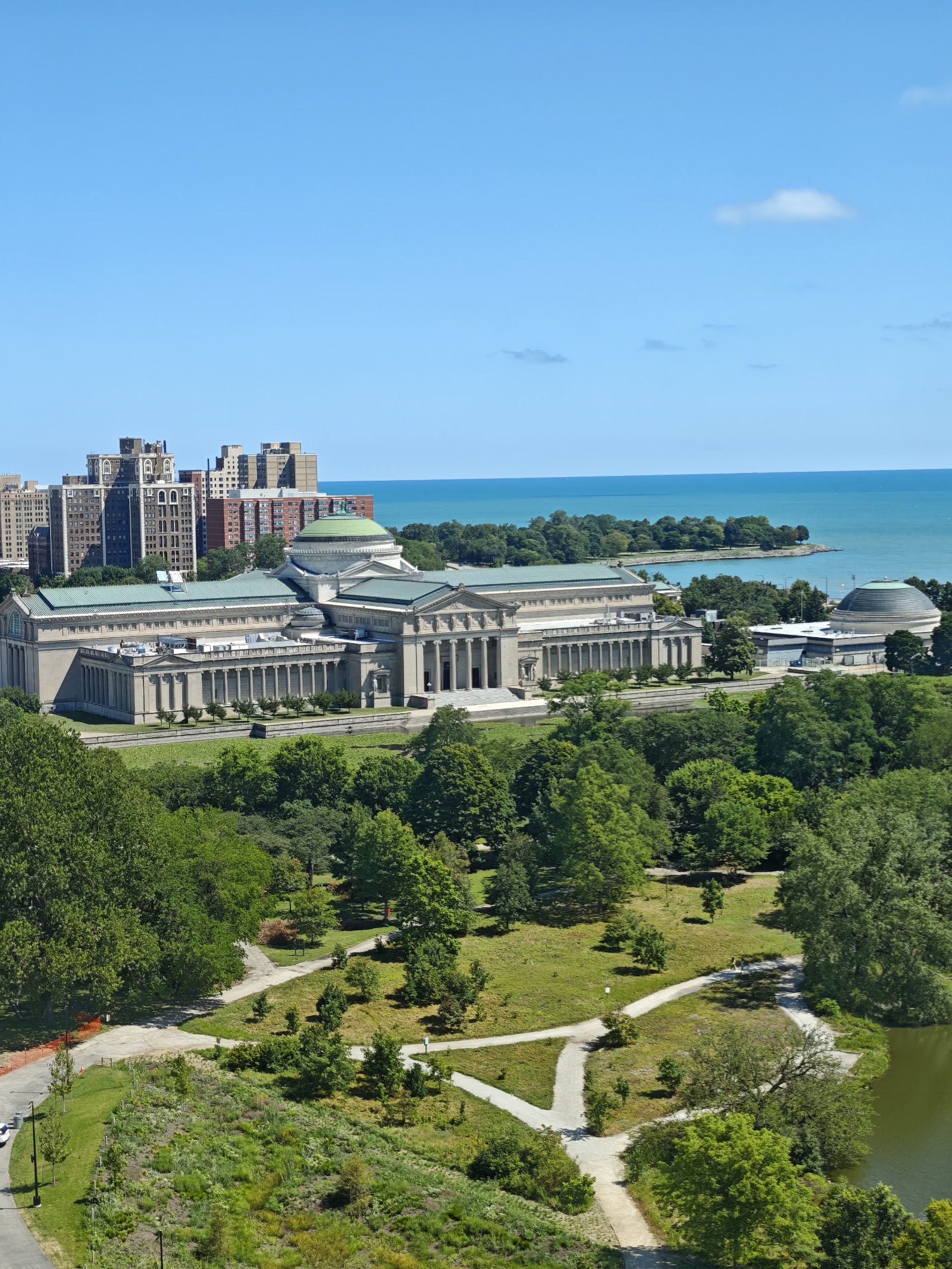
The Great Lawn. Fifty-eight thousand square feet of grass, built for picnics, concerts, and a sledding hill in the cold months.
Stand still on it for a second, because a few years ago standing here would have gotten you killed.
This was a road. Cornell Drive — six lanes of it, running north to south straight through the middle of Jackson Park, carrying commuter traffic at speeds that had nothing to do with a park. It cut the green space into two halves that couldn't reach each other. Generations of people on the South Side grew up understanding, without being told, that you did not walk across Cornell. You drove around, or you didn't go.
That is a very old Chicago habit, by the way. This city has spent a hundred years running fast roads along its best land and then wondering why nobody walks anywhere.
To build this campus, they closed it. Not narrowed, not calmed — closed. Seven blocks of six-lane road, from Sixtieth Street down to Sixty-seventh, simply subtracted from the map of C
hicago and turned into ground you can lie down on.
Which raises the obvious question, and the answer is expensive. All those cars had to go somewhere.
And they did not go quietly. Cornell was a commuter route, which means the people who used it mostly did not live here — they lived further out and drove through on the way to somewhere else. Closing it meant the neighborhood absorbed a fight on b