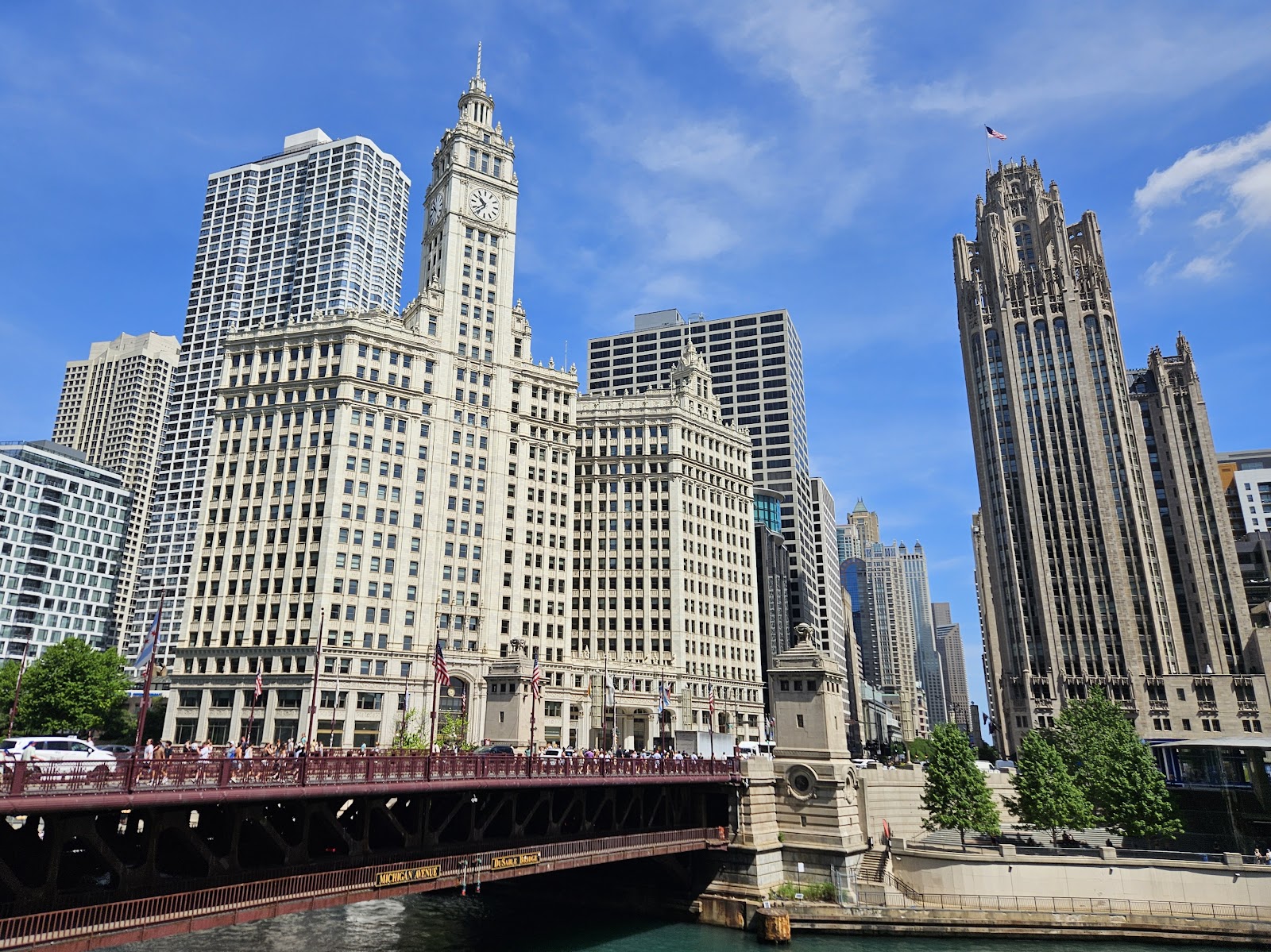
The white one. Two towers joined by walkways, a clock tower on the south end, and a surface so bright it looks lit even when it isn't. That's the Wrigley Building, and the brightness is a trick.
The skin is terracotta — glazed clay tile, more than three hundred and seventy-five thousand pieces of it. And it's not all one color. The glaze was mixed in six shades of white, from a greyer cream at the pavement to nearly pure white at the top. So the building appears to get cleaner and brighter as it climbs, instead of fading into haze the way stone does. The whole tower is a very expensive optical illusion about cleanliness. Which fits, because it was paid for by chewing gum.
William Wrigley Junior started out selling soap. To move the soap, he threw in free baking powder with every order. Customers wanted the baking powder more than the soap — so he switched to selling baking powder, and threw in free chewing gum with every order of that. You can guess what happened. The gum outsold the
powder. So he stopped arguing with his own customers and sold gum.
Then he made his real bet, which was this corner. When he committed to building here, the north bank of the river was warehouses and coal yards. The good addresses were all south, in the Loop. The bridge that made this stretch valuable wasn't even open yet. He built a gleaming white palace on the unfashionable side of the water a