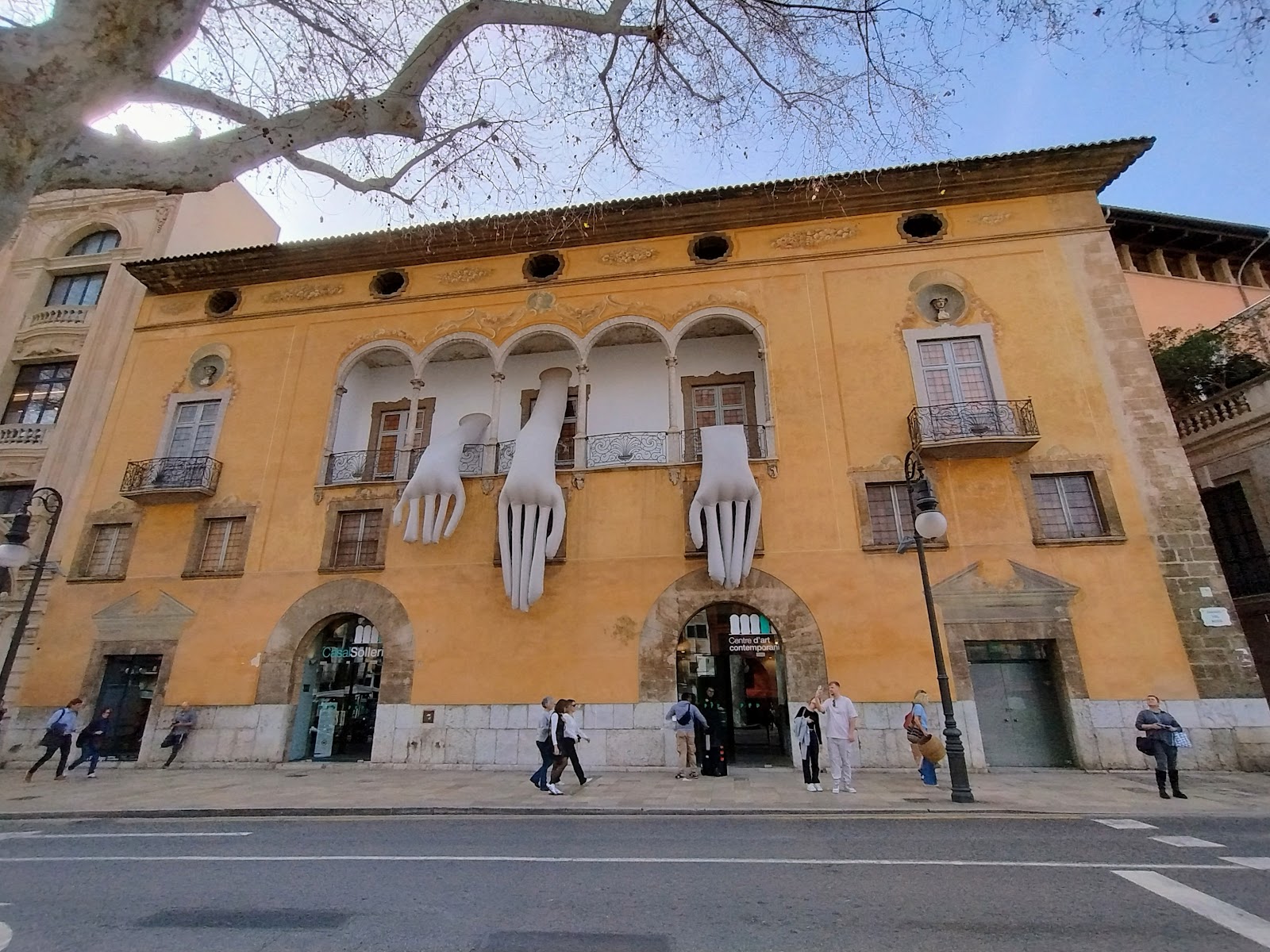
The pale stone palace on the corner of the Born, with the deep first-floor gallery and the iron railing running across it, is the Casal Solleric — and it was paid for entirely in olive oil.
That gallery is the thing to look at. Five arches, open to the air, held on slim columns, with a wrought-iron rail worked by an Italian sculptor. Its whole purpose was to let the family stand out over the Born and be seen doing it, on the street where being seen was the point.
The Vallès family made their fortune the way a lot of Mallorcan money was made — pressing olives in the mountains and shipping the oil out through this port.
That trade is the quiet engine under most of old Palma. The terraces you see stacked up the Tramuntana hillsides are olive terraces, built by hand over centuries, and the oil that came off them was this island's reliable export long before anybody thought of selling it as a holiday. Every grand house in this city is, at some remove, made of olives.
Then in seventeen s
ixty-three the Marquis of Solleric commissioned a palace, and the work took twelve years. He had the gallery's arches widened partway through, after visiting a rival's house, which is why the first floor sits slightly out of step with the doorways below it.
Twelve years. On a private residence. That's the pace of a cathedral, for a family home, funded by cooking oil.
And then the long slow decli