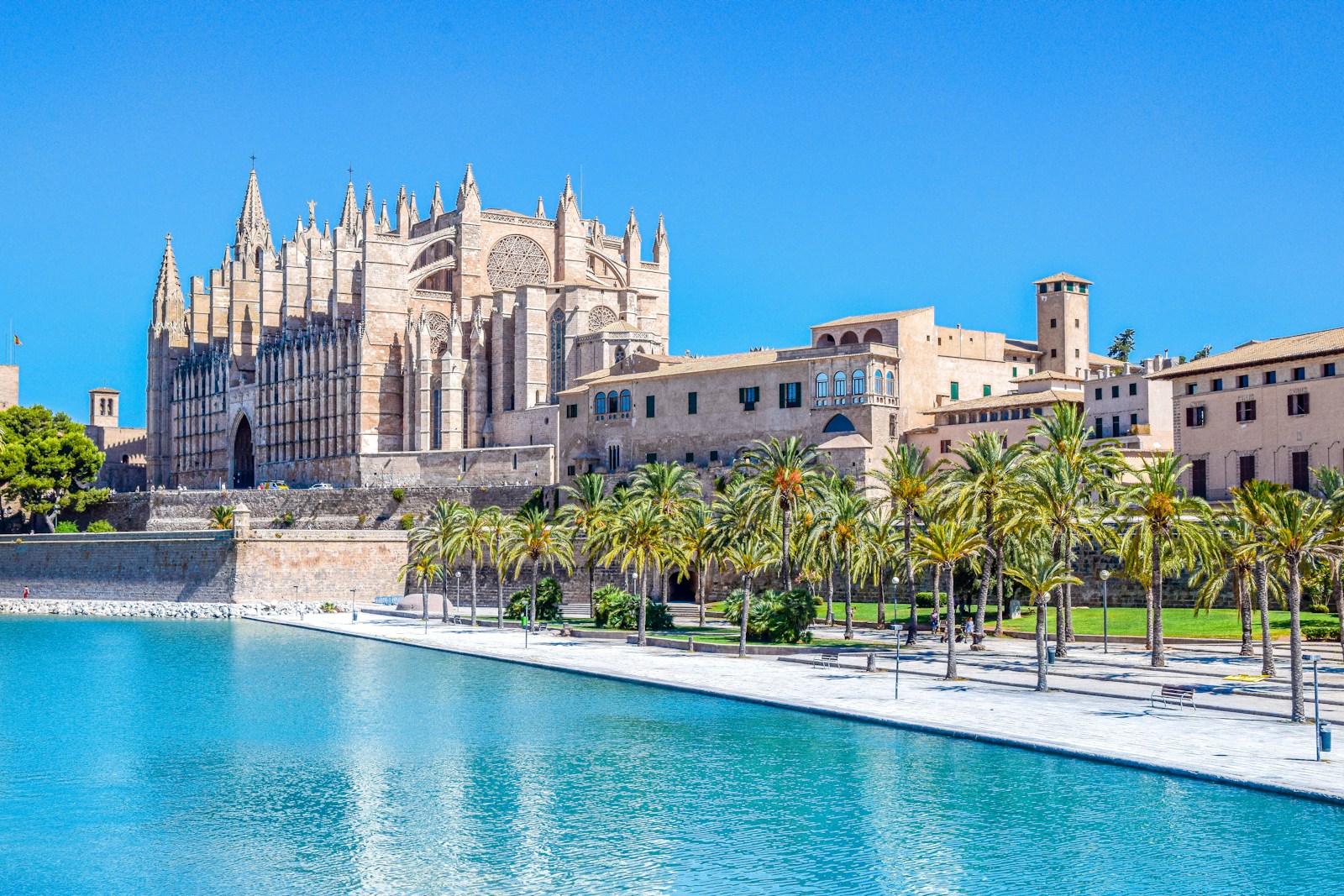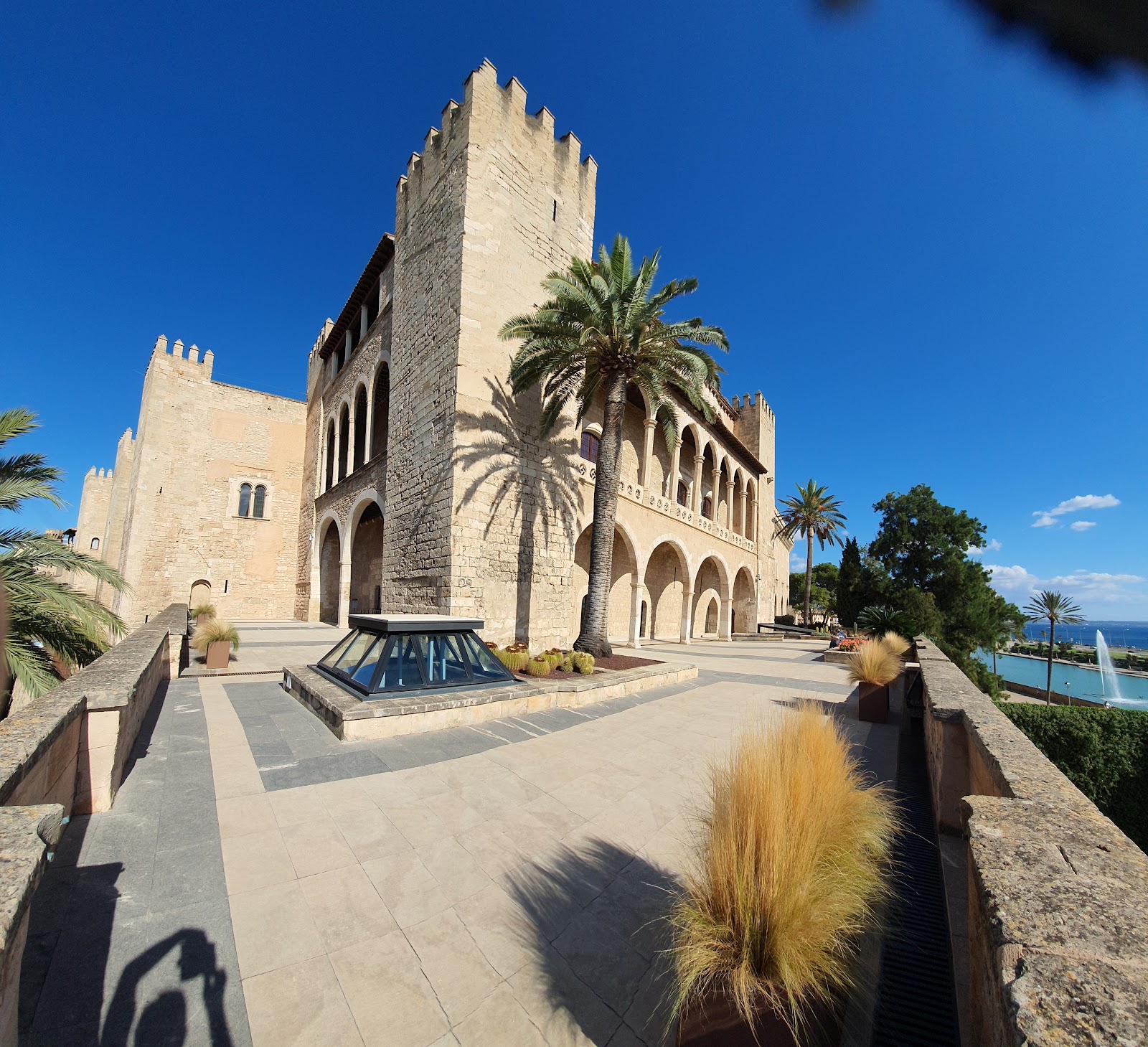
The long fortified building beside the cathedral is the Almudaina — the royal palace. Find the tallest tower and look at the very top. There's an angel up there, in bronze, turning with the wind. He's been doing that since about thirteen ten.
The word almudaina is Arabic. It means the citadel, and that is simply the building's name, because for three hundred years before any king of Aragon turned up this was the fortress of Muslim Mallorca — the governor's residence, the walls, the towers, the water system underneath, all of it.
In September twelve twenty-nine a fleet came over from the mainland and put a twenty-one-year-old on the beach at Santa Ponça with an army. His name was Jaume the First, and he besieged this city for three months through the winter — mining the walls, cutting the supply lines — until the last day of December, when it fell. What followed was brutal, and the chroniclers on the winning side don't hide it. The city was sacked and much of the population was killed
.
Then the new king walked up to the best building on the island and had a look at it.
And he kept it.
That's the decision this whole city runs on. He didn't level the citadel and start again — he moved into it. His son later spent about a decade turning it into something a European court would recognise: a Gothic chapel, a great hall, a throne room. But those are renovations. Underneath, the s