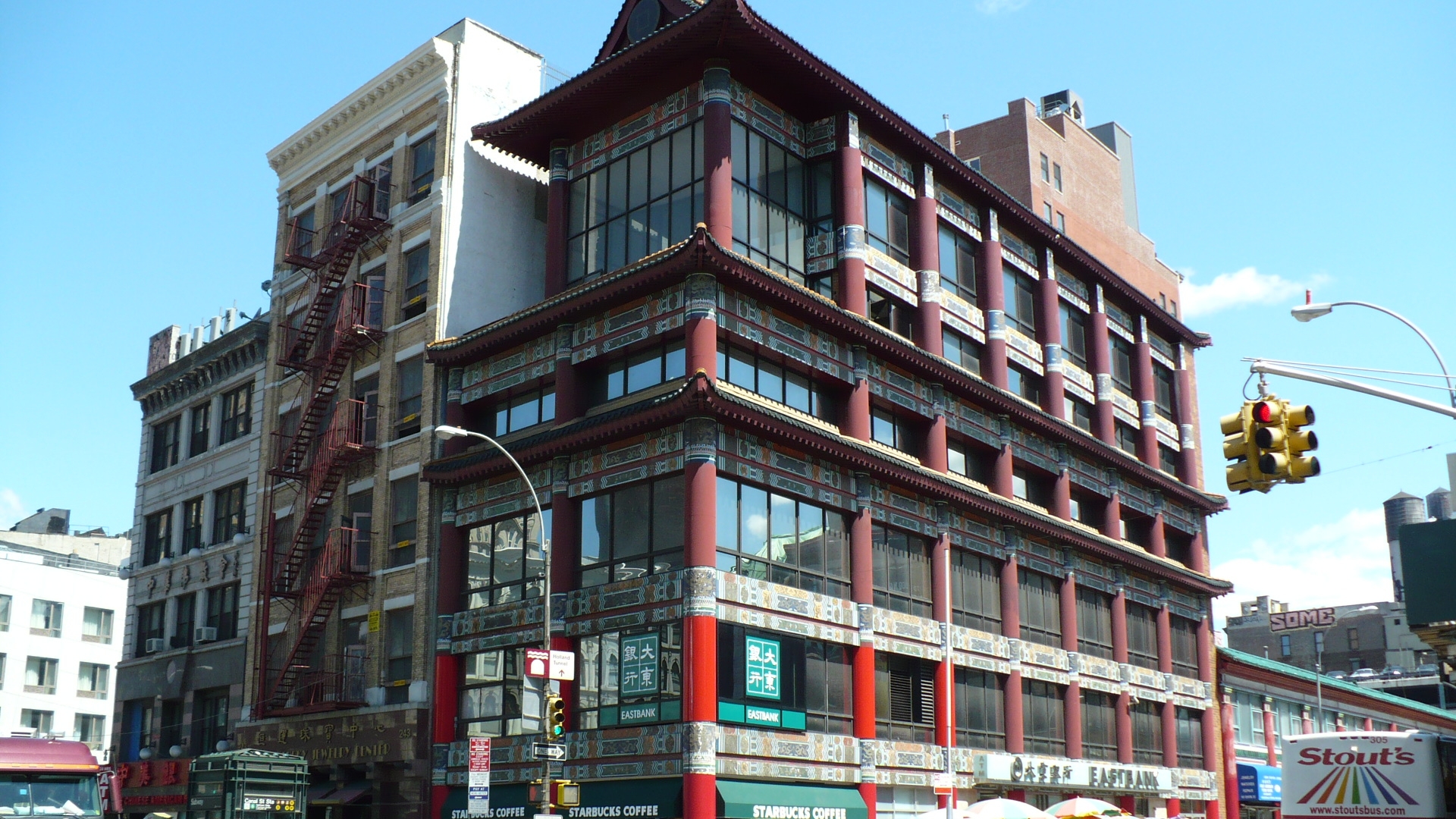
You're on Canal Street. Widest, loudest, most chaotic street in the neighborhood. Six lanes of gridlock, a river of people, tables of sunglasses, and a smell coming off the seafood stalls that arrives about a half-second before you do.
Start with the name, because the name is the first lie on the street. It's called Canal Street because there was, in fact, a canal here. It's buried under your feet right now.
Two hundred years ago, just north of here, there was a big freshwater pond — the Collect Pond, the drinking water of early New York. Then the city put tanneries and breweries and slaughterhouses along its banks, and within a couple of decades the drinking water became a chemical swamp so foul that people proposed simply filling it in with a hill. Which they did. They shoved a hill into the pond. To drain the muck, they dug a canal right down the middle of this street, ran it to the Hudson, and then — once it too turned into an open sewer — they buried the whole thing and paved ov
er it. The canal is still down there, somewhere under your feet, doing nothing. A street named for a thing they were too embarrassed to keep.
And the land they filled in never really settled. It stayed soft and swampy, foundations sank, floors tilted, the nice families fled — and the cheap, sinking ground they left behind became the most notorious slum in the city. A lot of what happened in this