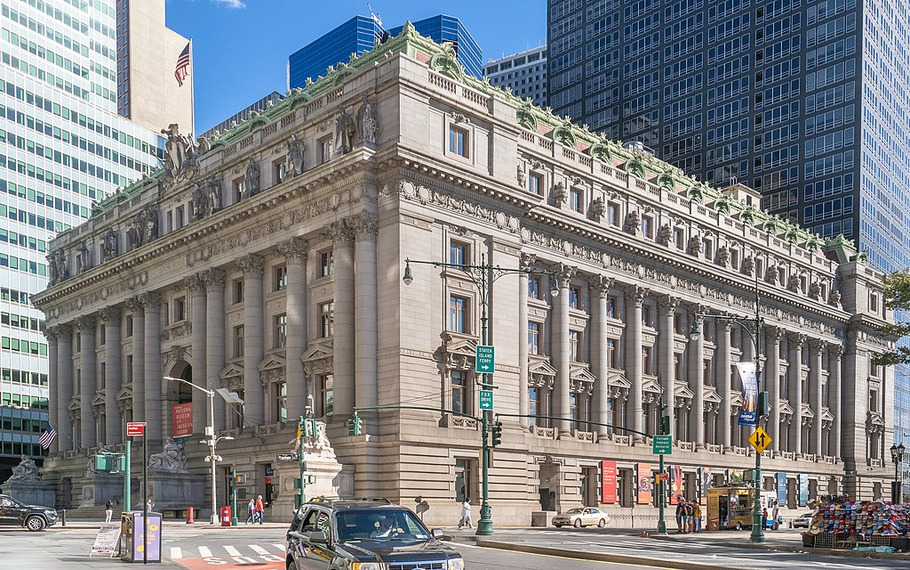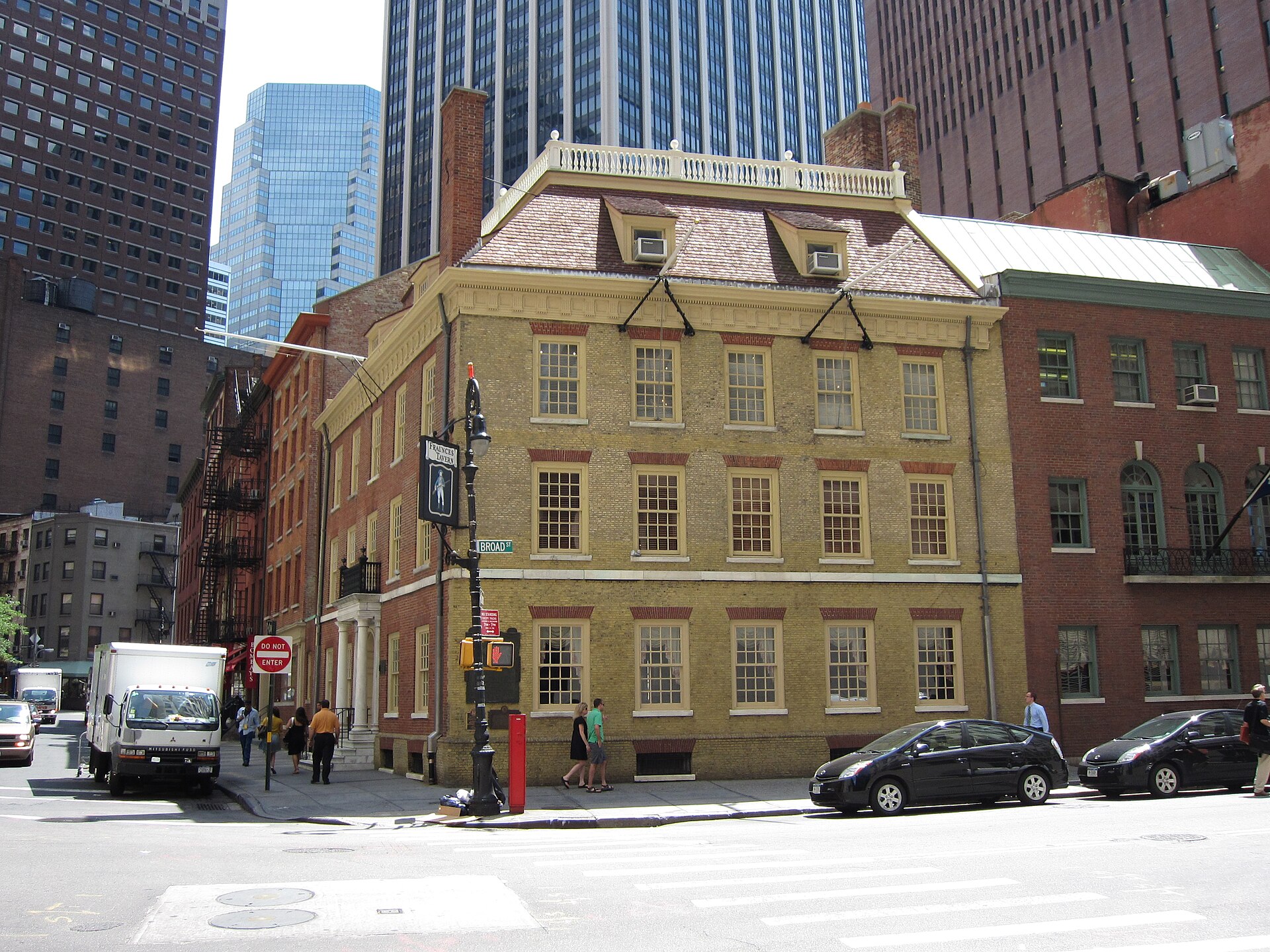
The little yellow-brick building on the corner, three stories and a red roof, surrounded on all sides by things forty times its size. Fraunces Tavern. It has been serving drinks on this corner, on and off, since seventeen sixty-two.
The house went up in seventeen nineteen as a private mansion for the De Lancey family, one of the richest families in the colony. In seventeen sixty-two a tavern keeper named Samuel Fraunces bought it and turned it into a public house.
The building took a cannonball through the roof in seventeen seventy-five, when a British warship in the harbor fired on the town. Nobody in the tavern was killed. Nobody, as far as anyone recorded, stopped drinking.
Then December fourth, seventeen eighty-three. Nine days after the last British troops sailed out of New York, George Washington asked the officers of the Continental Army to meet him upstairs, in the room they called the Long Room.
He had won. The war was over, the enemy was gone, and he was about to hand bac
k his commission and go home to Virginia — which almost no victorious general in history had ever voluntarily done.
He could barely speak. He raised a glass, said a few sentences about wishing their later days as prosperous as their former ones had been glorious, and then stopped. According to Colonel Benjamin Tallmadge, who wrote it down, Washington said he couldn't come to each of them, and ask