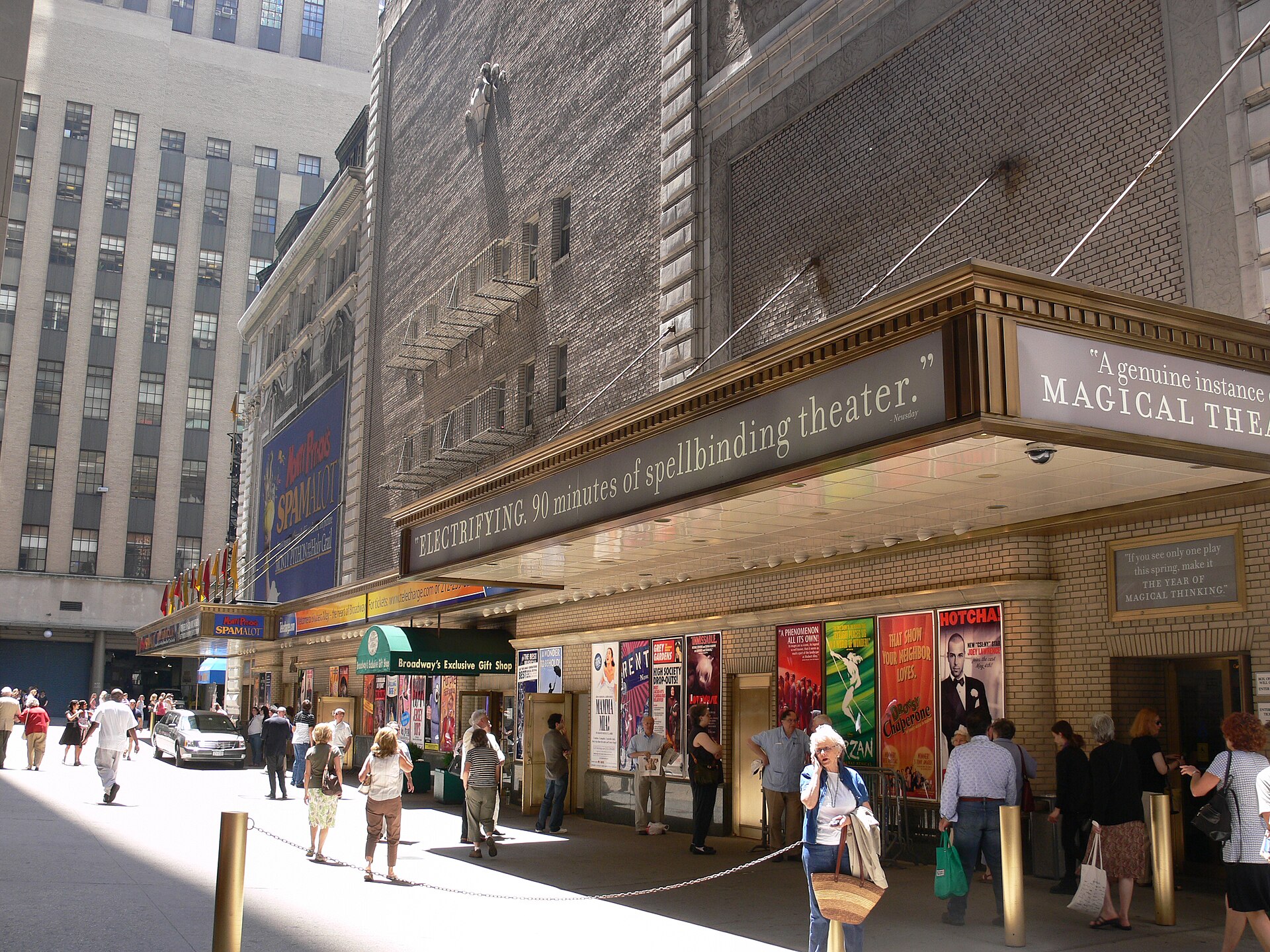
Shubert Alley runs about three hundred feet between two theaters, and it is the closest thing the American theater has to a town square. Every opening night, every strike, every closing-night crowd, everybody spills out into this lane.
It belongs to a family. Privately. It always has.
The alley only exists because of fire code. Back in nineteen twelve, the rules said you needed a lane wide enough to get emergency vehicles in behind the buildings. So the space got carved out, serving the enormous Hotel Astor on one side and two new theaters on the other. It was a legal requirement, not a piazza. Somebody drew it on a plan to satisfy an inspector.
The two theaters went up the following year, and both of them were Shubert theaters — because three brothers from Syracuse had spent a decade taking over the entire American theater business. Lee, Sam and Jacob Shubert were the sons of a poor immigrant peddler, and Lee started out hawking newspapers. They came down here to break the syndicat
e that controlled every stage worth playing in the country, they broke it, and then they assembled a larger monopoly of their own.
Sam never saw any of it. He was on a train to Pittsburgh in nineteen oh-five, in a wreck involving a car of dynamite, and he died at twenty-six — which is why the theater beside this alley carries his full name, Sam S. Shubert, spelled out on the front.
The surviving