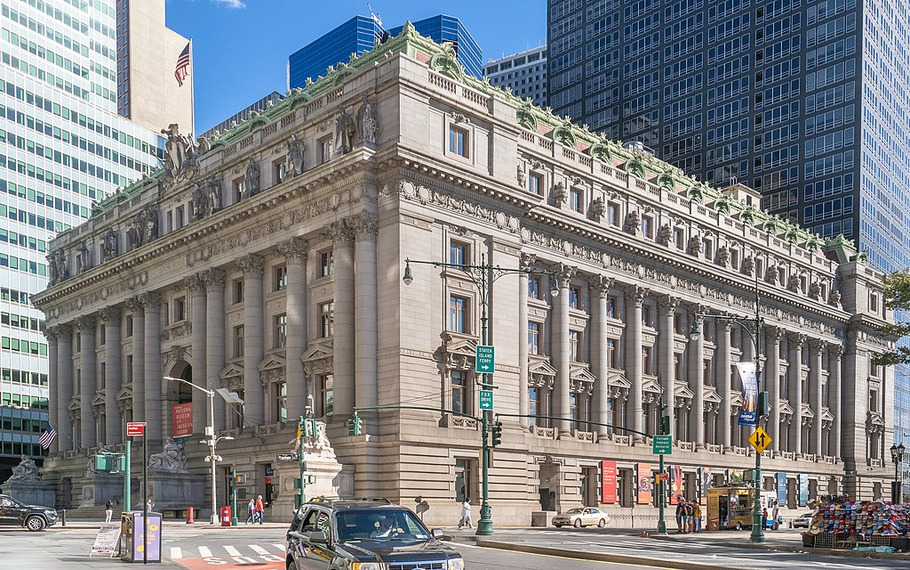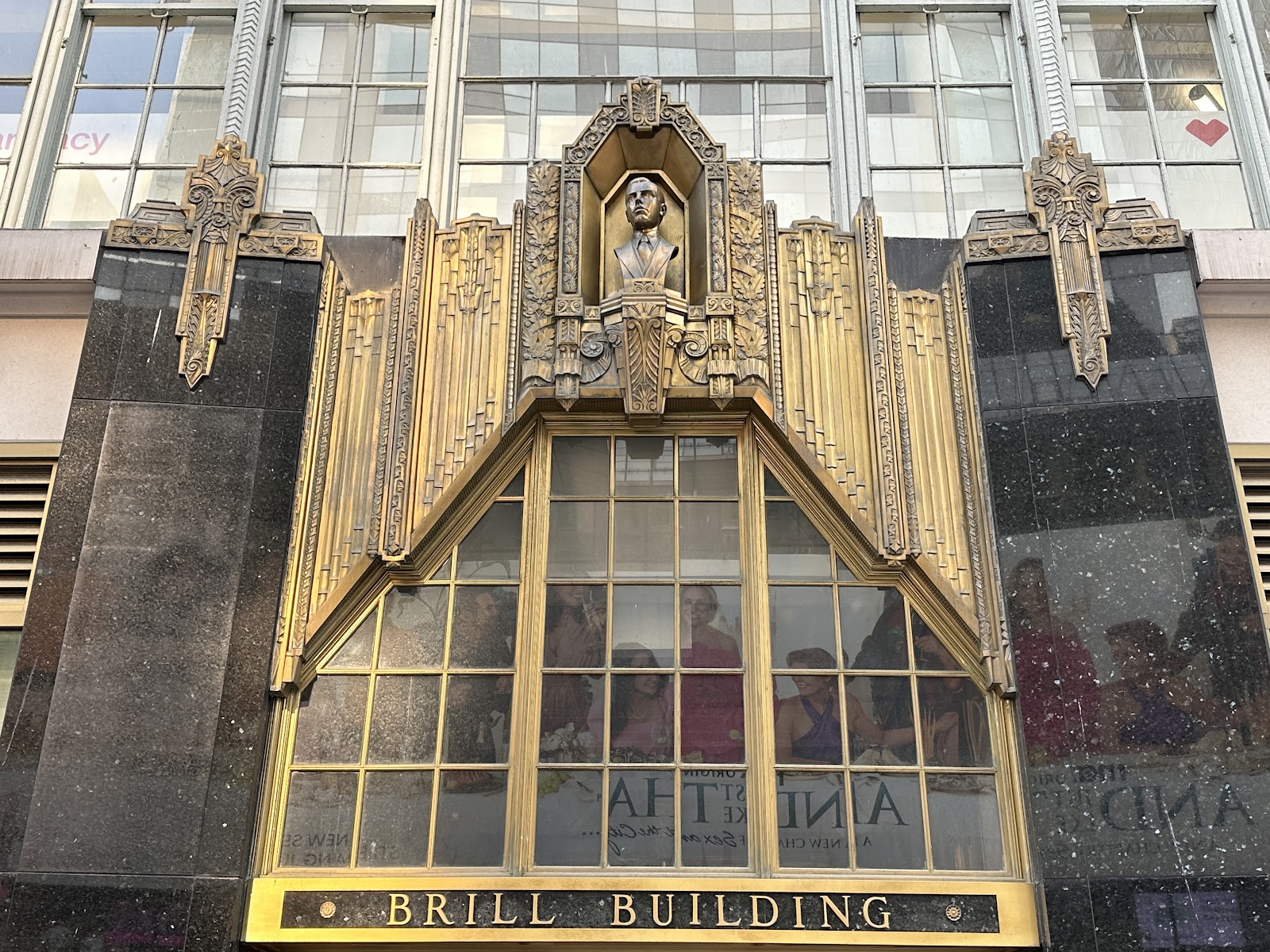
There's a niche above the doors of this building with a brass bust of a teenage boy set into it. Thousands of people walk under him every day and none of them know who he is.
His name was Alan Lefcourt. His father, Abraham Lefcourt, was a self-made developer who had put up dozens of buildings around this city, and he was a man who intended his son to inherit all of it. Alan died of anemia at seventeen, in the winter of nineteen thirty.
His father put up this tower as the Alan E. Lefcourt Building, gorgeous Art Deco, the boy's face in bronze over the entrance so that anyone walking in had to pass him.
And then the Depression took Abraham Lefcourt apart. He defaulted on the lease within a year, and the family that actually held the ground — the Brill brothers, who ran a men's clothing store down on the corner — took the property over. By the spring of nineteen thirty-two, the memorial to a dead boy was known to everyone as the Brill Building, and it has been ever since. Lefcourt didn'
t outlive the loss by much.
The Depression is also why the building became the most important address in American popular music, and the reason is deeply unglamorous. Nobody respectable would rent here. Offices sat empty, the owners needed anyone with cash, and the one industry desperate enough for cheap Midtown space was music publishing.
So the song men moved in, and they kept moving in, until