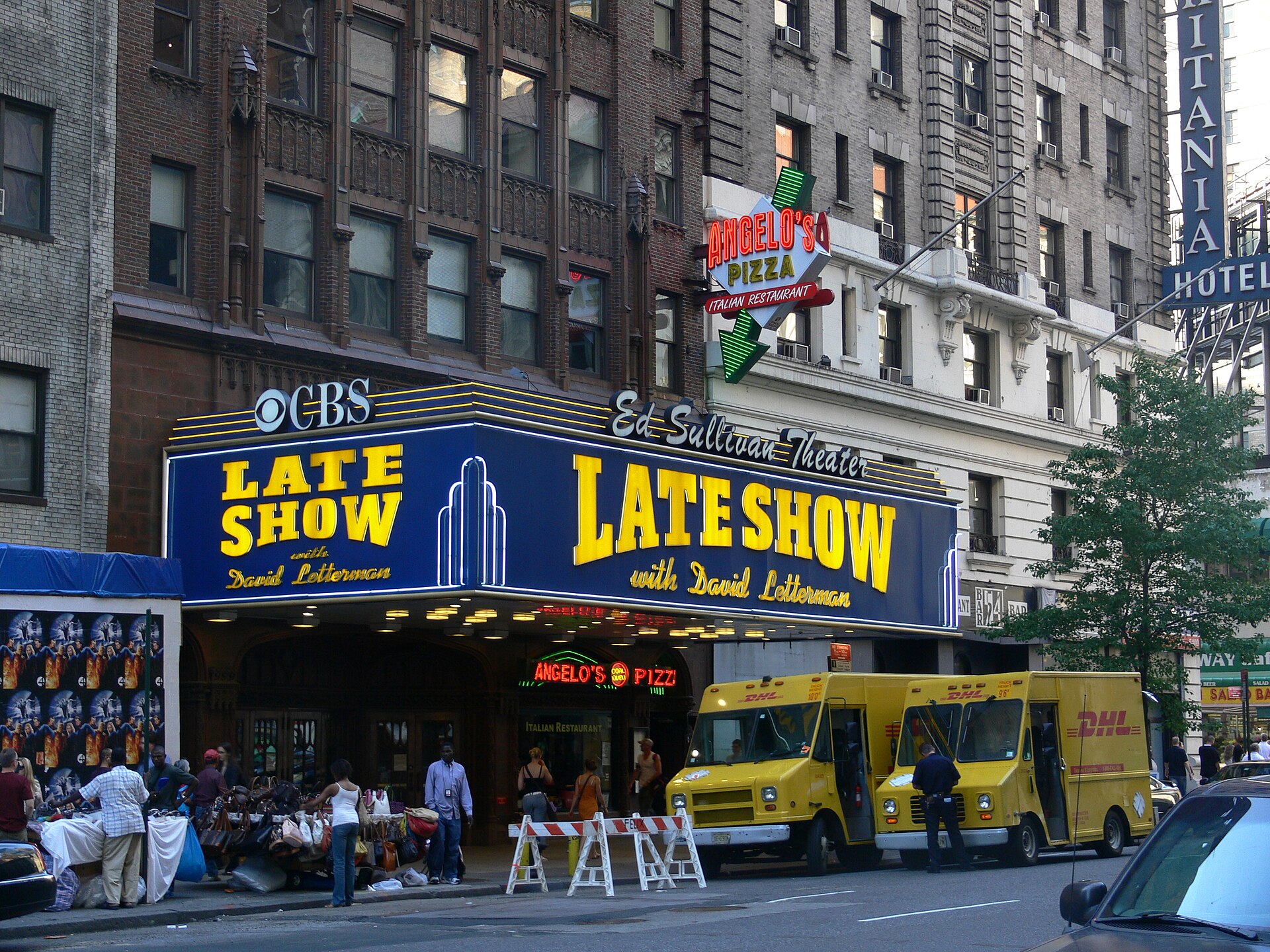
The theater behind that marquee has been four completely different buildings without ever moving an inch.
It went up in nineteen twenty-seven as a legitimate Broadway house, built by Arthur Hammerstein to honor his father Oscar — a cigar manufacturer who got rich on tobacco and then spent all of it on opera houses. A career path I find deeply reassuring.
Then radio bought it, and television bought it after that, and it became CBS Studio Fifty. Which is how a Broadway theater ended up hosting a variety show run by a stiff, awkward newspaper columnist. Ed Sullivan could not sing, dance, tell a joke, or comfortably stand still. He became the most powerful man in American entertainment anyway, and he held the job for twenty-three years. He was very good at exactly one thing, which was deciding who got seen. An act he liked was famous by Monday morning. An act he didn't never got the chance to find out.
On a Sunday night in February nineteen sixty-four, Ed Sullivan put four young men fro
m Liverpool on that stage.
CBS had received fifty thousand ticket requests. The theater holds seven hundred and twenty-eight seats. The paper worked out that your odds of getting into an Ivy League college were better. Seventy-three million people watched at home, which was a rating of forty-five point three — meaning that forty-five percent of every household in America that owned a television h