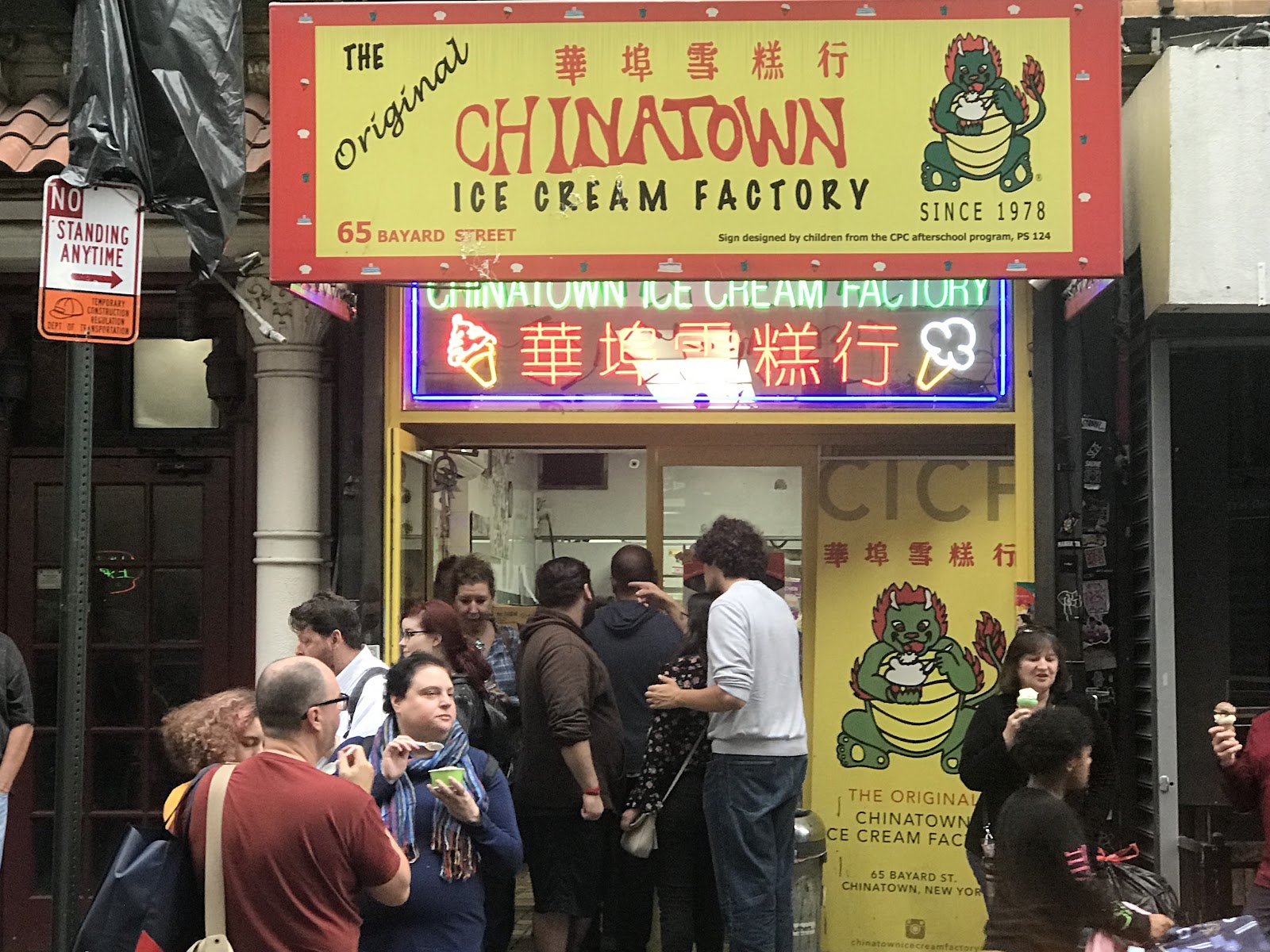
Look in the windows around you. Lacquered ducks hanging by the neck, glossy and bronze. Trays of pork buns. Bakery cases of mooncakes. This is the eating heart of Chinatown, so let's talk about the food — specifically, the enormous American lie that is Chinese food.
Start with chop suey. For the first half of the twentieth century, chop suey was the most popular restaurant dish in America. Not Chinese-American. American, full stop — it was arguably the country's very first national food craze, and Chinatown filled up with over a hundred chop suey parlors to serve it. The legend says it was invented right around here in eighteen ninety-six, when a visiting Chinese diplomat's chef threw one together. Lovely story. Except the word chop suey shows up in an American dictionary in eighteen eighty-eight — eight years before the man who supposedly invented it even arrived. The dish is older than its own origin story. And the name, in Cantonese, just means odds and ends. America's favorite Chi
nese food was named "miscellaneous."
And the part that breaks people: chop suey was most popular in the Midwest — in the towns with almost no Chinese people in them at all. The less real Chinese food a place had, the more it loved the fake.
While we're here — that egg roll you've had a thousand times? Not from China. It was very likely invented in a Chinese restaurant right here in Manhattan, in