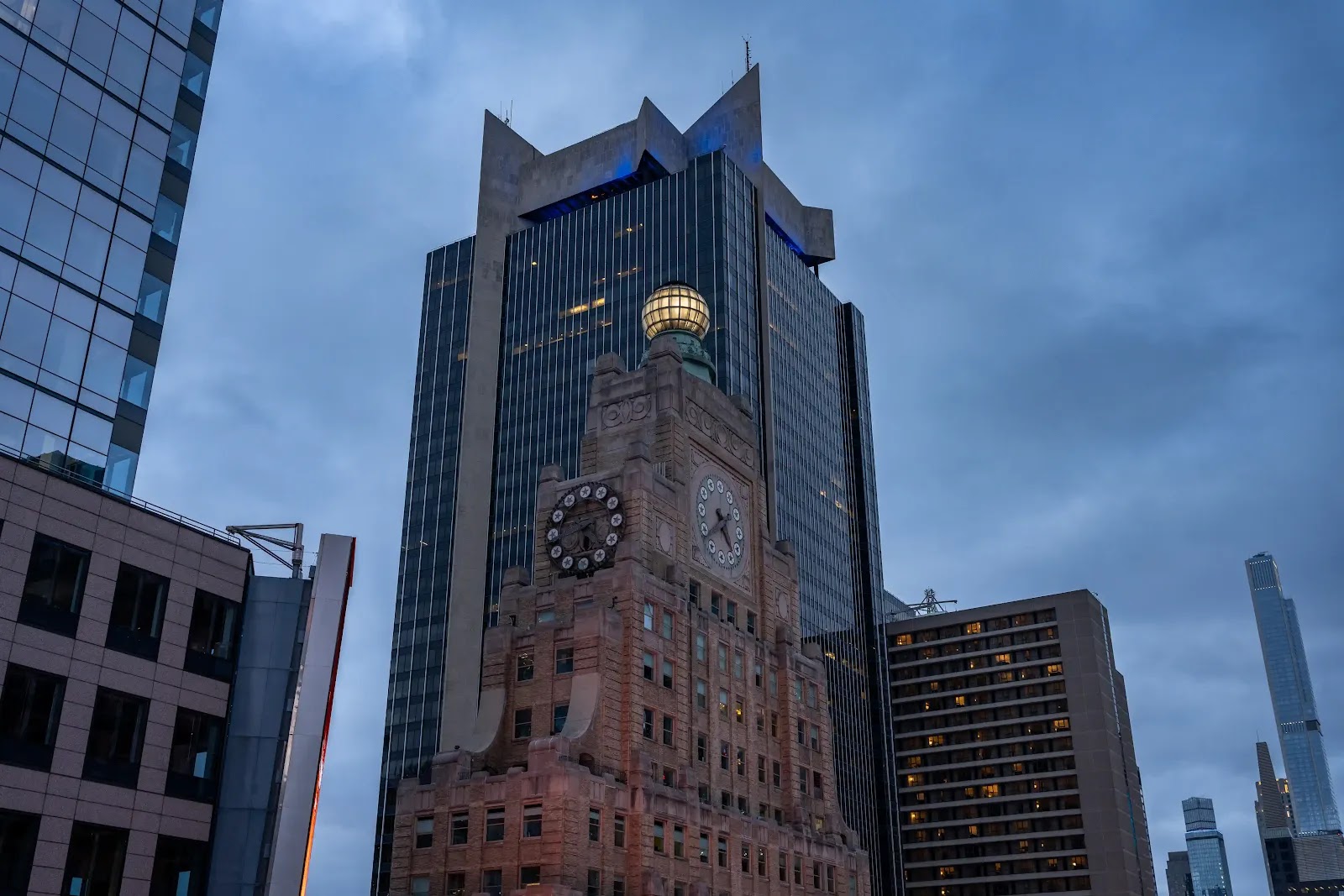
Look up for the clock tower with the glass globe sitting on top of it. That's the Paramount Building, and the globe used to be lit from inside so it could be seen from a long way off — a lighthouse for a movie studio.
Underneath it, from the twenties into the sixties, sat the Paramount Theatre. Thirty-six hundred seats. You bought one ticket and got a film AND a live stage show, which is the business model that made this street rich.
The stage show is where the trouble started. Benny Goodman was the biggest bandleader in the country, a clarinet player they called the King of Swing, and when he played this room in the late thirties, teenagers got out of their seats and danced in the aisles. That had genuinely never happened before in an American theater. Ushers didn't know what to do. Newspapers covered it like a public health event.
Then, a few days before the end of nineteen forty-two, a skinny twenty-seven-year-old singer took his first solo booking here, on a bill with Goodman's
band. A radio comedian named Jack Benny — at that point the most listened-to man in America — walked out to introduce him. And when the curtain went up on Frank Sinatra, the noise that came out of that audience was something nobody in the building had heard before.
Goodman was standing right there. Twenty years a professional, veteran of the aisle-dancing, the biggest name in American music. He t