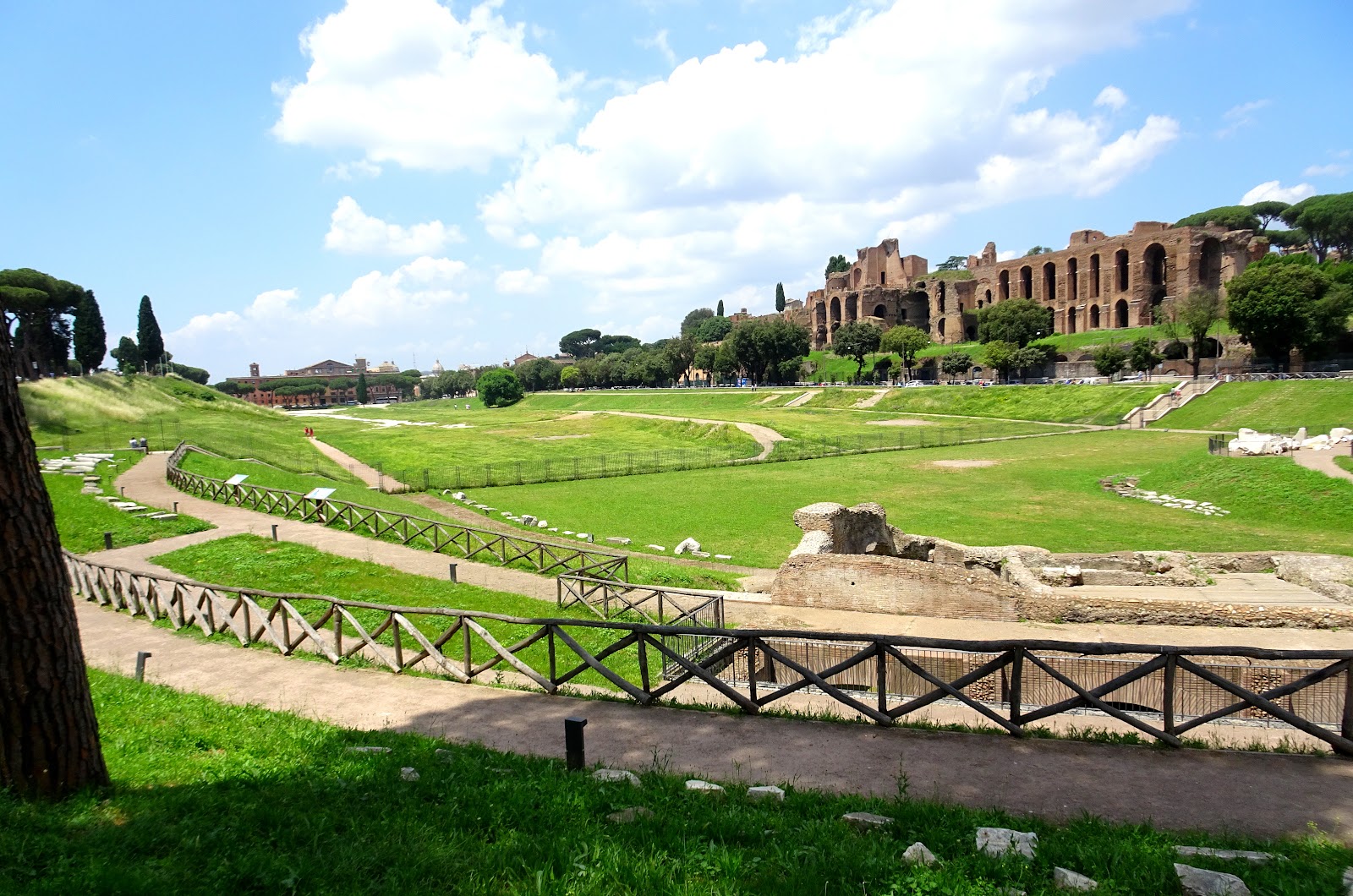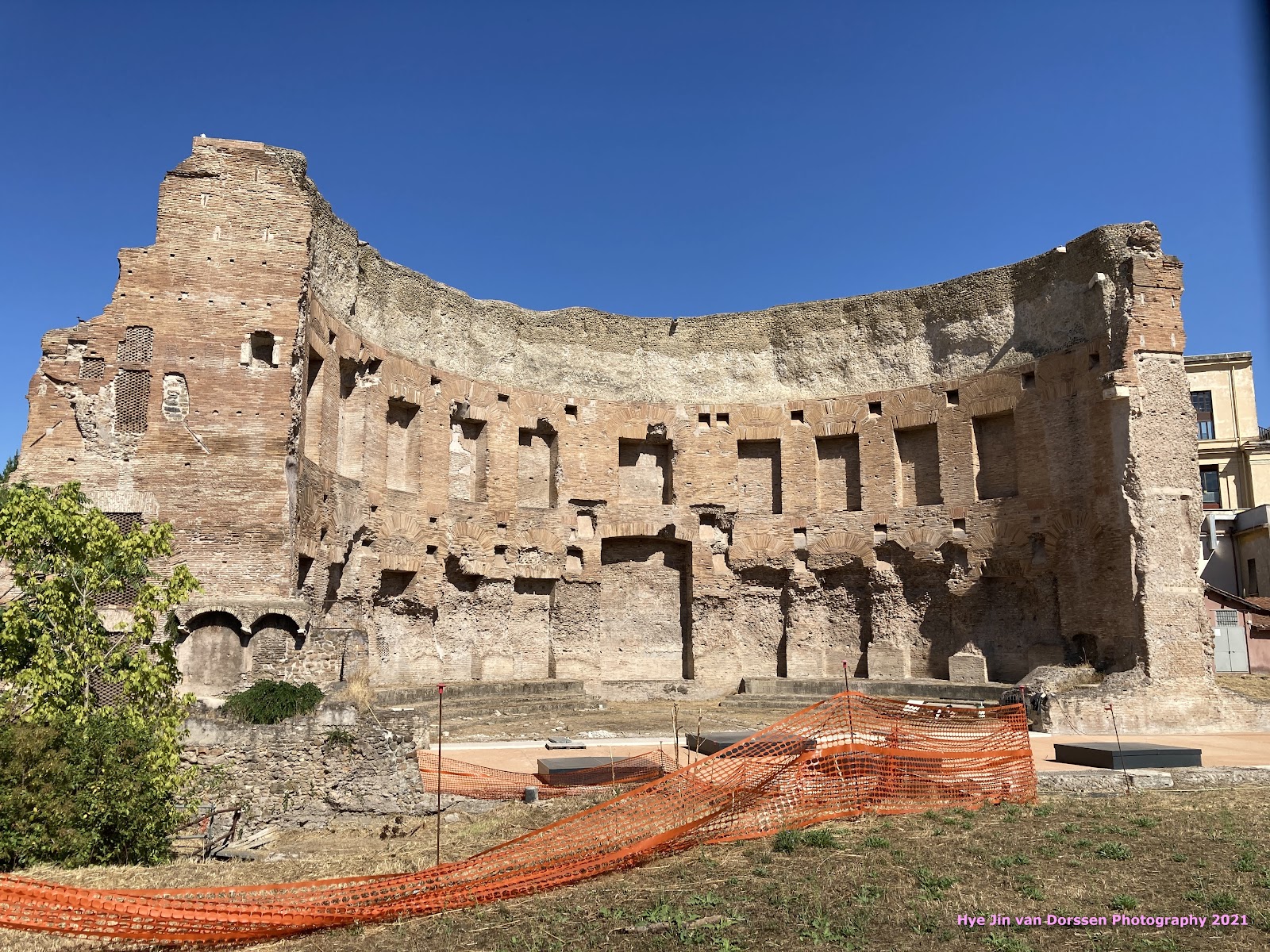
You're on the Oppian Hill, in a quiet park with pine trees and joggers. Underneath your feet, buried in the hillside, is what's left of the single most extravagant private home ever built by a Roman — the Domus Aurea, the Golden House of the emperor Nero.
Let's clear up the famous part first. Nero did not fiddle while Rome burned. The fiddle wouldn't be invented for a thousand years, and when the Great Fire broke out, Nero was thirty-five miles away at the coast. He actually rushed back, opened his gardens to the homeless, and organized relief. So why does everybody think he watched it burn and sang? Because of what he did next. Huge stretches of the city center were now cleared ash — so Nero grabbed it, all of it, and built himself a palace so enormous that Romans muttered he'd burned the place down on purpose to make room. He didn't. But he absolutely took advantage.
And what a palace. Around three hundred rooms, almost none of them bedrooms — they were for parties. Walls sheathed
in gold and gemstones. Dining rooms with ceilings that slid open to shower guests with flower petals and perfume through hidden pipes. And the main banquet hall rotated. Day and night, a round dining room turning slowly to mimic the heavens. For centuries people assumed that was a myth — until archaeologists dug up the mechanism, a great rotating platform on ball-bearing spheres, exactly as descri