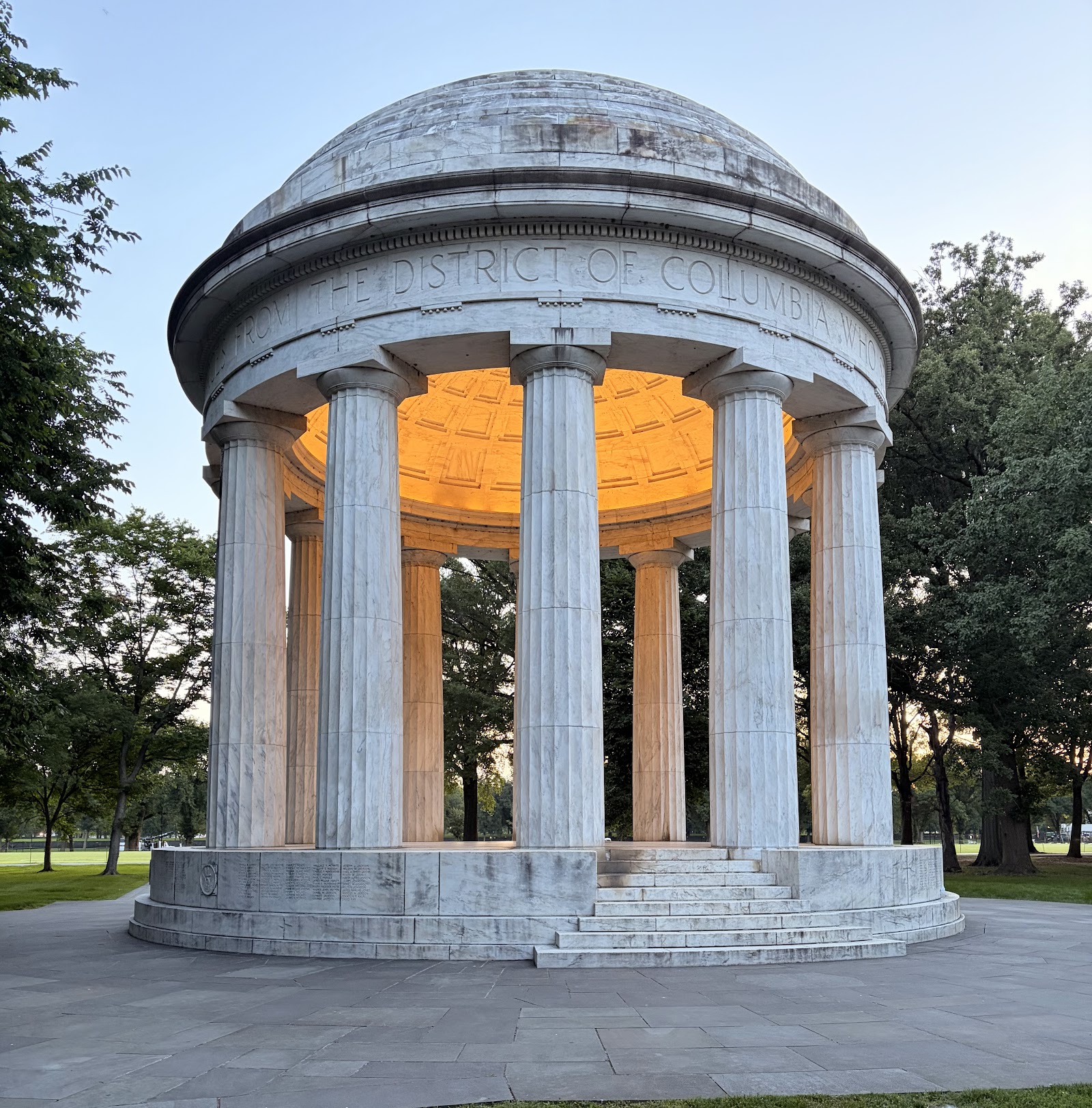
You're looking at a small, round, marble temple with twelve columns and a dome. It's forty-seven feet tall. It looks like a bandstand. That's because it IS a bandstand.
This is the District of Columbia War Memorial, and it is the most overlooked thing on the entire National Mall. Every tourist walks right past it on their way to something bigger. Which is a shame — because the story of how it got here is one of the best on this tour.
This memorial honors the twenty-six thousand residents of Washington D-C who served in World War One. Four hundred and ninety-nine of them didn't come home. Their names are inscribed around the base — listed alphabetically, with no distinction for rank, race, or gender. In nineteen thirty-one. While the rest of America was still decades away from desegregation, this little marble temple treated a Black private and a white officer exactly the same.
It was paid for entirely by private donations from the people of the District. Not the federal government —
the citizens. The same citizens who, then and now, have no voting representation in Congress. They couldn't elect the people who governed them, but they could build their own memorial.
The fundraising campaign stretched five years. President Coolidge made one of the first donations and authorized collection in government offices. But the money came in slowly — a quarter here, fifty cents there,