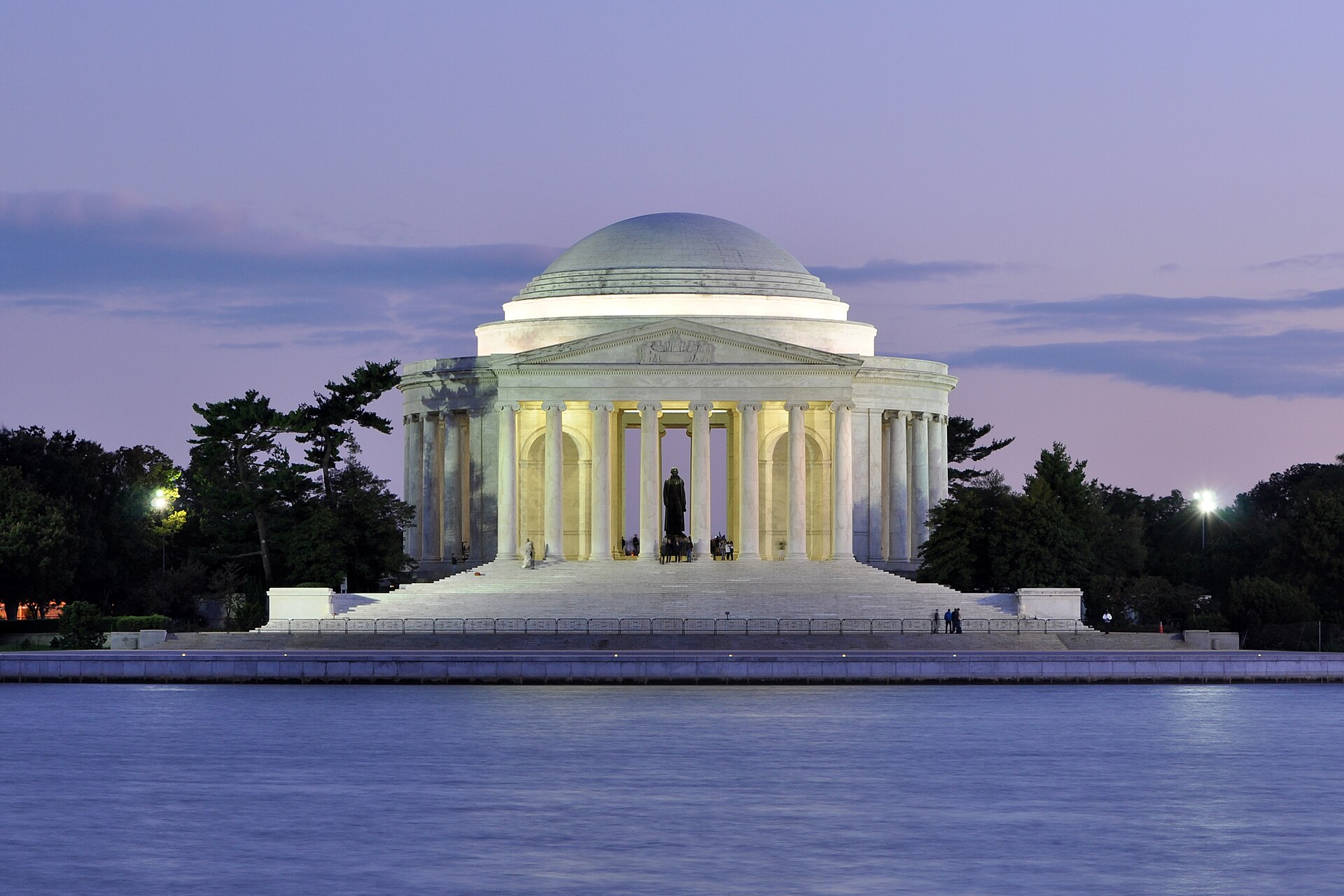
The Jefferson Memorial. A hundred and twenty-nine feet of white marble modeled on the Roman Pantheon. Twenty-six Ionic columns. A nineteen-foot bronze statue of the man who wrote all men are created equal while enslaving over six hundred people.
But before we talk about Jefferson, look at the ground you're standing on. Because what used to be here is extraordinary.
In nineteen eighteen, Congress funded a public swimming beach on this exact spot. The Tidal Basin Bathing Beach. Lifeguards. Diving platforms. Sandy beach. On a hot July day in nineteen twenty, it drew twenty thousand swimmers. There was a strictly enforced rule — no bathing suit could stop more than six inches above the knee.
It was whites only.
African Americans were left to swim in dangerous, undeveloped stretches of the Potomac. In nineteen twenty-one, they asked Congress for a beach of their own. After years of delay, a bill passed in nineteen twenty-four appropriating seventy-five thousand dollars.
Then in Februar
y nineteen twenty-five, the Senate voted fifty-three to twenty-two to cut the funding. Rather than build a beach for Black people — or, God forbid, integrate the existing one — Congress closed the beach entirely and banned all further bathing. The memorial to the man who wrote the foundational sentence of American equality stands on a spot where equality was explicitly rejected.
The memorial itse