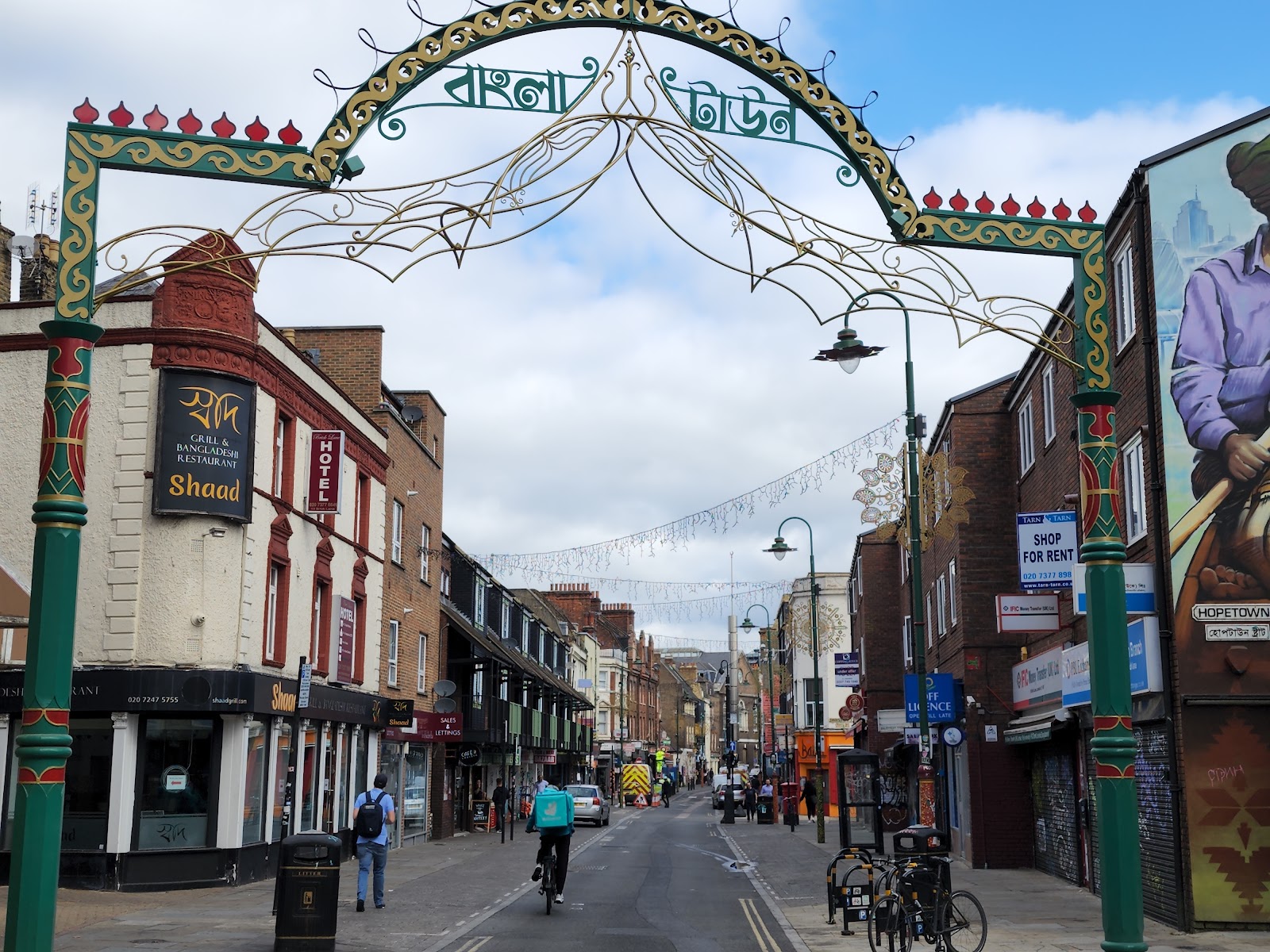
Brick Lane. Right now, breathe in — depending which way the wind's going, you're getting frying onions and curry from one direction and hot fresh bagels from the other. This is the most famous curry street in Britain and the heart of the Bangladeshi community that made this neighborhood its own. There's an ornamental arch marking it as Banglatown, painted in the green and red of the Bangladesh flag. The street signs are in English and Bengali.
Which means Brick Lane is doing exactly what it's always done: belonging completely to whoever arrived most recently. The Huguenots made silk here. The Jewish community made bread and clothing here. Now it's the curry houses, the sari shops, and the touts — men whose entire career is standing on the pavement, menu in hand, gently insisting that the best curry in London is, by an astonishing coincidence, directly behind them. Same street, new owners, and the food is the flag they plant.
Even the name is a leftover. Brick Lane is called Brick Lan
e because this is where they dug the clay and fired the bricks that built much of old London — a muddy industrial lane that has since been a brewery street, a tailoring street, a Jewish street, and now a Bengali one. Each wave left its stuff and moved up and out.
Two things on this street you should actually look at. First, the walls. Brick Lane is one of the great street-art capitals of the worl