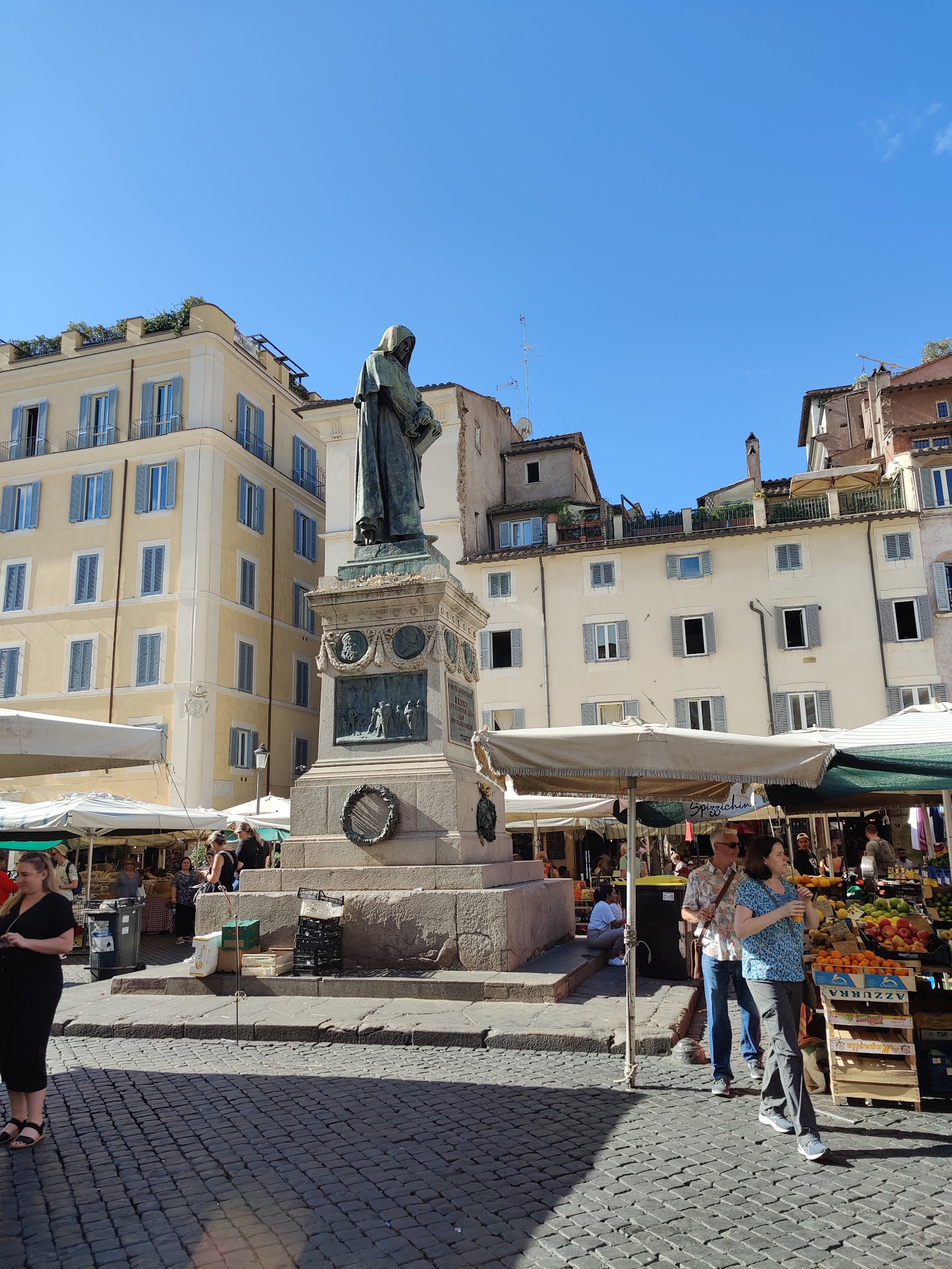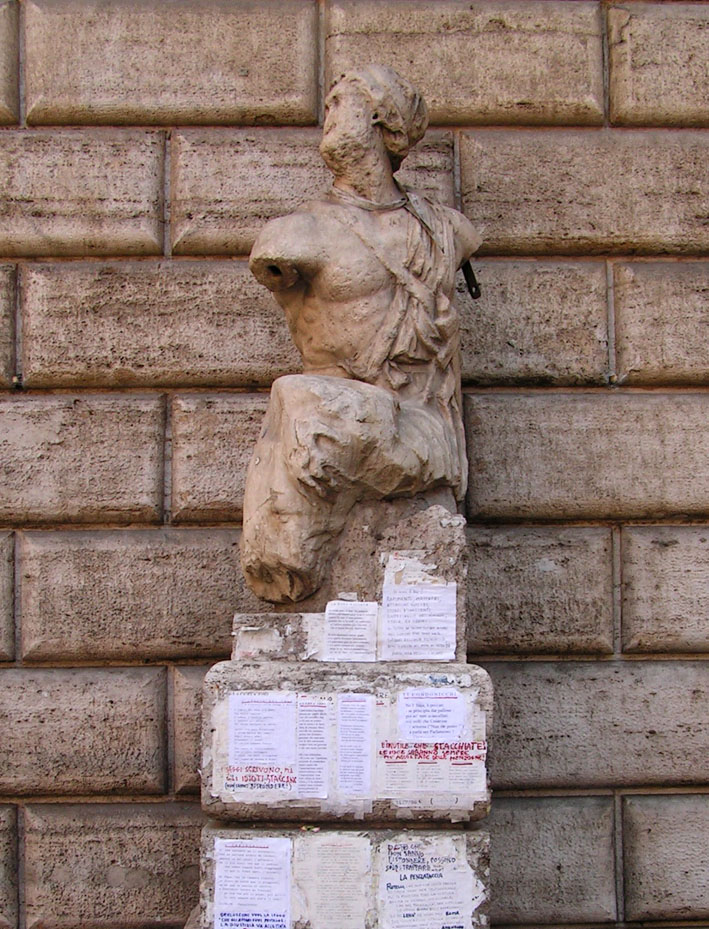
On the corner in front of you is a battered lump of ancient marble on a pedestal — worn almost featureless, missing arms, barely recognizable as a human figure. Tourists walk past it constantly. It might be the single most influential broken statue in the world. This is Pasquino, and it invented anonymous social media around the year fifteen hundred.
Nobody's even certain who it's meant to be. The best guess is that it's the wreckage of a Greek masterpiece showing the hero Menelaus carrying the dead body of Patroclus — genuinely great sculpture, just battered past recognition. The name is a neighborhood story: it supposedly came from a sharp-tongued local, a tailor or schoolmaster called Pasquino, famous on this block for his cutting remarks. When people started sticking anonymous insults on the statue, they named it after the district's biggest mouth.
It worked like this. Romans living under the popes could not exactly criticize the government out loud. So they started sneaking out
at night and gluing anonymous poems — short, savage, funny — onto this statue. Insults about corrupt cardinals, mockery of the popes, complaints about taxes. By morning the statue would be covered in them, and crowds would gather to read the latest. No signatures. No way to trace them. The verses got a name, pasquinades, which is where English gets the word for a satirical lampoon.
The most famou