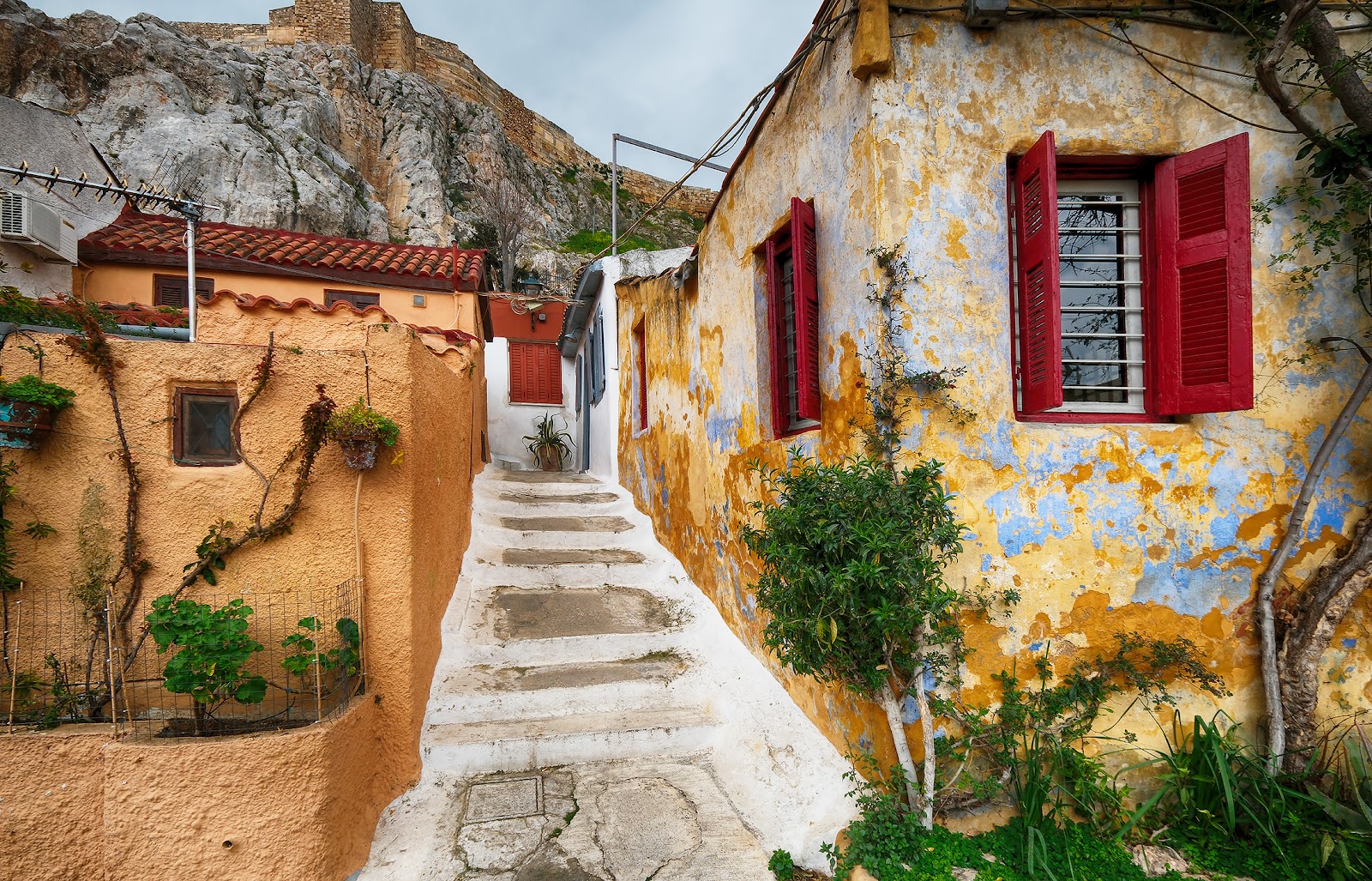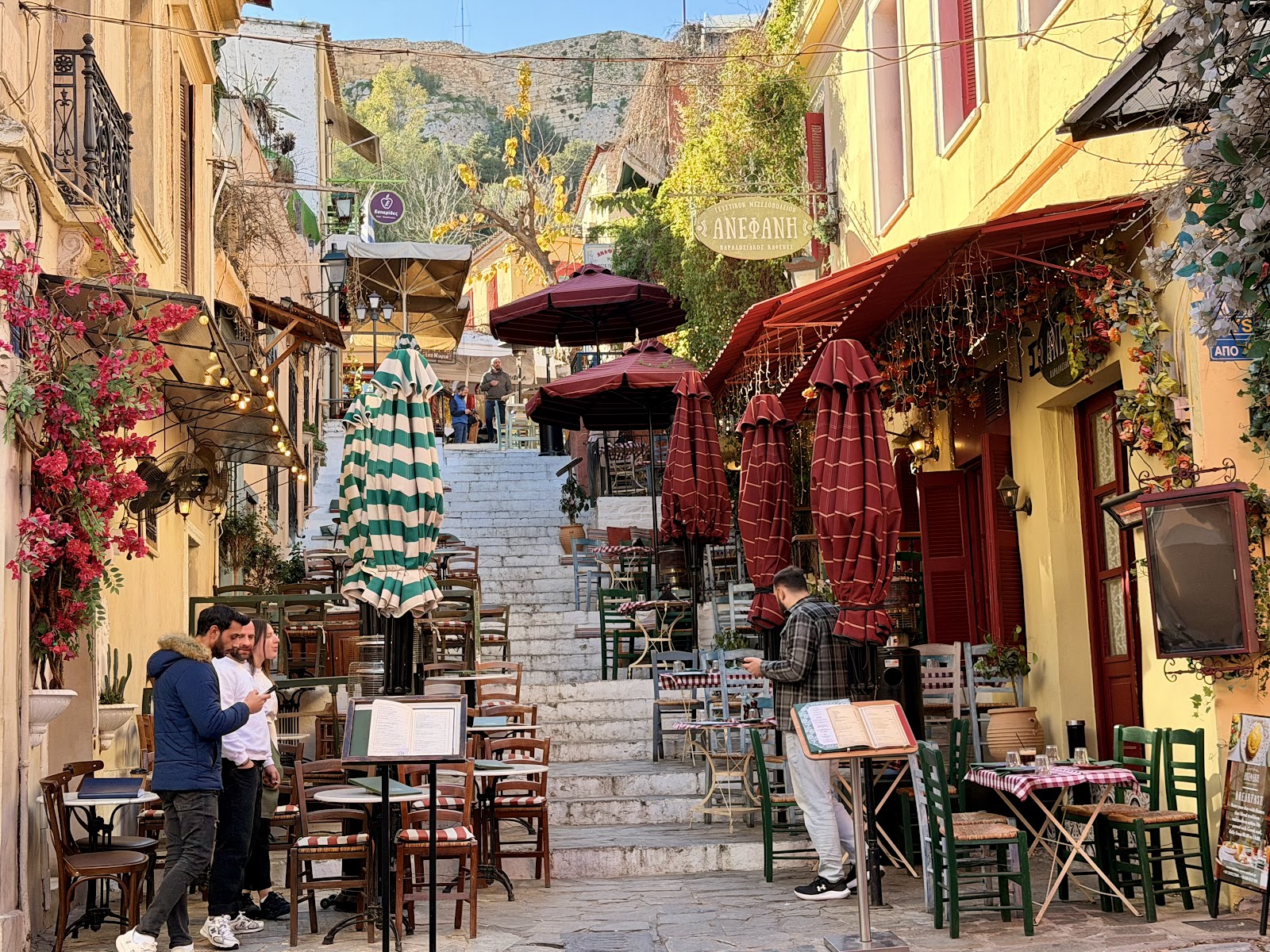
You're on Mnesikleous Street, the stepped lane in Plaka where the cafés put their tables ON the steps. People sit drinking on a staircase with bougainvillea over their heads, and it's one of the most photographed streets in Greece.
And it is a government product.
Plaka is the old town — the only part of Athens that kept its shape through the nineteenth century while the rest of the city was being redrawn. Low houses, no straight lines, the lanes running where they ran under the Ottomans. That much is genuinely old.
What is not old is the quiet.
Through the nineteen sixties and seventies, this neighbourhood was the loudest place in Greece. The tourist boom arrived and Plaka filled up with nightclubs. Bouzouki joints, discos, bars, taverna floor shows with amplified music running until four in the morning — one after another after another, in lanes three metres wide, with families living above them. At the peak there were around NINETY clubs operating in here.
Residents did what res
idents do. They left. The old houses emptied. The ones still standing fell apart, because nobody repairs a building that's worth more as a disco.
At the end of the seventies the Greek state did something remarkably blunt about it.
In nineteen seventy-nine a preservation plan was put into effect, and a presidential decree listed the historic centre. The following year Plaka was listed as a single