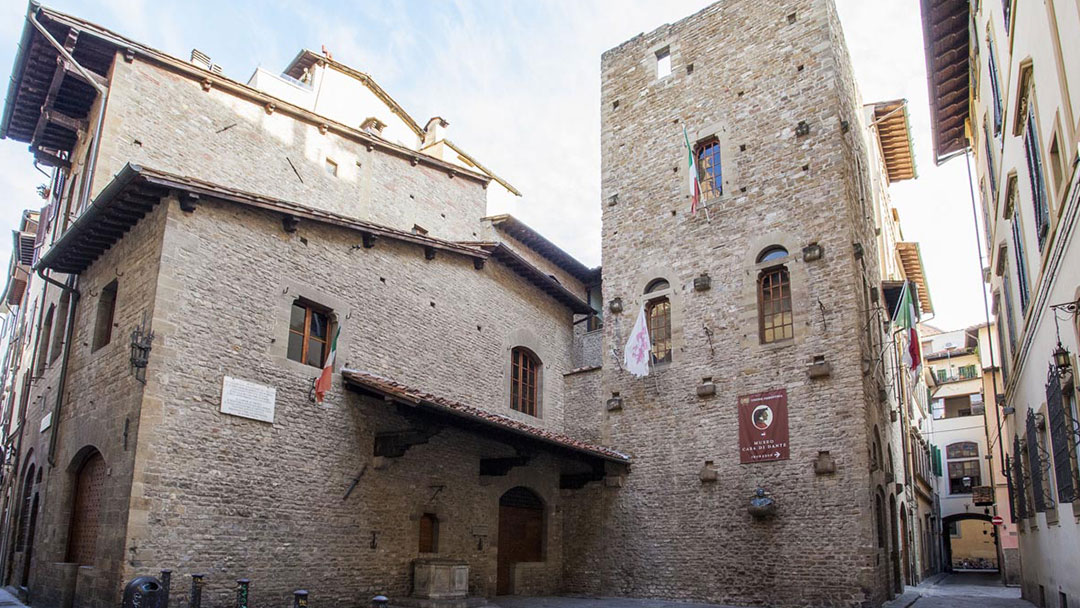
This narrow lane, this tower house they call the Casa di Dante. I'll be honest with you — it's a reconstruction, a museum built where scholars think his family lived, not the actual walls he grew up in. But this neighborhood is genuinely his. Somewhere in these few streets, around seventy years before Columbus, Florence raised the greatest poet the Italian language would ever have. And then Florence sentenced him to be burned alive.
Dante Alighieri wasn't only a poet. He was a politician — a serious one. Around thirteen hundred he held one of the highest offices in the city, at the exact moment Florence tore itself in half between two factions squabbling over power and the Pope. Dante's side lost. And he lost while he was out of town, sent off as an envoy to Rome, which is the worst possible place to be when your enemies seize the city behind your back.
They came after him with the weapon that always wins: paperwork. In his absence, they put him on trial for corruption — graft, embez
zlement, the usual charges you throw at a man you simply want gone. The split tearing the city apart was between two factions with almost comically similar names — the White Guelphs and the Black Guelphs — who agreed on nearly everything except how much power the Pope should have over Florence. Dante was a White. The Blacks won, with a heavy shove from Pope Boniface the Eighth, who wanted the city