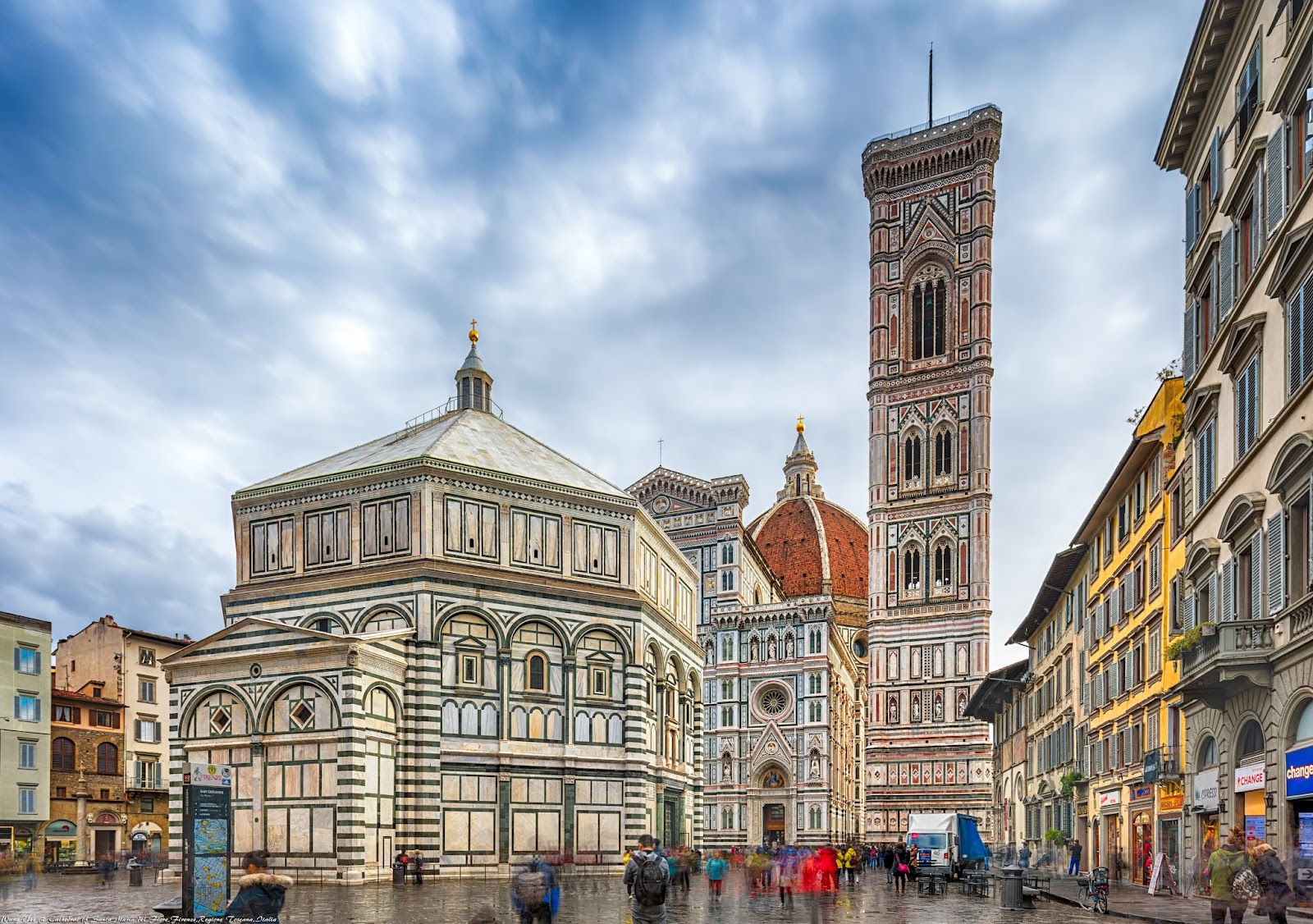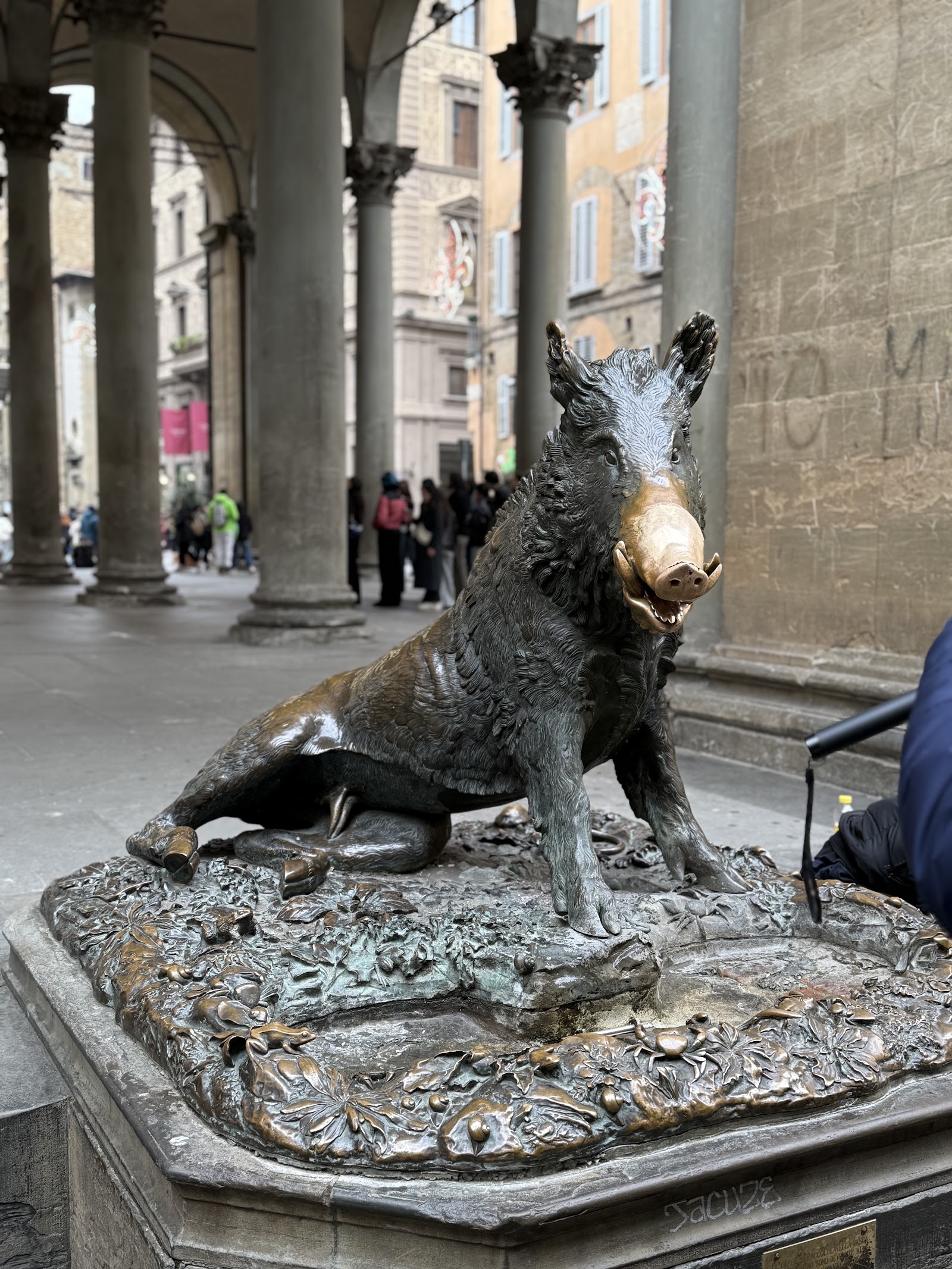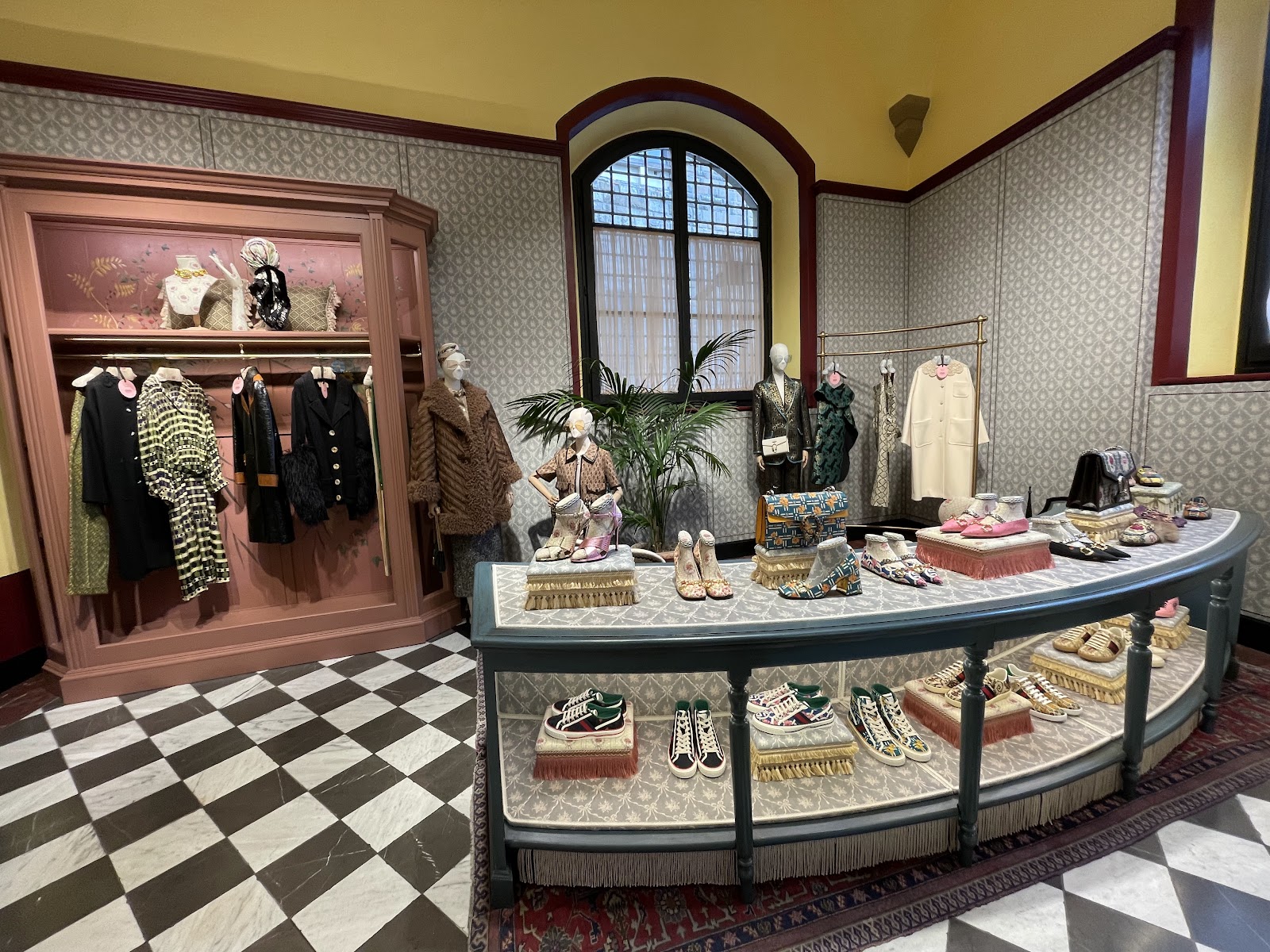
On the corner of Piazza della Signoria, tucked beside the giants and the fountain, there's an older, quieter palace with a row of coats of arms across its front. That's the Palazzo della Mercanzia — for centuries the merchants' tribunal, the court where Florentine traders came to settle their disputes. Which makes it a very fitting building for what's inside it now. A Gucci. Specifically the Gucci Garden — part shop, part archive, part restaurant run by one of the most decorated chefs in Italy. The oldest commercial court in the city, wearing a fashion label.
The man whose name is on it started at the absolute bottom of the luxury business — carrying it. Guccio Gucci was a young Florentine who, around the turn of the last century, went to London and took a job at the Savoy Hotel, one of the grandest hotels in the world. He was a porter. A bellboy. His job was to haul the luggage of the very rich up to their rooms, and to stand there, in the lobby, watching what money looked like when
it traveled — the monogrammed trunks, the fitted leather cases, the sheer confident quality of a wealthy person's suitcase. Most people in that job see a heavy bag. Guccio saw a business.
He came home to Florence in nineteen twenty-one and opened a small shop selling fine leather goods and luggage, built on the one thing Florence had made brilliantly since the guild days — worked leather. And it