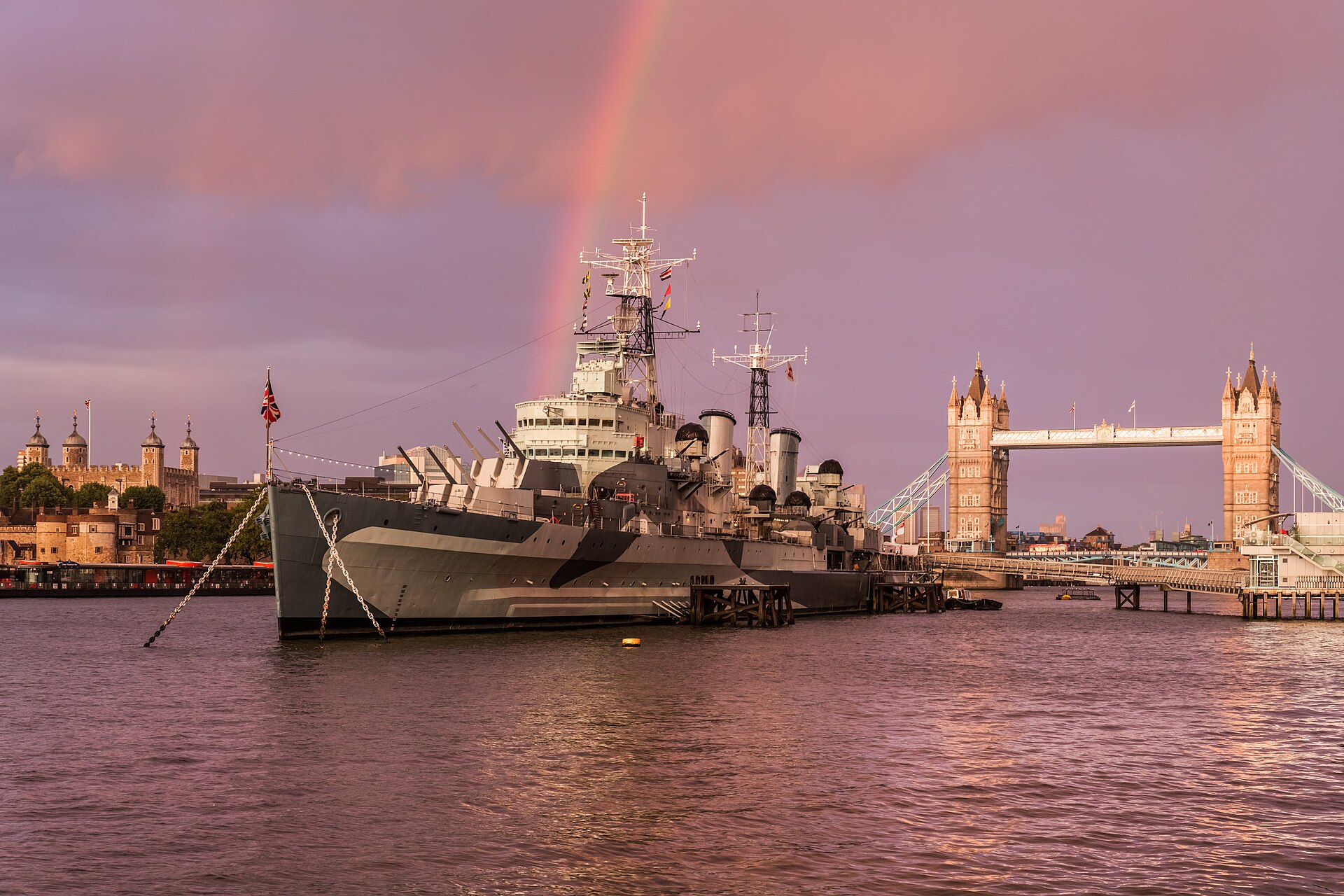
That grey warship moored in the river is HMS Belfast, and more than three hundred thousand people a year climb its nine decks to see what a Second World War cruiser actually looked like from the inside. She almost didn't make it to the war she's famous for. Launched in nineteen thirty-eight, commissioned less than a month before war broke out, she struck a German magnetic mine in November of nineteen thirty-nine that broke her back and tore her turbines from their mountings. The Navy could easily have scrapped her on the spot. Instead they spent more than two years rebuilding her from the keel up, and she didn't return to active duty until the end of nineteen forty-two — better armored and better equipped than the ship that limped home broken. She earned the rest of her reputation after that repair, not before it. For eighteen months she helped protect the Arctic convoys — the brutal supply run to the Soviet Union, through some of the worst seas on Earth. In nineteen forty-three she to
ok part in the Battle of North Cape, helping sink the German battlecruiser Scharnhorst. Of the Scharnhorst's crew of nearly two thousand men, all but thirty-six died. The following year, she was off the coast of Normandy on D-Day itself, and by some accounts fired one of the very first shots of the invasion. She's one of only three surviving ships from that day.
And then the Navy nearly scrapped