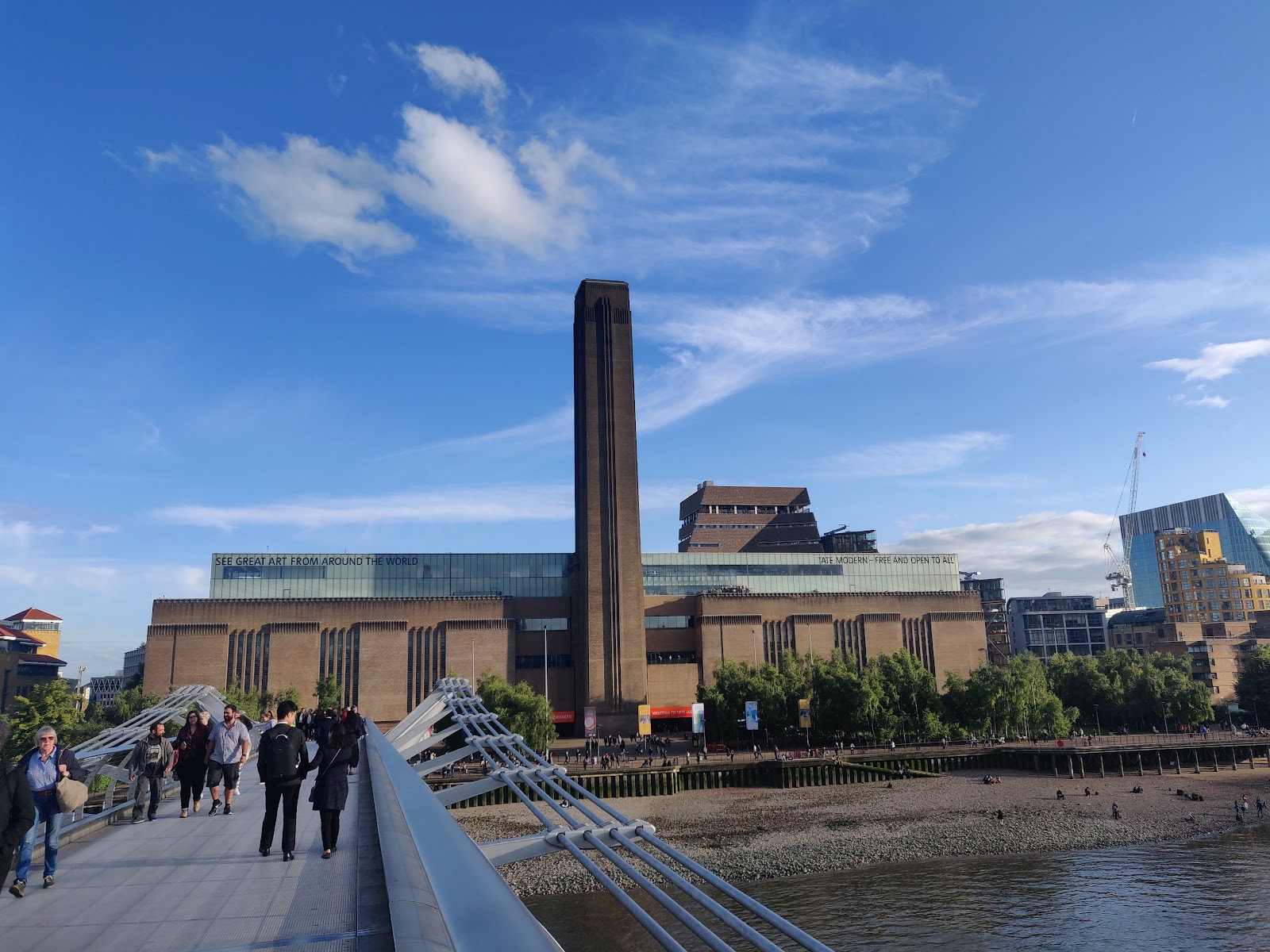
This enormous brick building with the single tall chimney is Tate Modern, and until the year two thousand it was doing a completely different job. For years before that, it sat here derelict and half-forgotten, an industrial carcass on prime riverfront land that most people assumed would eventually just be knocked down. This was Bankside Power Station — a working, oil-burning power plant, designed by Giles Gilbert Scott, the same architect behind the red telephone box on nearly every London street corner. When it stopped generating electricity, it just sat here, derelict, an enormous industrial shell nobody quite knew what to do with. The architects who eventually won the job to convert it made one decision that changed everything: they didn't disguise it. The architects were a Swiss firm, Herzog and de Meuron, and their whole pitch was restraint. They kept the raw brick, kept the chimney, and turned the empty turbine hall into one giant gallery space. That hall used to hold the genera
tors. Now it's a cathedral-sized room for art too big to fit anywhere else, and it's been used for exactly that. One year an artist filled it with an enormous glowing artificial sun and a ceiling of mirrors, and visitors lay flat on the concrete floor by the thousands just to look up at it. Another year, the entire floor was covered in what looked like a hundred million individual sunflower seeds,