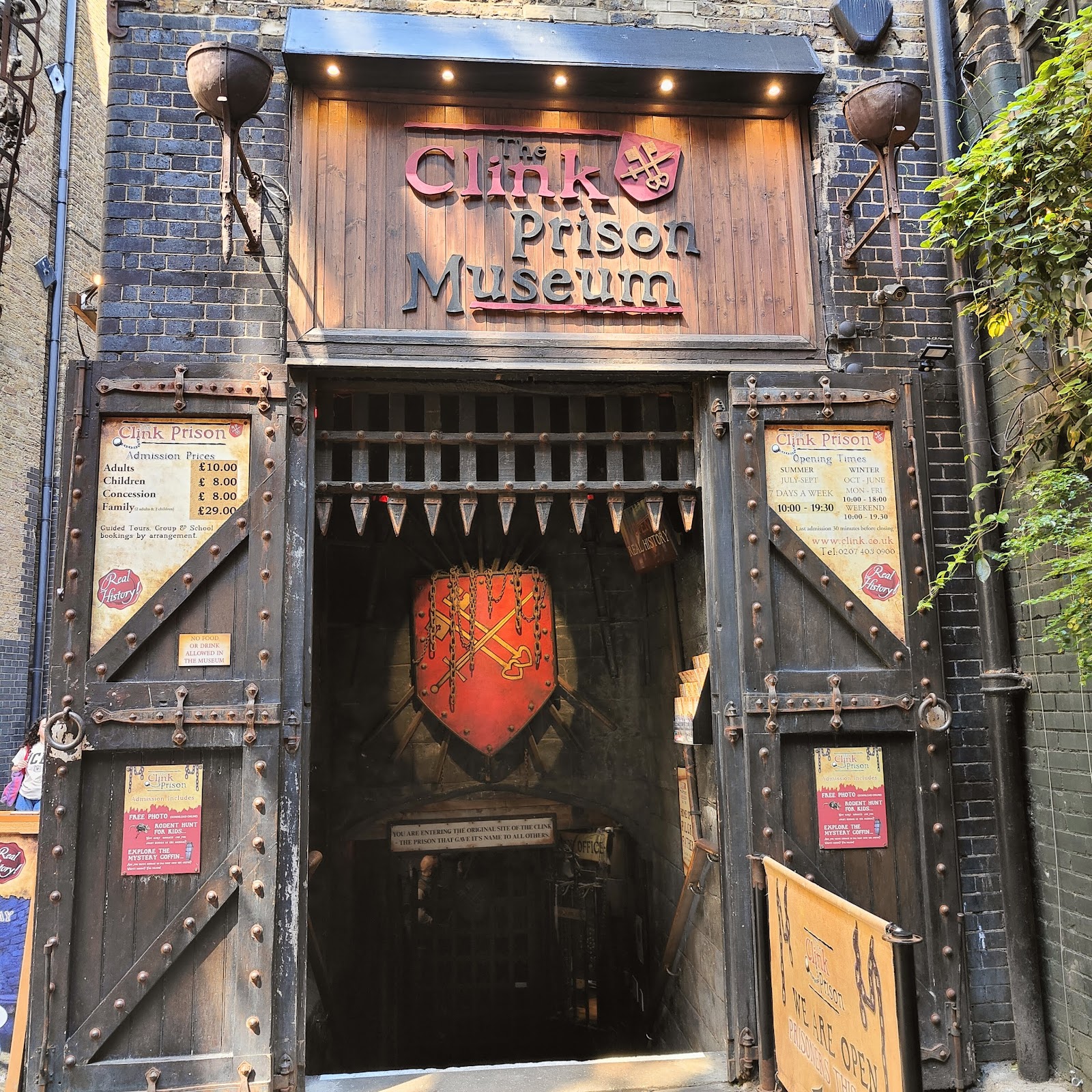
That narrow building is the Clink Prison Museum. It stands on the site of one of the oldest and most notorious prisons in England — old enough that "the Clink" became the generic English word for any jail at all. Walk through it today and you'll find the museum still keeps the atmosphere honest — recreated dungeon cells, thumbscrews, and the rack all displayed in the dark, low-ceilinged rooms where the real versions once did their work. And the detail that gets me is who actually ran it. This whole stretch of Bankside, prison included, sat under the legal authority of the Bishop of Winchester. The same bishop who licensed the brothels operating along this riverbank also owned and operated the prison that punished people for the exact activity he was profiting from down the street. He wasn't choosing between sin and law and order. He was billing both sides, and doing it here specifically because Southwark sat just outside the City of London's own jurisdiction — the same legal loophole t
hat let the theatres operate freely a few hundred yards from where you're standing. The women who worked in his licensed brothels even had their own nickname, drawn straight from his title — Winchester Geese. When one of them died, local superstition held they couldn't be buried in consecrated ground. A separate patch nearby became known as the single women's graveyard instead — the bishop's busin