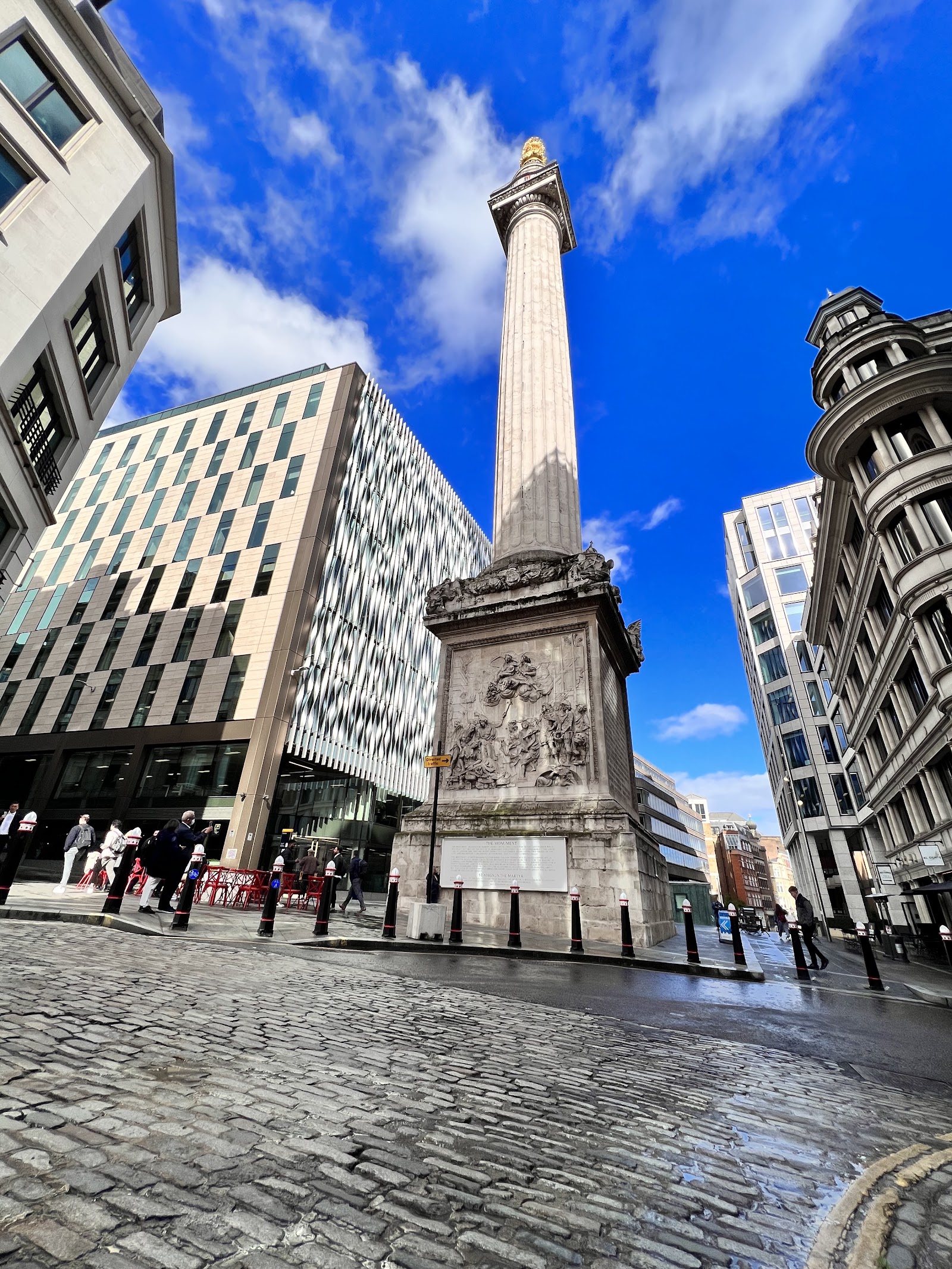
That tall stone column with the golden flaming ball on top is the Monument, built to remember the Great Fire of London in sixteen sixty-six, the fire that burned most of the city to the ground. It's a memorial. It was also built as a scientific instrument the size of a skyscraper — and it has been quietly broken for three hundred years.
Start with its position, because it's not random. The column is exactly two hundred and two feet tall. And it stands exactly two hundred and two feet from the spot on Pudding Lane where the fire started. Tip the whole thing over sideways, and the flaming golden urn would land right on the bakery where it all began.
That golden ball of flames on top isn't just decoration — it's the fire itself, cast in gilded bronze, the disaster the whole column exists to remember. The blaze started just down the hill, in a baker's shop, in the small hours of a September morning in sixteen sixty-six, and over four days it ate the medieval city almost whole: thirteen t
housand houses, more than eighty churches, and the old Saint Paul's Cathedral, all gone. And the strangest fact about the Great Fire is the death toll — officially, about six people. A blaze that destroyed most of London is recorded as having killed almost nobody, largely because no one bothered counting the poor. When it came time to crown the column, they argued over what belonged up there. Wren