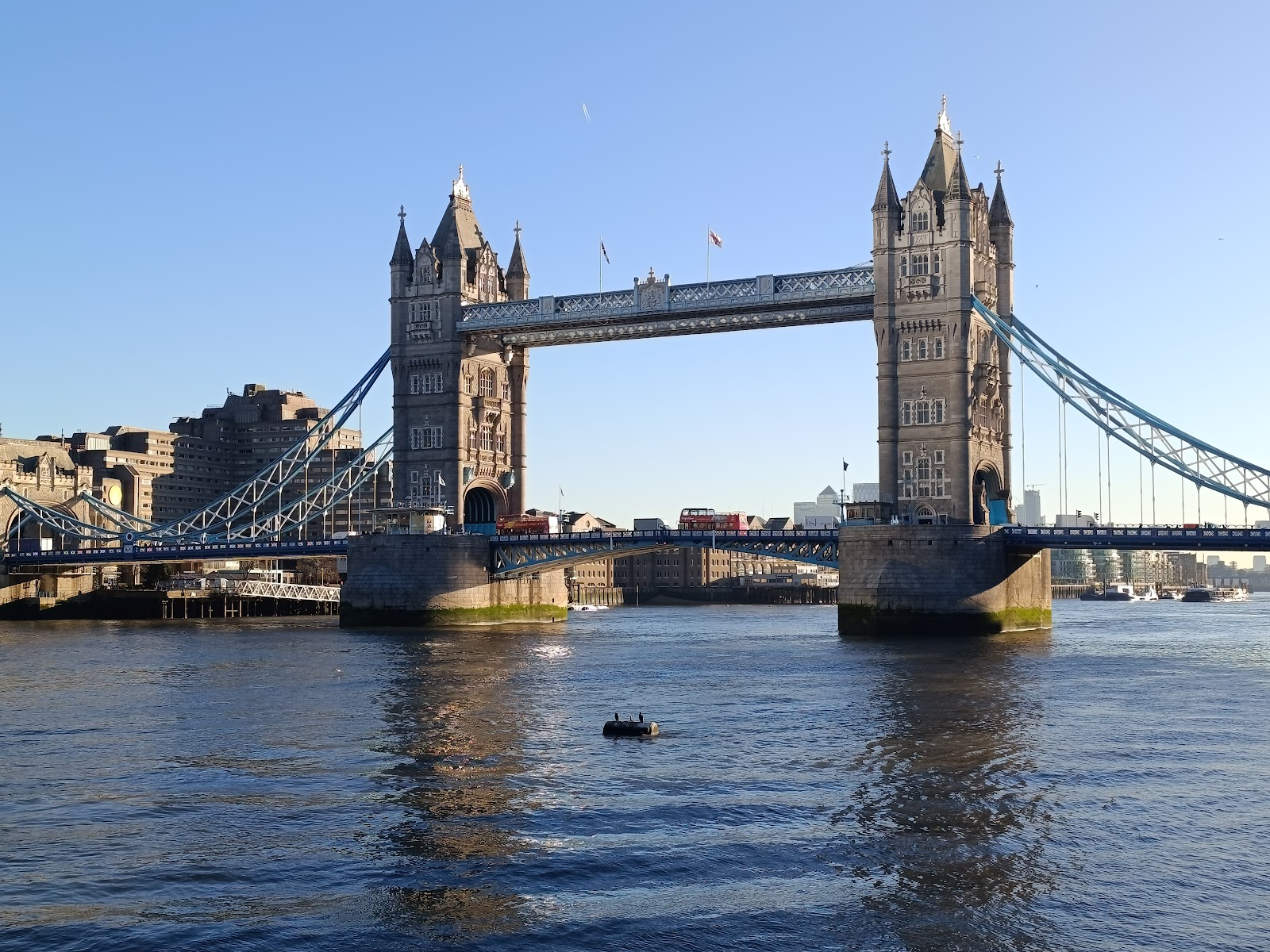
Tower Bridge. The two great towers, the blue walkways up top, the road that splits in the middle and lifts. It looks ancient. Gothic, medieval, like it's guarded knights. And that is a complete costume. This bridge is younger than the light bulb.
It was finished in eighteen ninety-four, which makes it modern by London standards — and underneath that fairytale stonework, it is pure Victorian muscle. The whole thing is a steel skeleton. All that heavy medieval-looking stone is just cladding, a fancy coat bolted onto the steel so the brand-new bridge wouldn't embarrass the genuinely ancient Tower of London right beside it. They built a cutting-edge steel machine and dressed it in a thousand-year-old costume so it wouldn't make a fuss.
And it is a machine. The two halves of the road each weigh over a thousand tons, and they still tilt open to let ships through. The original Victorian system did it with water pressure — steam engines pumping water to build up enormous force, then releasin
g it to swing those giant leaves up like a drawbridge. The old machinery is still down there. It went electric in the nineteen seventies, but it still lifts, around a thousand times a year, right now, today — raised by a crew working to a printed timetable, with the tower clock kept a couple of minutes fast so the bridge is never late to open. And the rule that delights me is that the boats have p