You're looking at the most photographed fence in New Orleans — cast-iron cornstalks with morning glories climbing through them, catching the afternoon light.
Every tour guide in this city will tell you Colonel Short had this fence made because his wife missed her Iowa cornfields. She was homesick, so he bought her corn she'd never have to harvest. It's romantic, it's sweet, and it's almost certainly not true.
There's another cornstalk fence at nine fifteen Royal Street in the French Quarter, and that one went up first. The homesick wife story was originally told about the OTHER fence. Over a hundred and seventy years of tour guides have been playing the world's longest game of telephone — attaching the same legend to whichever fence they happen to be standing in front of.
What actually happened is that Colonel Robert Short most likely flipped through an eighteen fifty-eight catalog from the Wood and Perot iron foundry, found a page with cornstalks on it, and checked the box. The mos
t romantic fence in the South is a catalog order.
It was originally painted in bright colors — green stalks, purple morning glories. The whole thing was a garden party. Somebody later painted it black, which might be the most New Orleans thing possible — taking something cheerful and making it gothic.
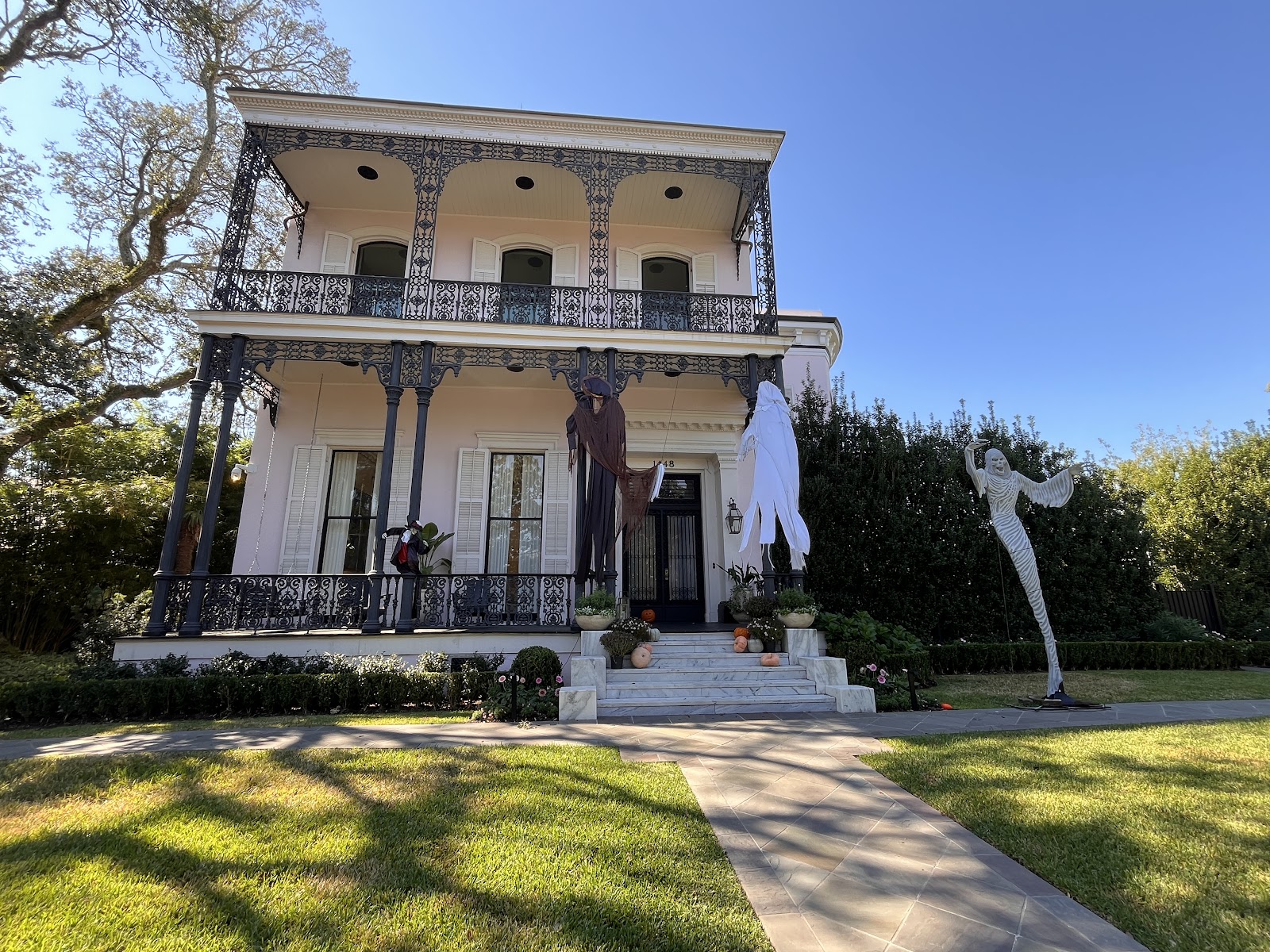
The house has a story too. When the Civil War broke out, Colonel Short fled to Kentucky, and th