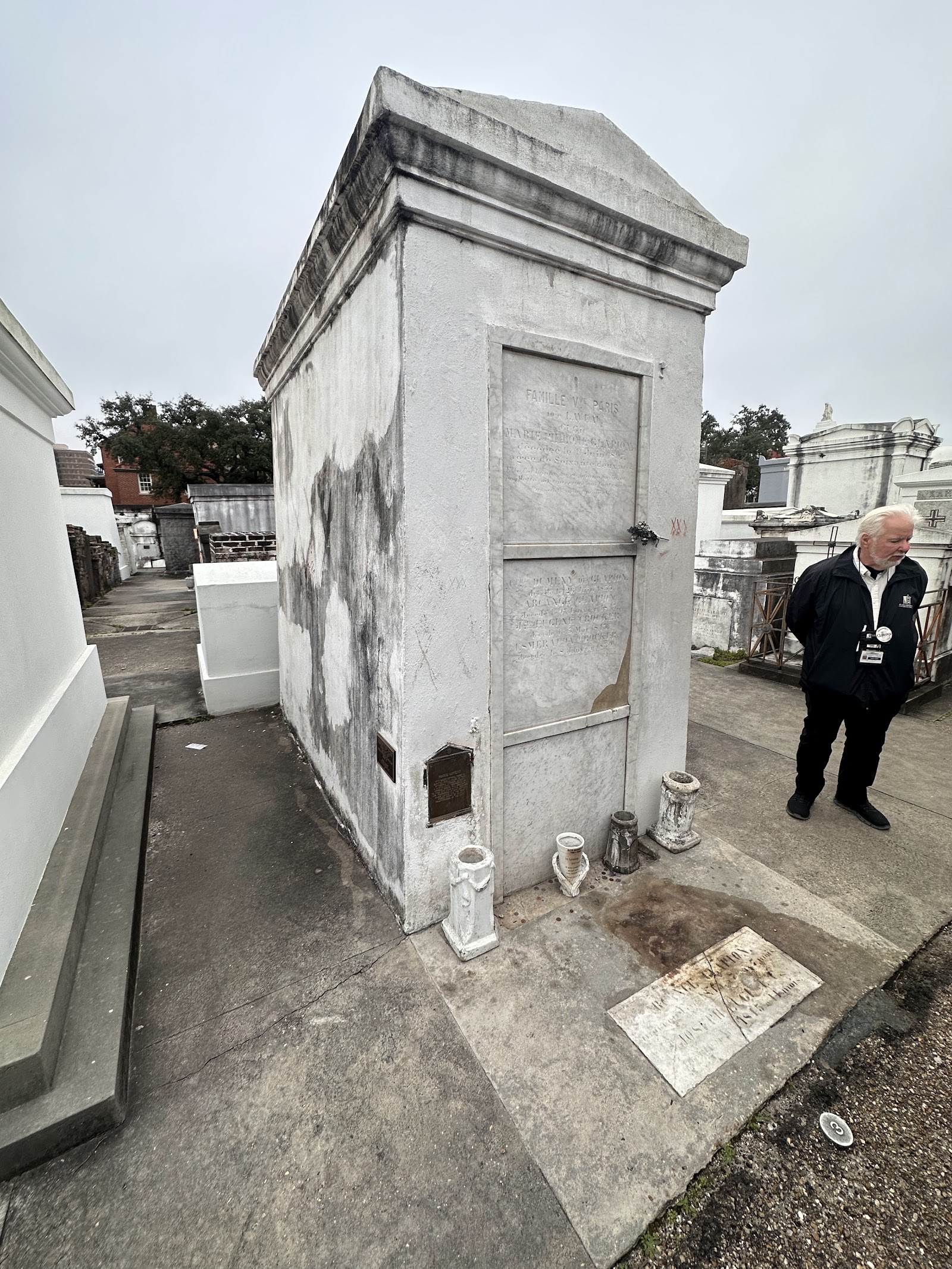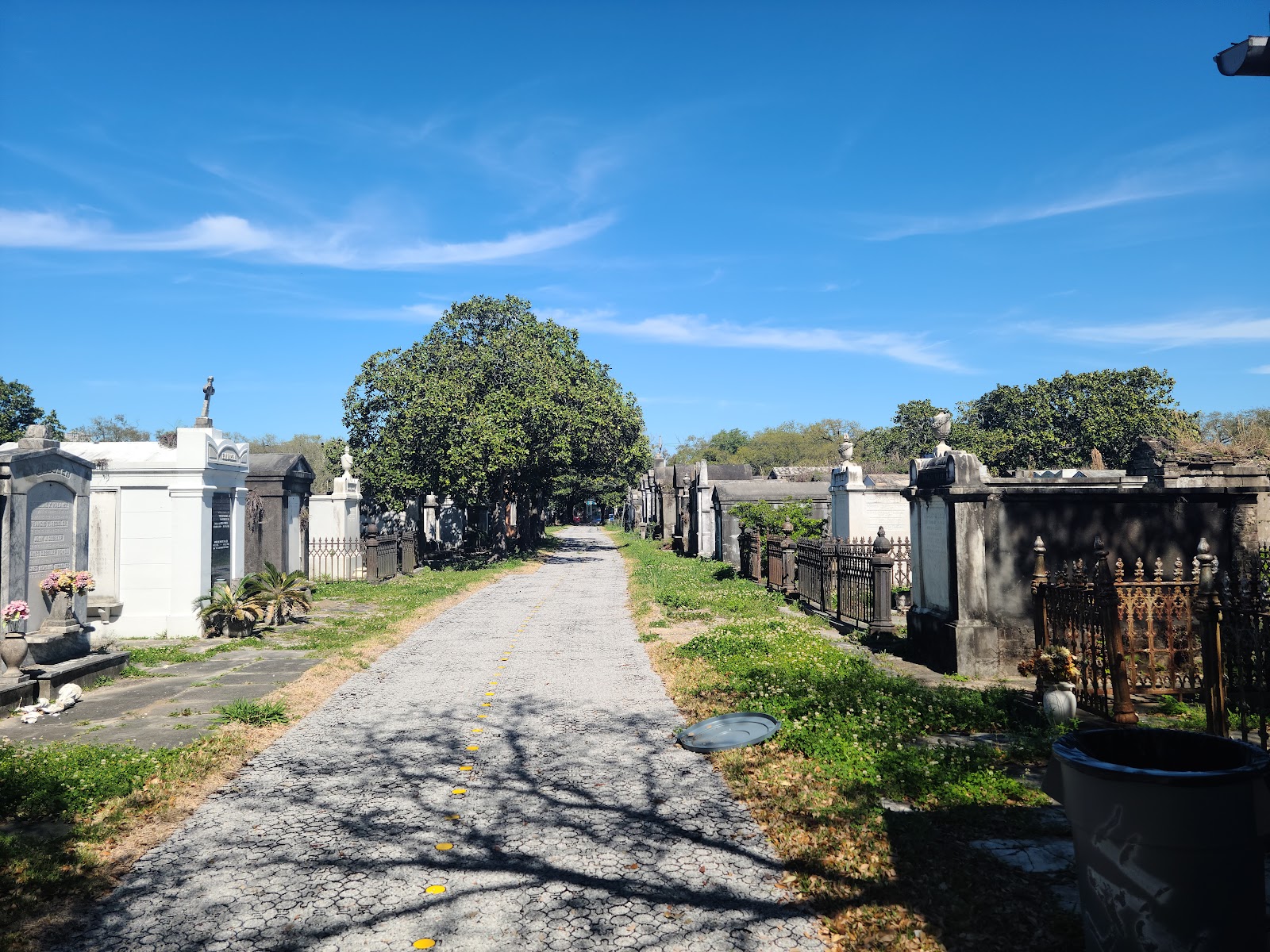
You're standing at one of the Cities of the Dead — that's what they call the cemeteries in New Orleans — and once you understand how they work, you'll understand why.
There are roughly seven thousand people buried in this one city block. Some estimates put it closer to ten thousand. The math doesn't seem possible until you learn the system.
In New Orleans, tombs get reused. A body goes in, the tomb is sealed, and in the subtropical heat the inside reaches up to three hundred degrees in summer. After one year and one day — a period rooted in old religious doctrine — the tomb is reopened, whatever remains are swept to the back, and a new body goes in. Over decades, a single family tomb can hold forty, fifty, sixty people. The Smith-Dumestre tomb here has thirty-seven names on it, and the family says ten more are waiting.
Why build above ground in the first place? The water table sits just below the surface. Early settlers who buried coffins underground discovered something horrible —
after rainstorms, the rising water pushed the airtight coffins back up through the earth like corks. Remains washing through city streets. They tried weighing coffins down with stones, drilling holes to let the water in — nothing worked. So they built up, and it became tradition.
This cemetery was the first non-denominational burial ground in the city — founded back when this area was still the C