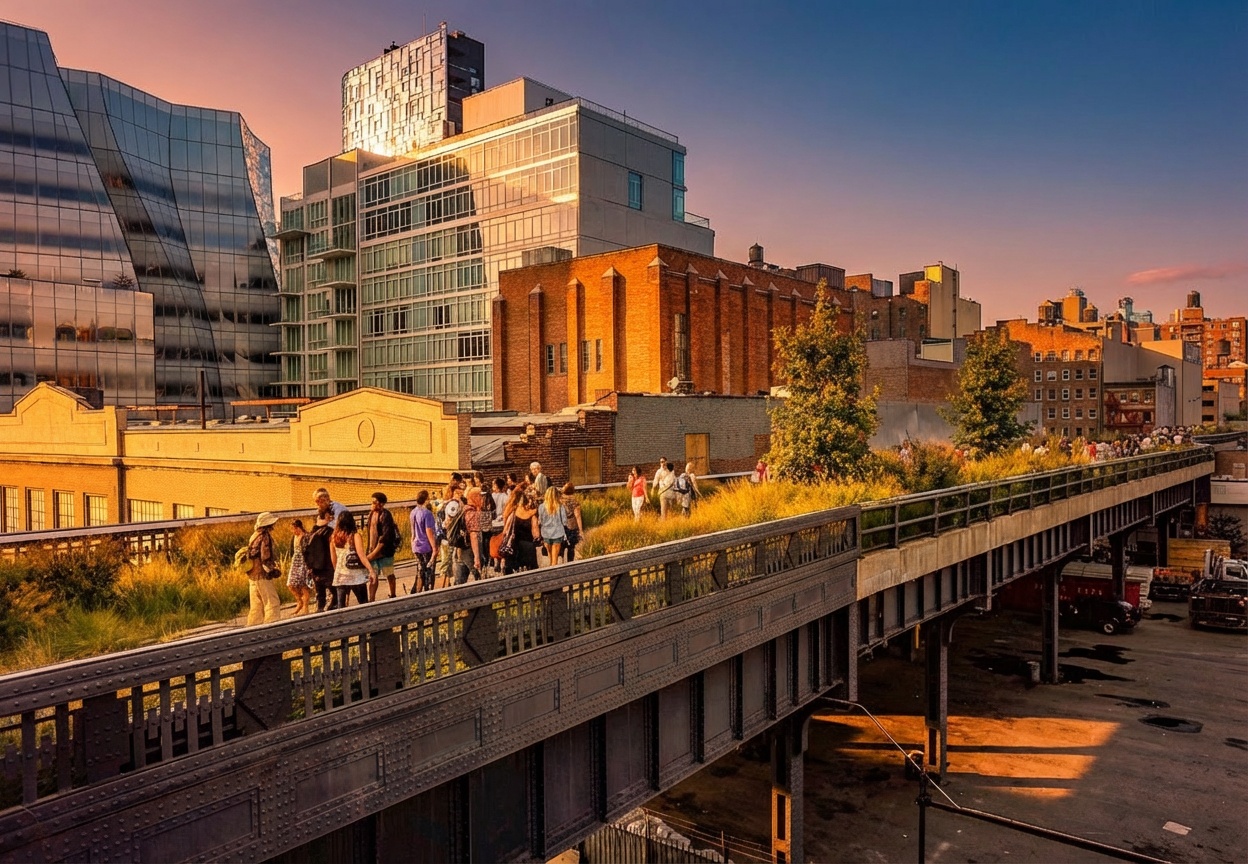
The Chelsea Grasslands — one of the wildest stretches of the High Line. Look around at the plants. The tall grasses, the wildflowers, the way everything blurs together — garden and walkway, hard and soft, no clean line between the two. This is not an accident. It's a very careful imitation of an accident.
In nineteen eighty, the last freight train on the High Line rolled south toward the Meatpacking District. It was carrying three carloads of frozen turkeys — probably headed for Thanksgiving distribution. After that, nothing. The trains stopped, and the railroad sat abandoned for twenty years.
And then something happened that nobody planned. Seeds that had been carried by train wheels from other parts of the country — embedded in gravel, trapped in wheel wells — started to germinate. Rain fell. Sun hit the tracks. And a forest grew.
By the time anyone looked up, the abandoned viaduct — thirty feet above the street, invisible to almost everyone below — was covered in wild vegetation.
Botanists eventually counted a hundred and sixty-one species growing up here. Tough, drought-tolerant grasses. Gray birch and quaking aspen. Juniper bushes. Sumac. Clover, buttercups, grape hyacinths. Sweetbay magnolias. An entire ecosystem, self-seeded and unsupervised, thriving on a rusted railroad in the middle of Manhattan.
In two thousand, an art photographer named Joel Sternfeld hauled an