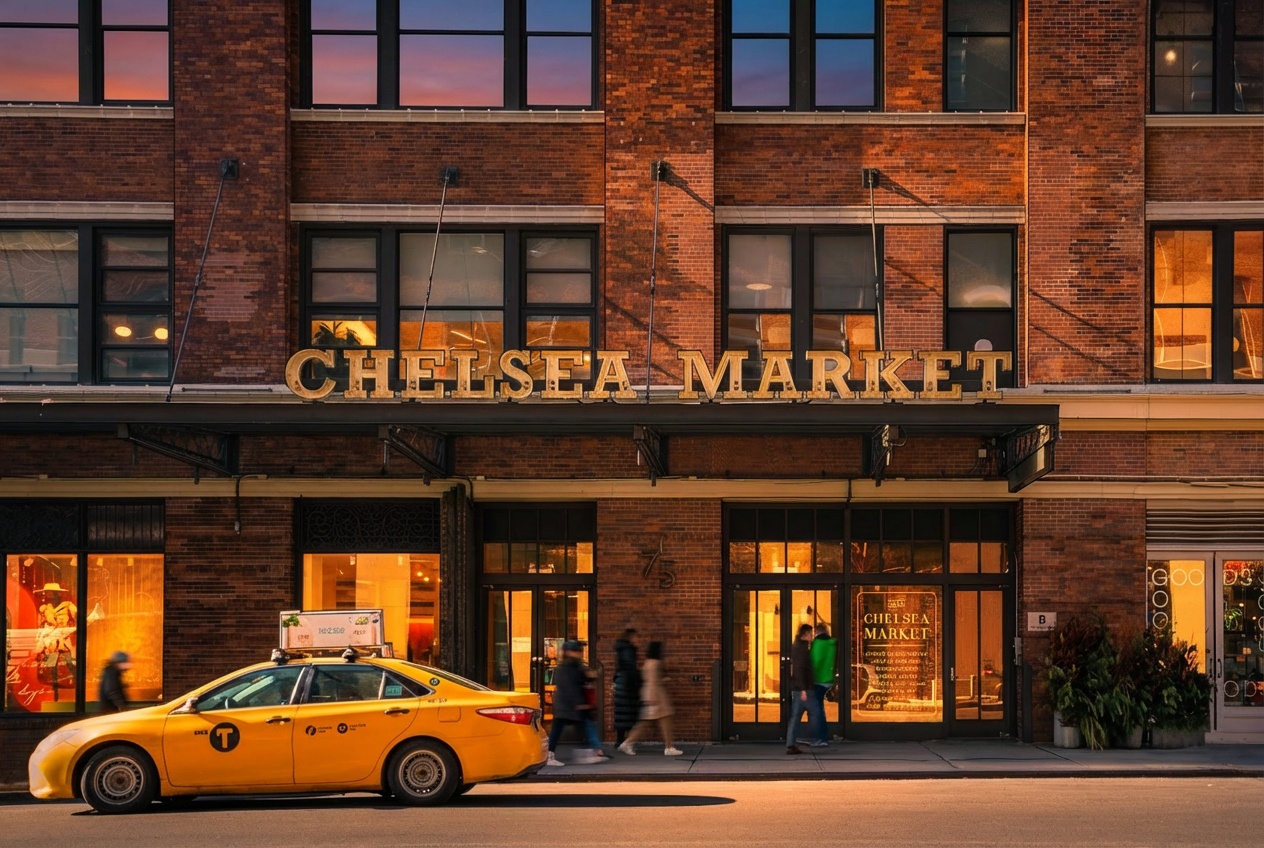
Chelsea Market. That massive brick building below you — the one that stretches an entire city block from Ninth to Tenth Avenue. Right now it's a food hall. People are down there eating lobster rolls and artisanal doughnuts and browsing boutique hot sauces. Twenty-five years ago, it was a cookie factory.
This was the National Biscuit Company — Nabisco. Seventeen interconnected brick buildings, completed around nineteen thirteen, and when they were done, Nabisco called it the world's largest bakery. That same year, Ford was putting cars on assembly lines. Nabisco was putting cookies on conveyor belts. Different industries, same ambition.
The High Line didn't just run alongside this building. It ran THROUGH it. When they elevated the freight railroad in the early nineteen thirties, the architect — a man named Louis Wirsching Junior — designed the Tenth Avenue side of the building with a train siding built directly into the structure. Freight cars loaded with sugar, flour, and cocoa roll
ed straight into the factory at the second floor. Workers unloaded ingredients without anything ever touching the street. The loading dock windows are still visible from up here — those wide openings on the upper floors, the ones that don't look like normal windows. Those weren't for light. Those were for trains.
And what they were making in there — the Oreo. The very first Oreo was produced in t