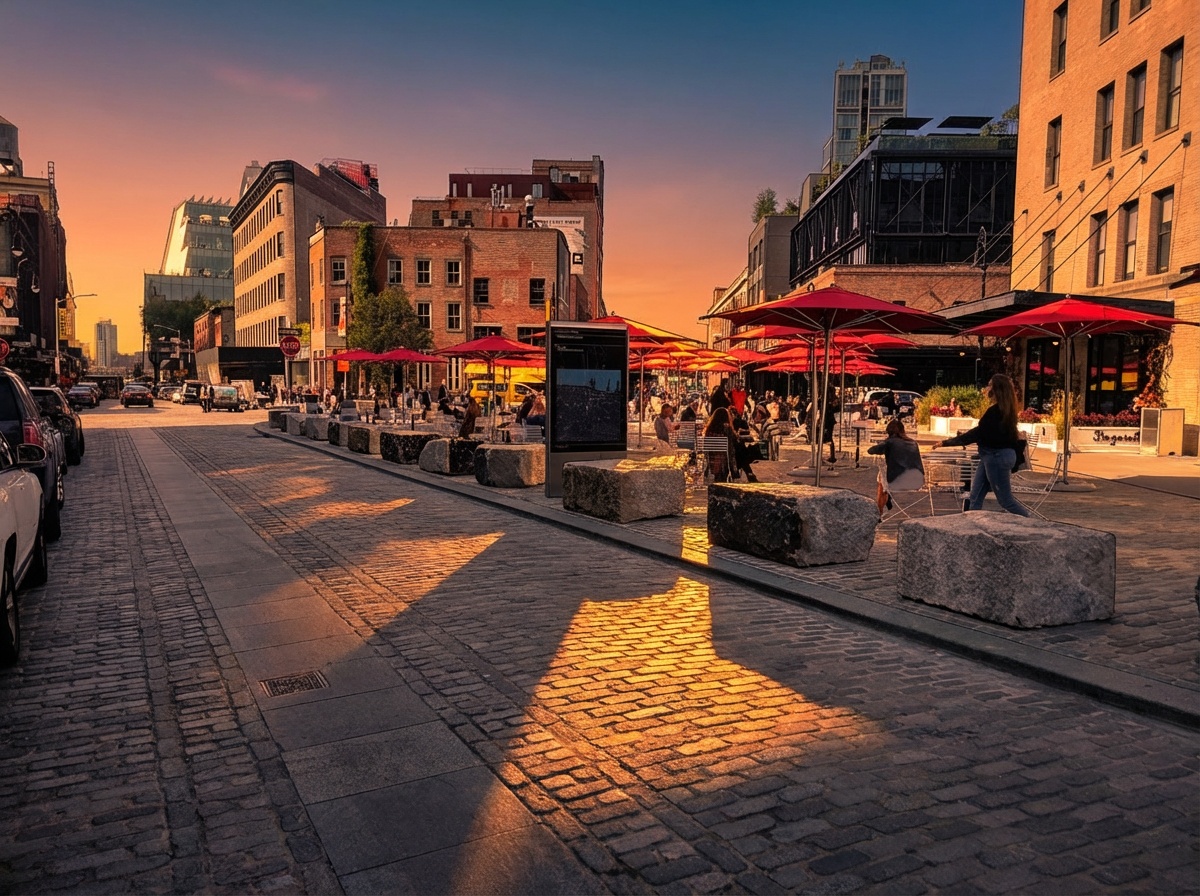
Gansevoort Street. Look down. Those stones under your feet — the bumpy ones, in the street — are Belgian blocks. Laid in the eighteen hundreds. They're still here because the city landmarked the neighborhood in two thousand three and you can't rip them out. But the reason they're bumpy, the reason nobody ever smoothed them flat, is that smooth cobblestones get slippery when they're wet. And out here, "wet" usually meant blood.
By nineteen hundred, more than two hundred and fifty slaughterhouses and packing plants were operating within a few square blocks of where you're standing. Three thousand butchers, working before dawn under floodlights, hauling sides of beef on overhead hooks, loading crates of organ meat onto trucks. The air smelled like raw fat and refrigerant and the Hudson River. The streets ran red — literally, not poetically. The neighborhood was called the Gansevoort Market, and it was Manhattan's open wound.
The men worked in white aprons that were never white for long.
They shared the predawn hours with an entirely different population — the transgender sex workers and partygoers who used these same streets after the clubs closed. Butchers and drag queens, side by side at three in the morning, each pretending the other wasn't there. That was the Meatpacking District.
In nineteen eighty-five, a French restaurateur named Florent Morellet took over a twenty-four-