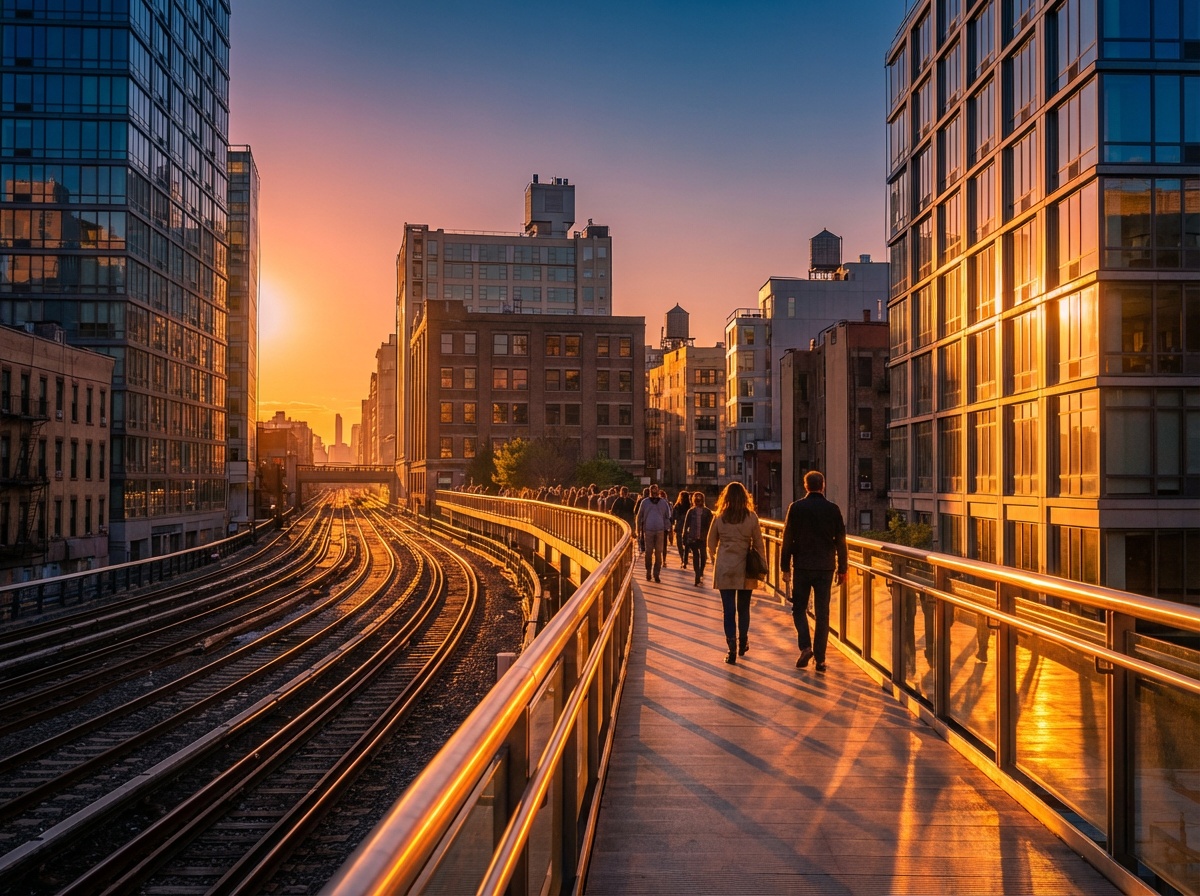
You're up on the High Line now — thirty feet above the street, walking on the old freight railroad. Look down at the ground. See those steel rails embedded in the walkway — the ones weaving between the concrete planks? Those are original railroad tracks. And they have a body count.
In eighteen forty-seven, the City of New York authorized a railroad down Tenth and Eleventh Avenues. Street level. No fences, no barriers, no grade separation. Just steam locomotives hauling freight cars — sometimes trains several blocks long — through a neighborhood where tenement buildings pressed right up against the tracks. Meat, dairy, coal, produce. Everything Manhattan needed to eat, heat, and build came rumbling down these avenues at all hours, sharing the road with pedestrians, horse carts, children, and eventually automobiles.
By eighteen ninety-two, the New York World newspaper gave the avenue a name. Death Avenue. They wrote that quote many had been sacrificed to a monster which has menaced the
m night and day.
The city's solution was, and I genuinely love this, cowboys. Starting in the eighteen fifties, an ordinance required the railroad to hire — quote — a proper person to precede the trains on horseback. So they recruited actual cowboys from ranches out West. Full Western gear — hats, boots, the whole look. And they rode ahead of the locomotives through Manhattan, waving a red flag b