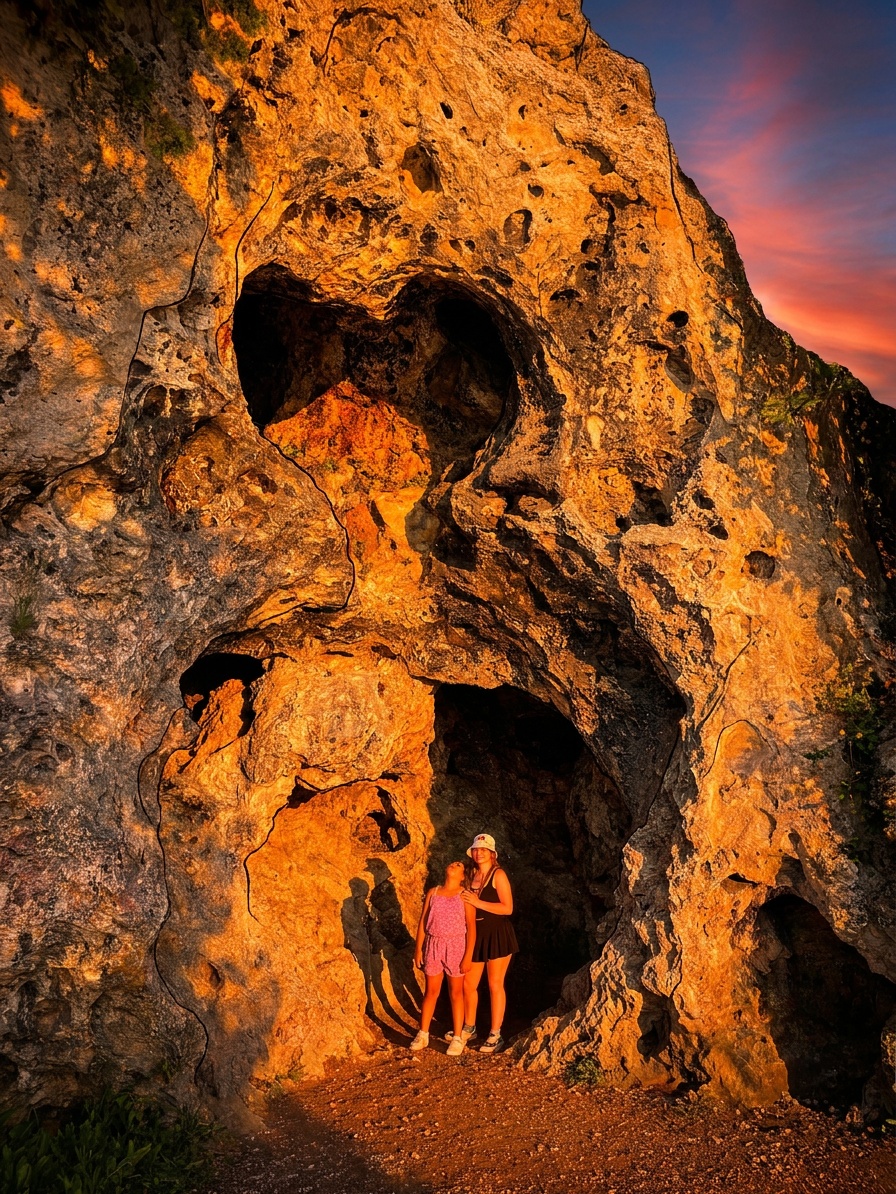
You're on the west shore now, and there are two things to look at. Close up, right off the road, there's a small dark cave scooped into the rock — that's Devil's Kitchen. And far off on the horizon, across the water, that enormous suspension bridge is the Mackinac Bridge, five miles of it, connecting the two halves of Michigan. Let's do the cave first, because the ground you're standing on is stranger than it looks.
This whole island is, geologically speaking, a cave-in that healed. Deep underneath you, a long time ago, there were beds of salt. Water got into them and slowly dissolved the salt away, which left big empty caverns underground, which meant the heavy rock on top had nothing holding it up — so it collapsed, shattering into a jumble of broken chunks. And then, over ages, mineral-rich water seeped through all that rubble and cemented it back together into brand-new solid rock. So the bedrock of Mackinac isn't really one clean stone. It's the healed scar of an ancient collapse
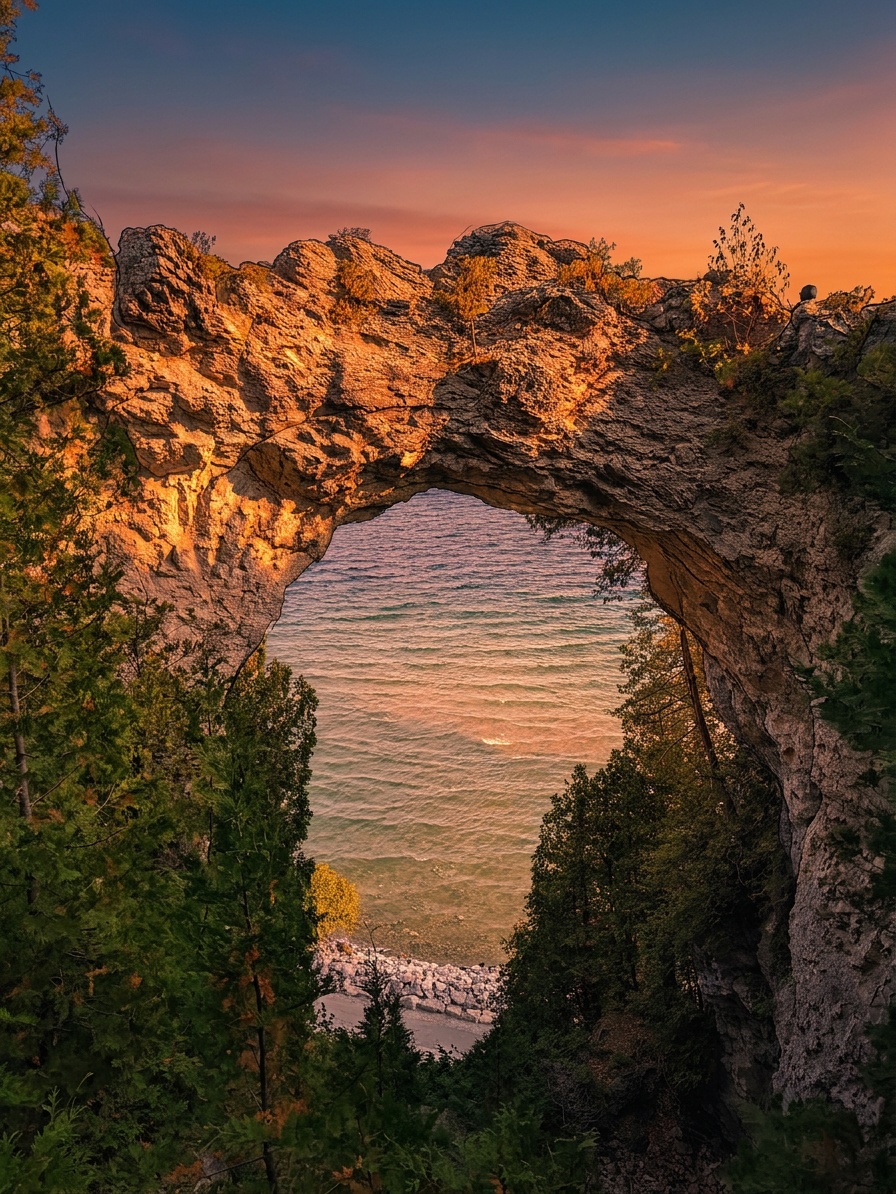
. You are biking around on a landslide that pulled itself back together. Devil's Kitchen, like Arch Rock back up the shore, is just a spot where the old high lake waters later carved into that patched-up rock and left a hollow.
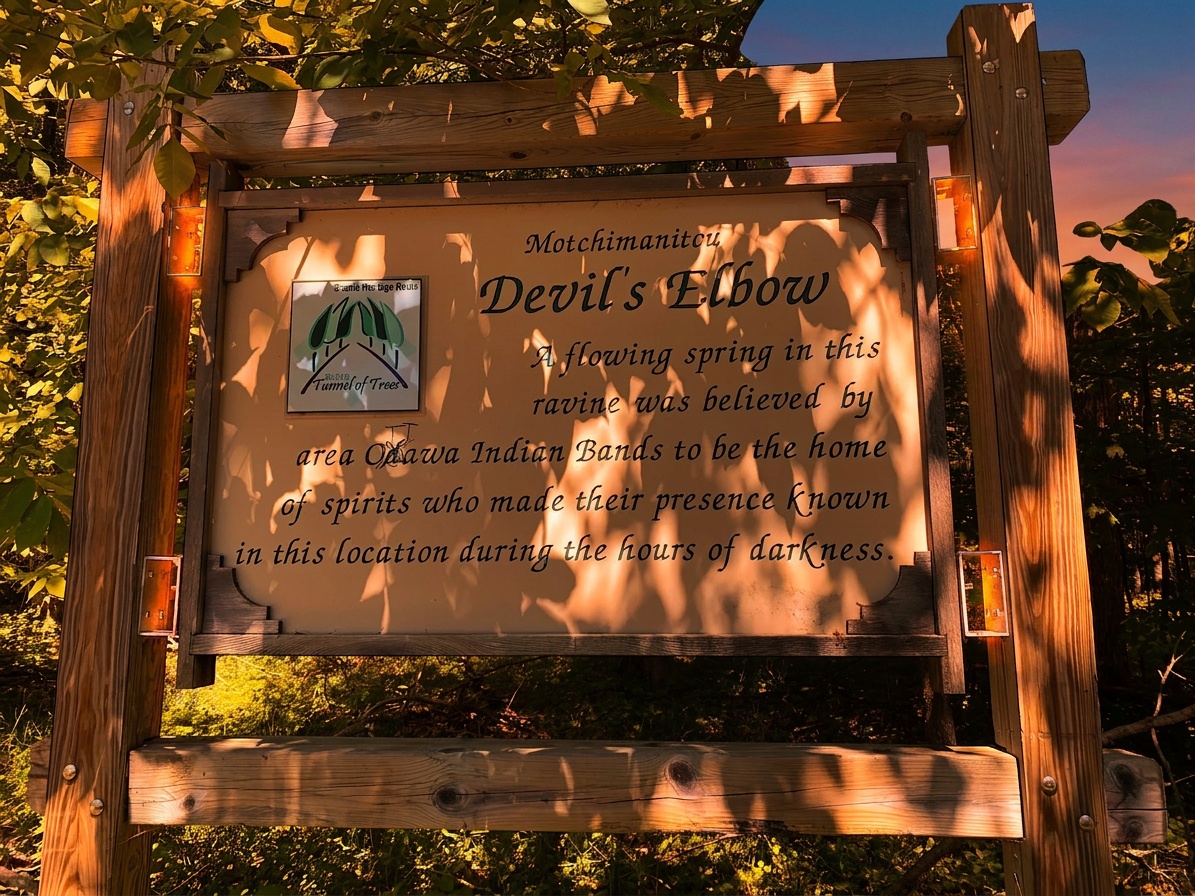
Now, the name. Devil's Kitchen — because the story goes that this cave was where evil spirits, or in some tellings outright cannibal giants, did their cooking. Cheerful st