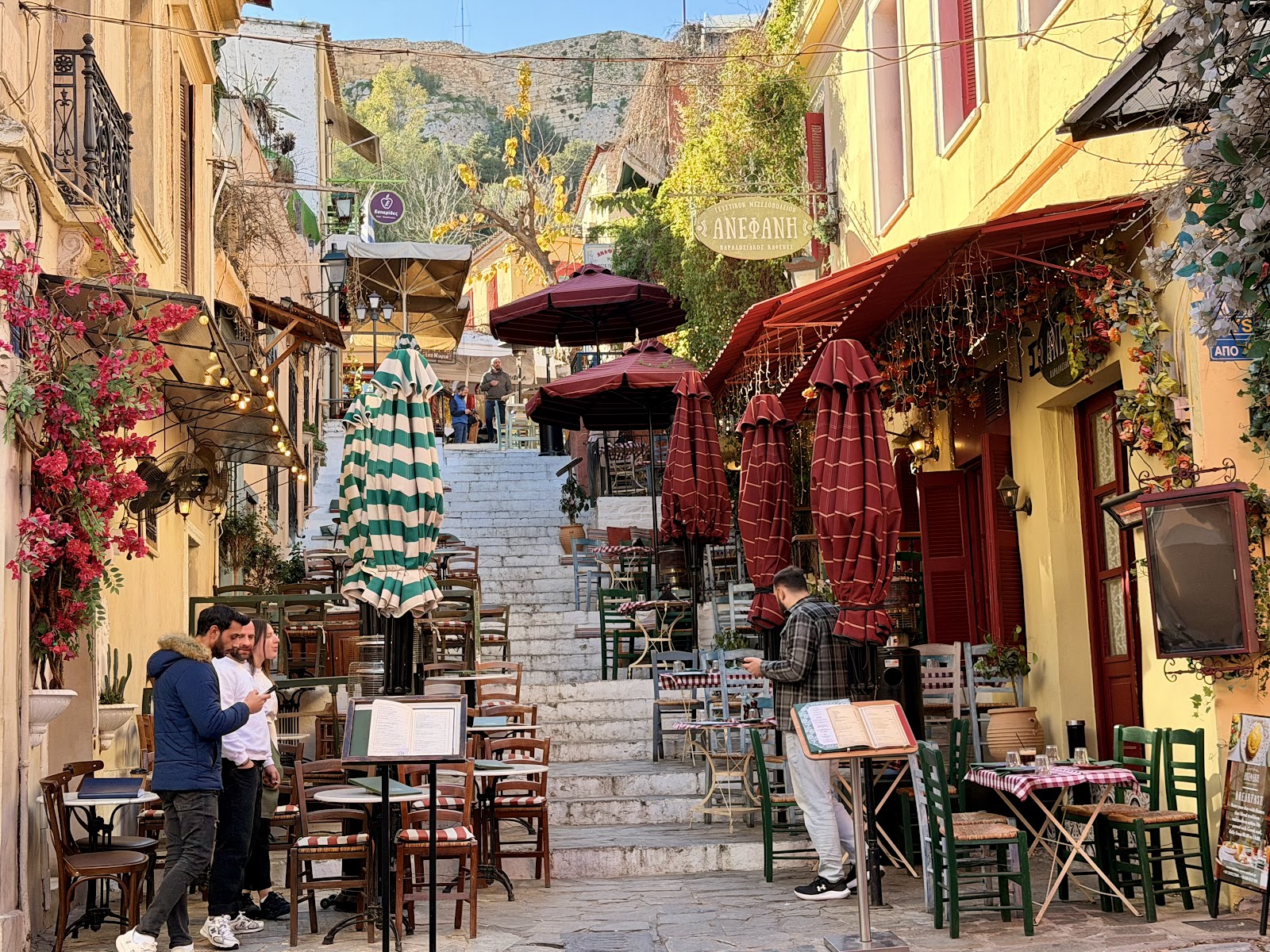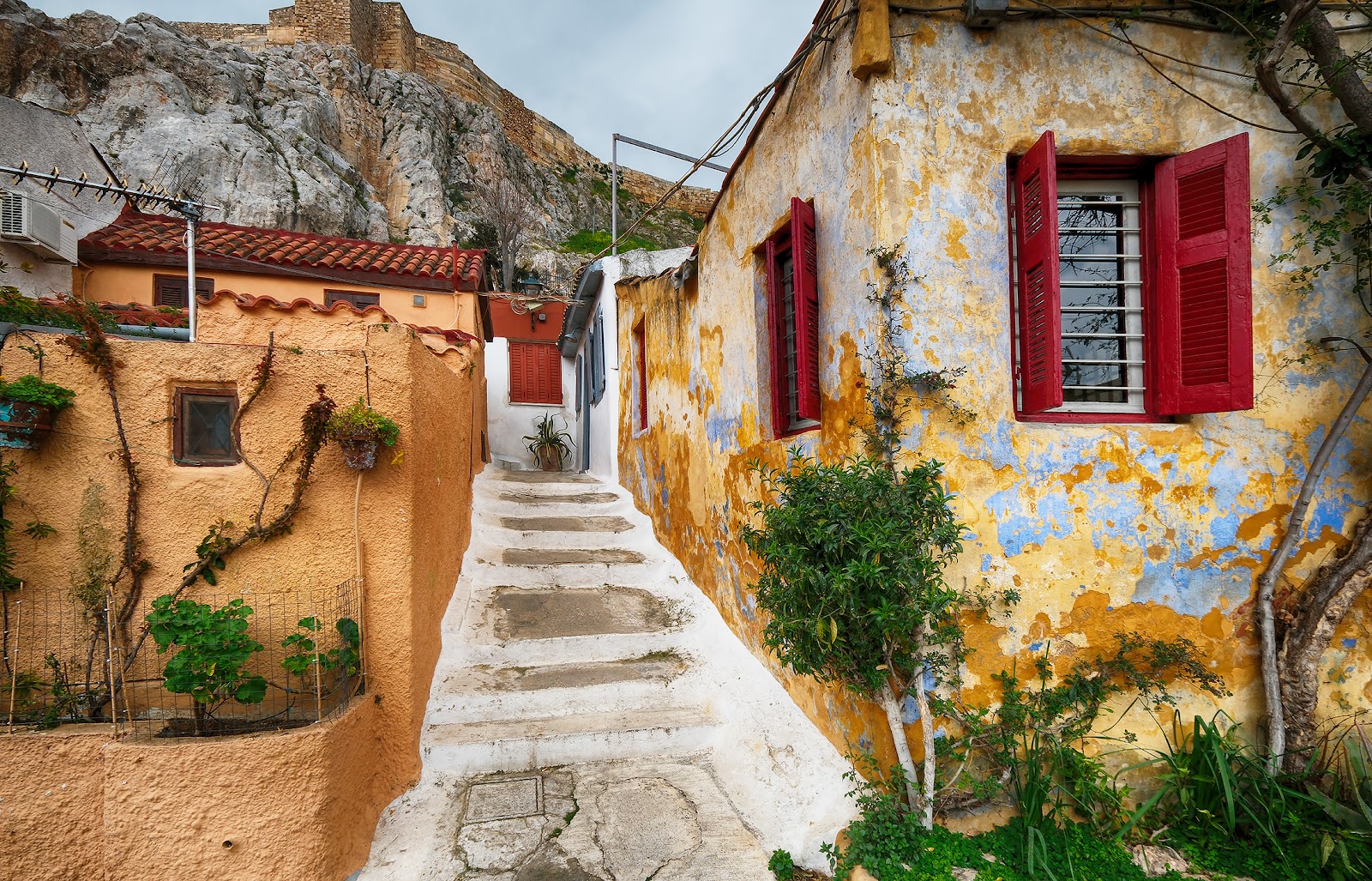
This is Anafiotika, and you have just walked out of Athens into an island. Whitewashed cubes with flat roofs, blue and red doors, pots of geraniums on the steps. Lanes so narrow you can touch both walls, cats asleep on the parapets, washing hung out over your head. Behind the top row of houses the rock of the Acropolis goes straight up.
The nearest place that looks anything like this is a boat ride away, and everything you can see was put up in the dark.
When Athens became the capital in the eighteen thirties, the new state needed a palace, ministries and a city. Which meant it needed people who could actually cut and lay stone. The island of Anafi is a rock in the far south-east Cyclades with a few hundred people on it. It also had a reputation across the Aegean for producing the best masons in Greece. So Athens sent for them, and they came with their families, along with builders from the other islands.
Nobody housed them. There was no accommodation and no plan for any, just a con
struction site the size of a city and a workforce sleeping rough on the slope.
The masons solved it themselves, using a rule left over from the Ottoman administration that was still in force. A house that went up between sunset and sunrise, with its roof finished before morning, could not simply be pulled down. It had to go through a process. A process takes time, and time was all they needed.
T