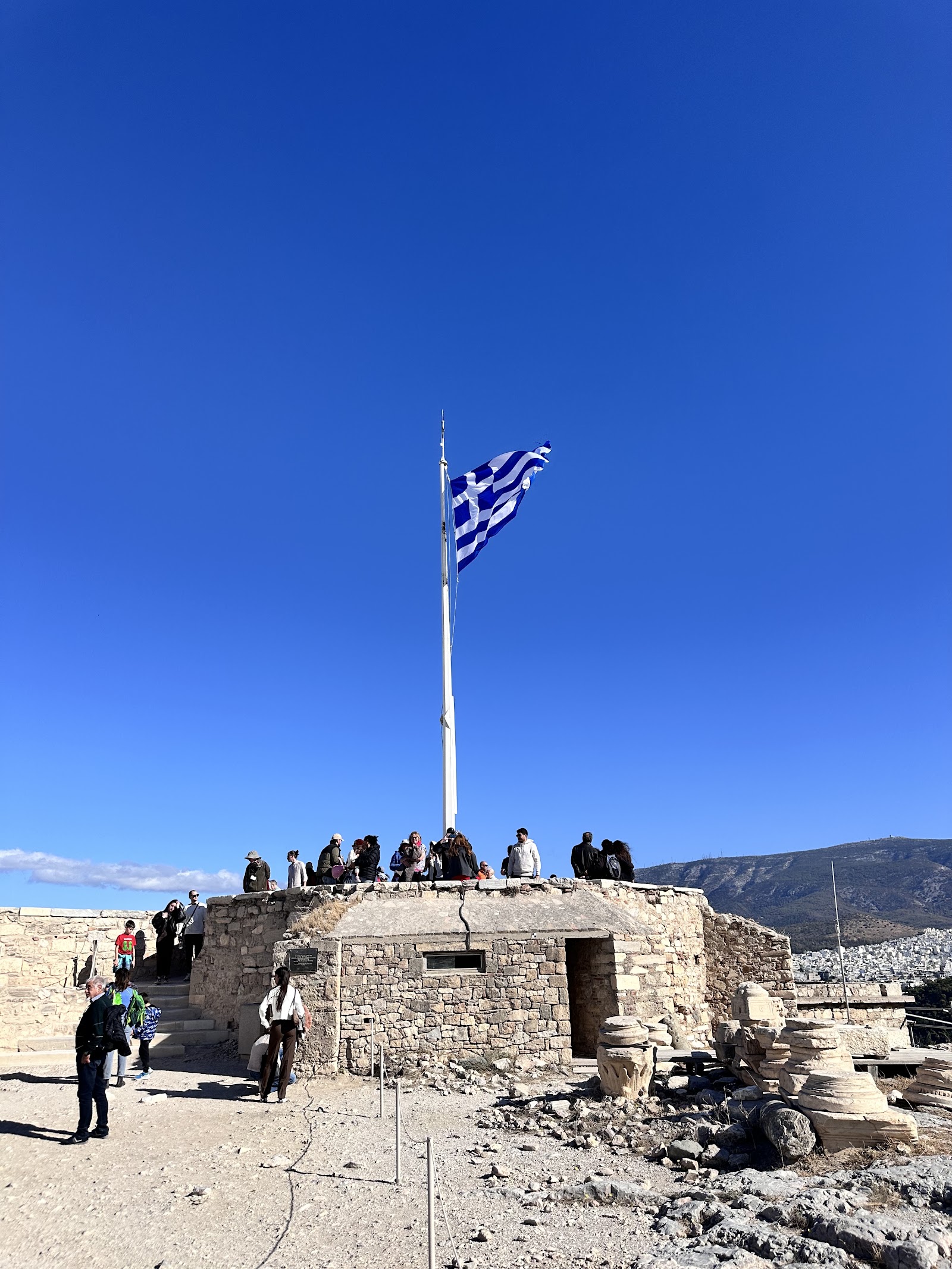
Out at the far eastern tip of the rock there's a viewing platform with a big Greek flag on a tall pole and the whole city spread out below it. That flagpole is where, on the twenty-seventh of April, nineteen forty-one, German soldiers raised the swastika over Athens.
Greece had fought off an Italian invasion for months, until the German army came south and broke through. German troops entered Athens that April morning. One of the first things they did was come up here and hoist the Nazi flag, high enough that people could see it from their windows all over the city.
Manolis Glezos was eighteen. Apostolos Santas was nineteen, a law student. They were friends, and they decided the flag was coming down.
They didn't just run up the hill. They went to the National Library and read up on the Acropolis: old excavation reports, descriptions of the caves and passages that run through the rock. They found what they needed, a cave on the north slope, near the Erechtheion, with a way up through
the rock to the top.
On the night of May thirtieth, they slipped past the wire, crawled up through the cave, and came out onto the Acropolis in the dark, with German sentries on the hill. They made their way here, to the flagpole, worked the flag loose, and pulled it down. They kept a piece of it, and got rid of the rest.
In the morning, Athens looked up at the Acropolis, and the swastika was g