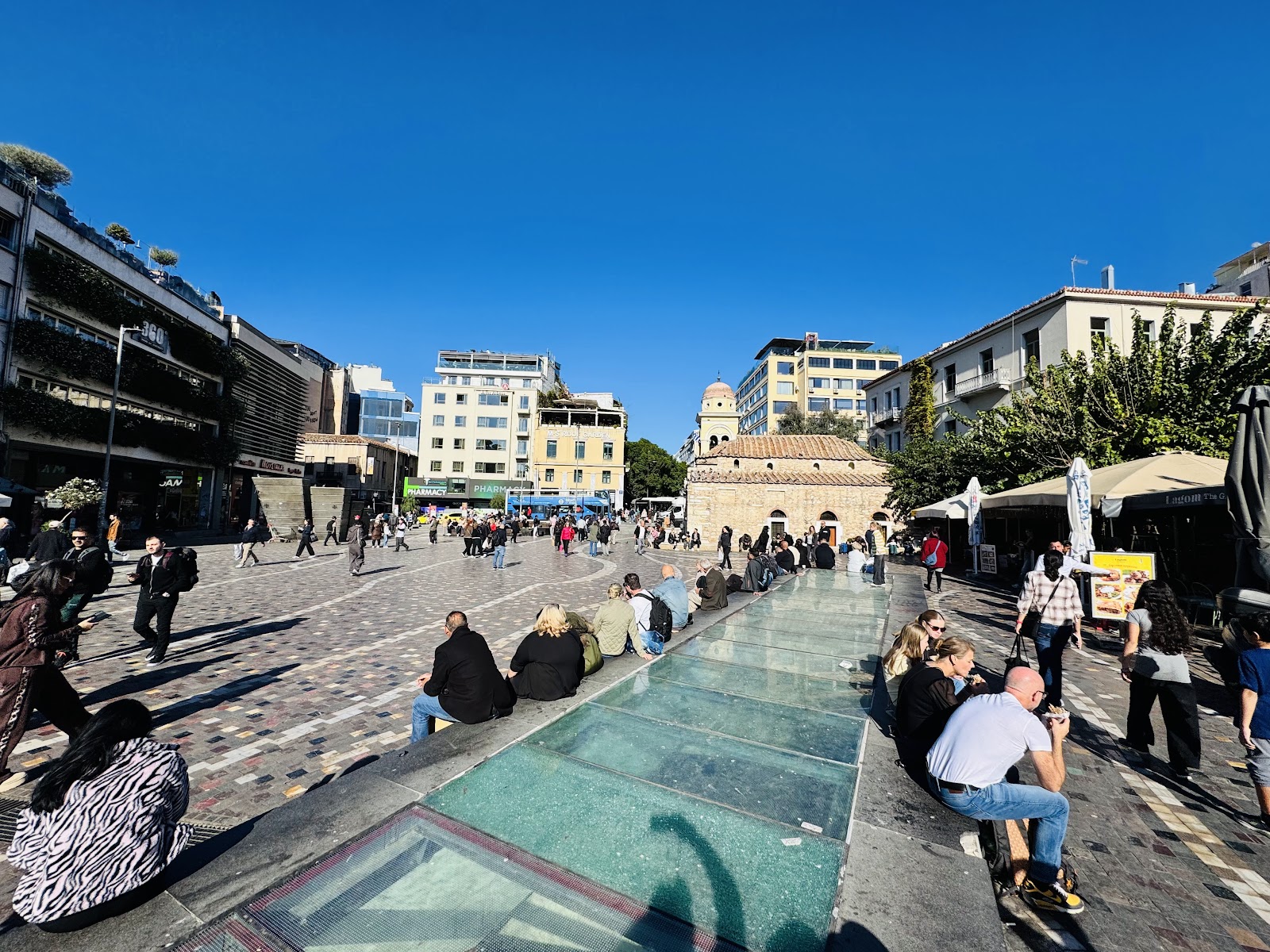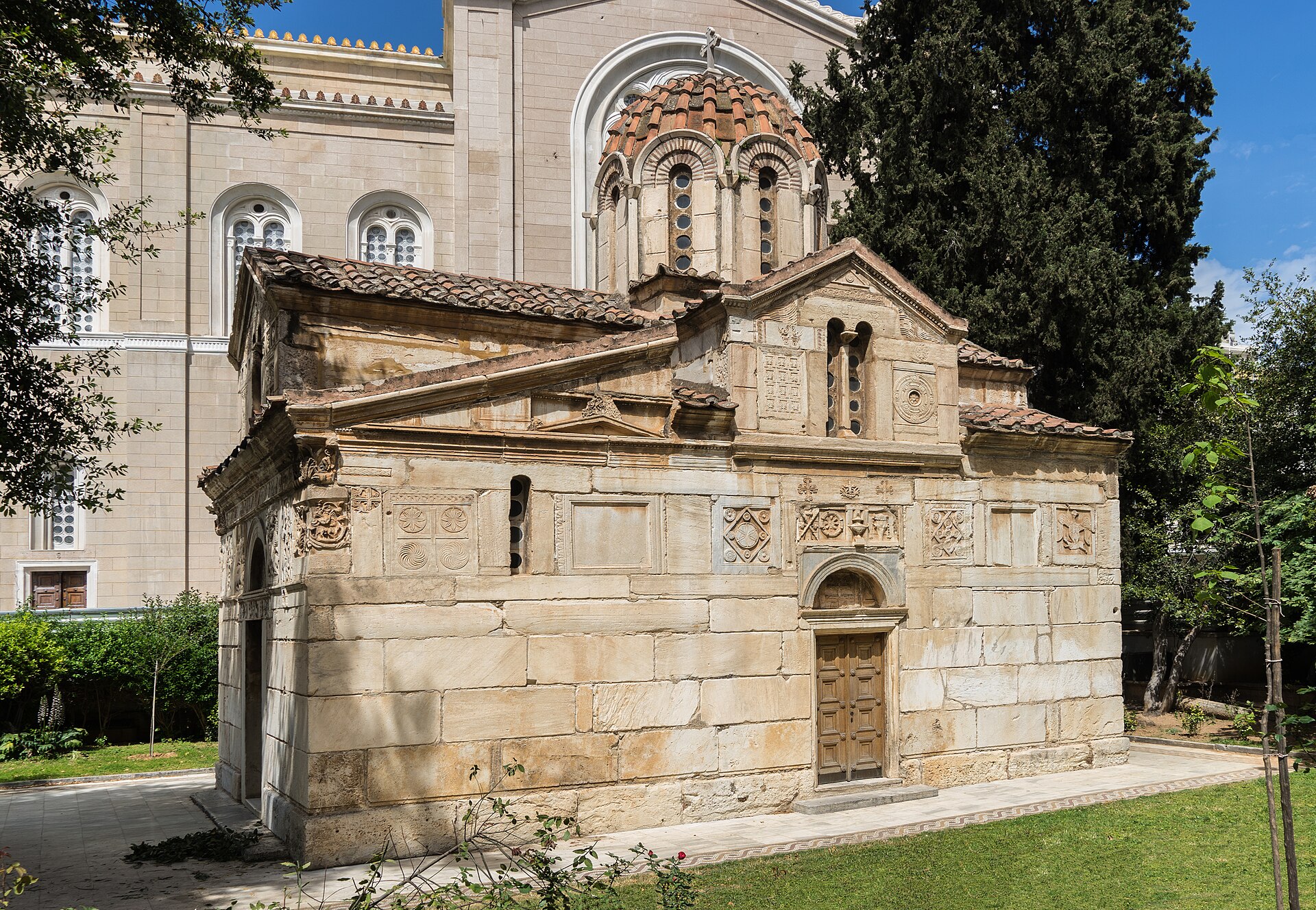
There are two churches in front of you and you want the small one. The big pale cathedral is the Metropolis, and the little grey box crouched beside it looks like it was assembled out of a crate of spare parts. Get closer, because it was. The wall is made of carvings — dozens of them, all different, all older than the building, stacked up like a shelf of things somebody couldn't bear to throw out.
There are about ninety of them. Eagles, lions, sphinxes, wreaths, crosses, panels lifted off Roman tombs — every one cut for some other building, salvaged, and laid up into this one. The whole church is only about twelve metres long. The cathedral behind it could swallow it whole.
And over the main door there's a long horizontal strip that's older and stranger than the rest. It's a calendar. A pagan Athenian calendar, running through the months of the ancient year with the festivals marked and the signs of the zodiac carved along it. When this became a church, nobody took it down. Somebody
went along the strip and cut small crosses into it, in the gaps, and left it exactly where it was. The oldest thing on this church is a list of the festivals of the old gods, sitting over its front door where anyone can read it. The crosses sit in it like an editor's corrections.
Nobody can even agree how old it is. Serious proposed dates run from the sixth century to the fifteenth. The wall is t