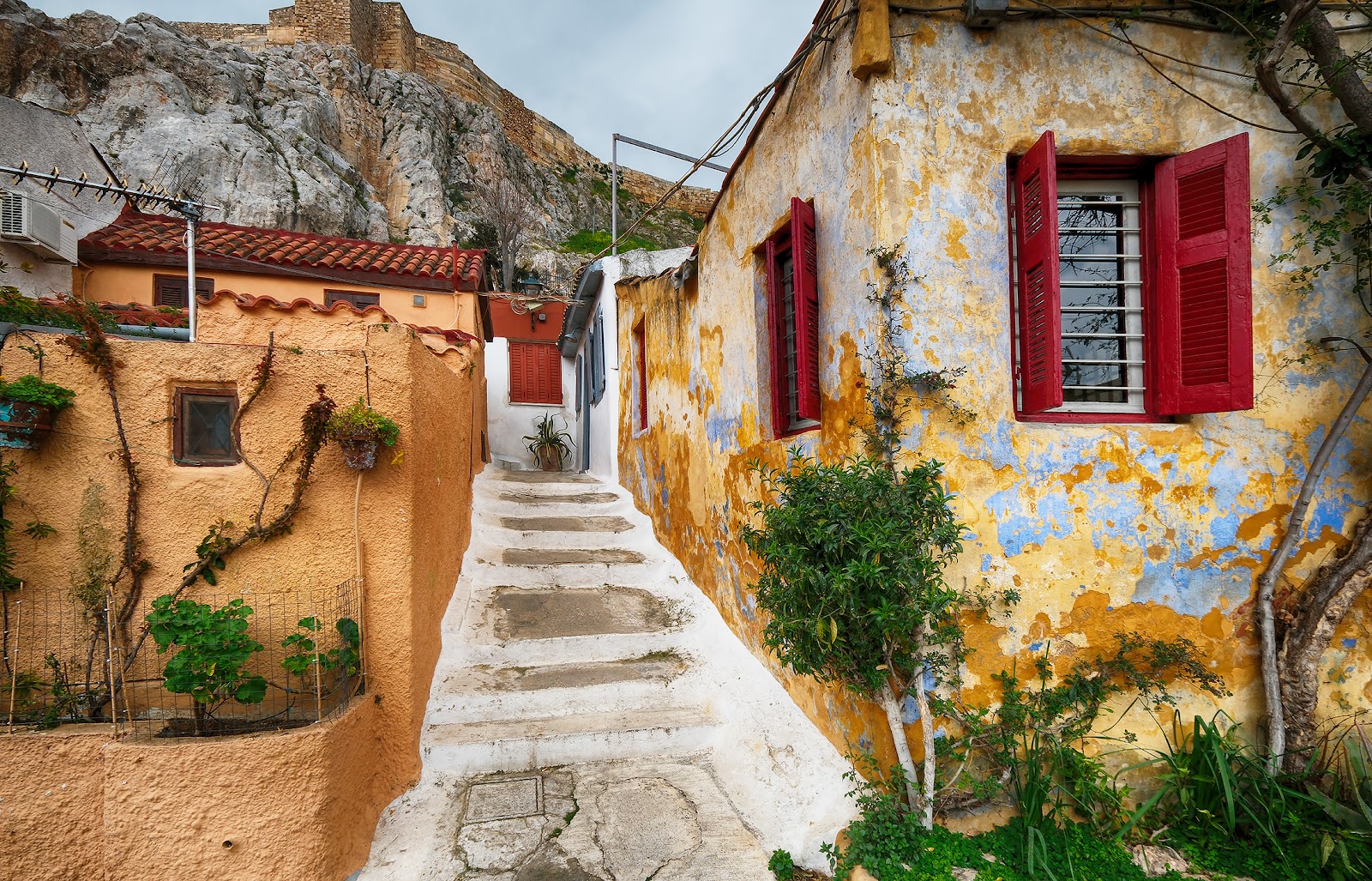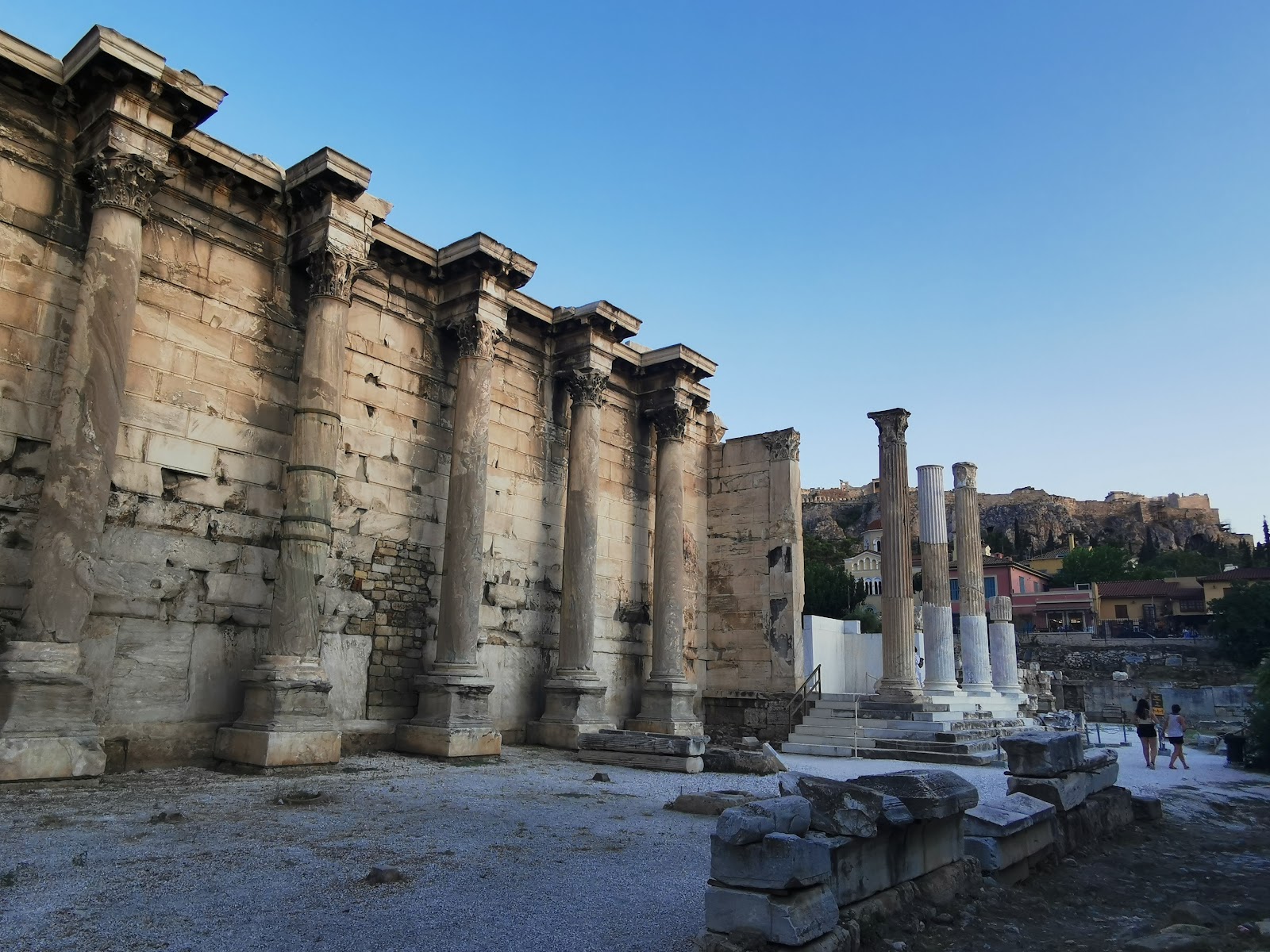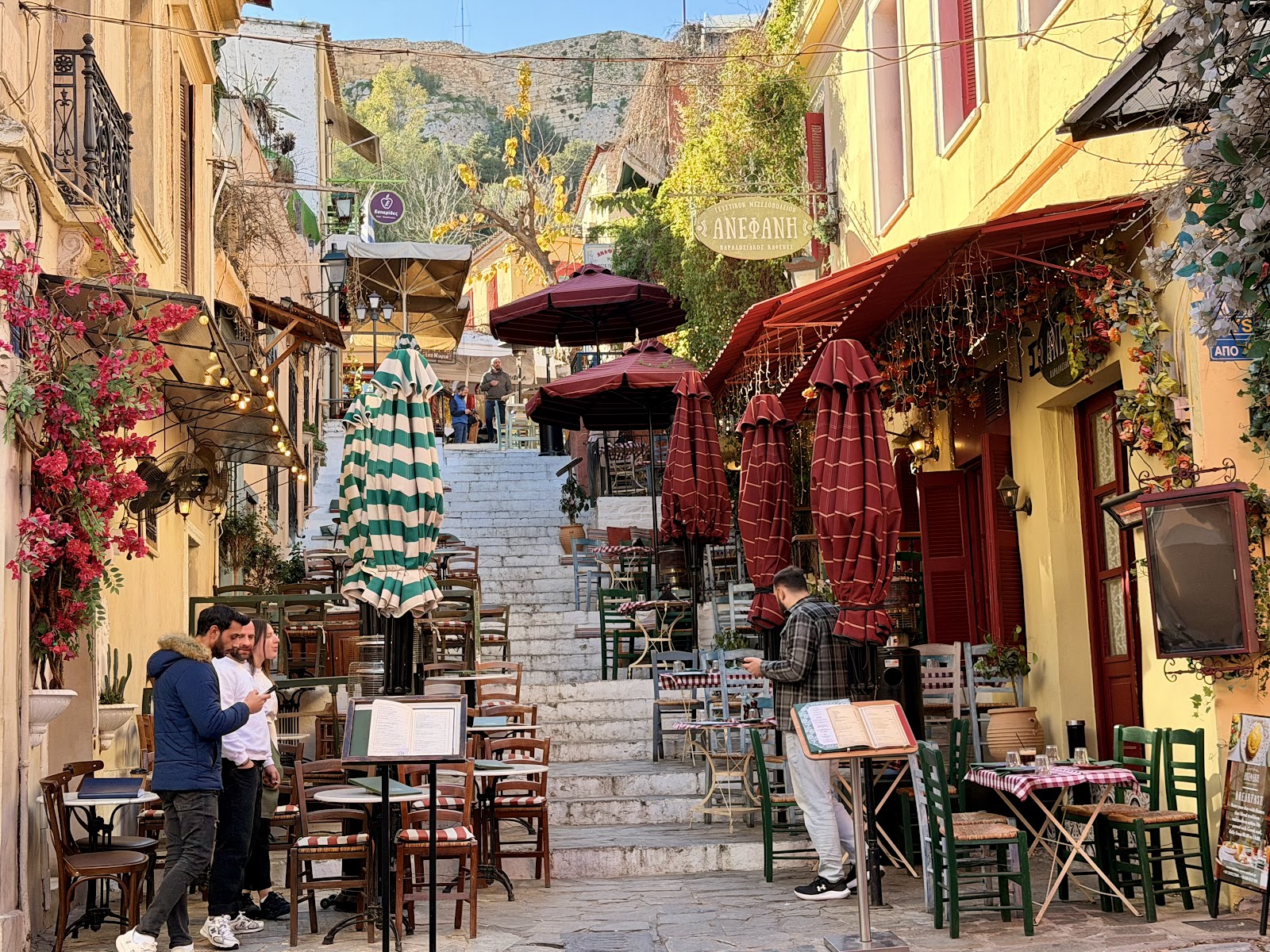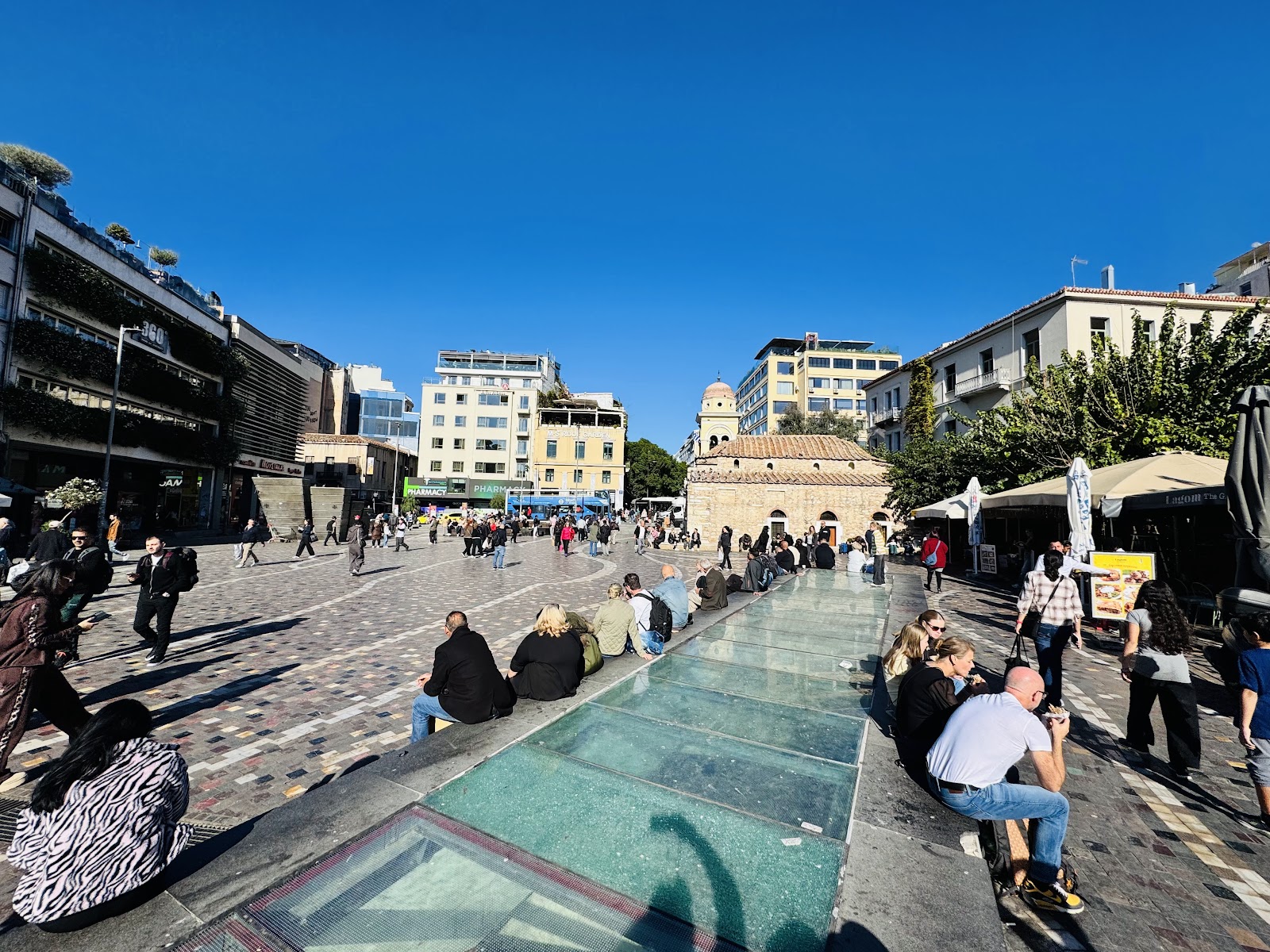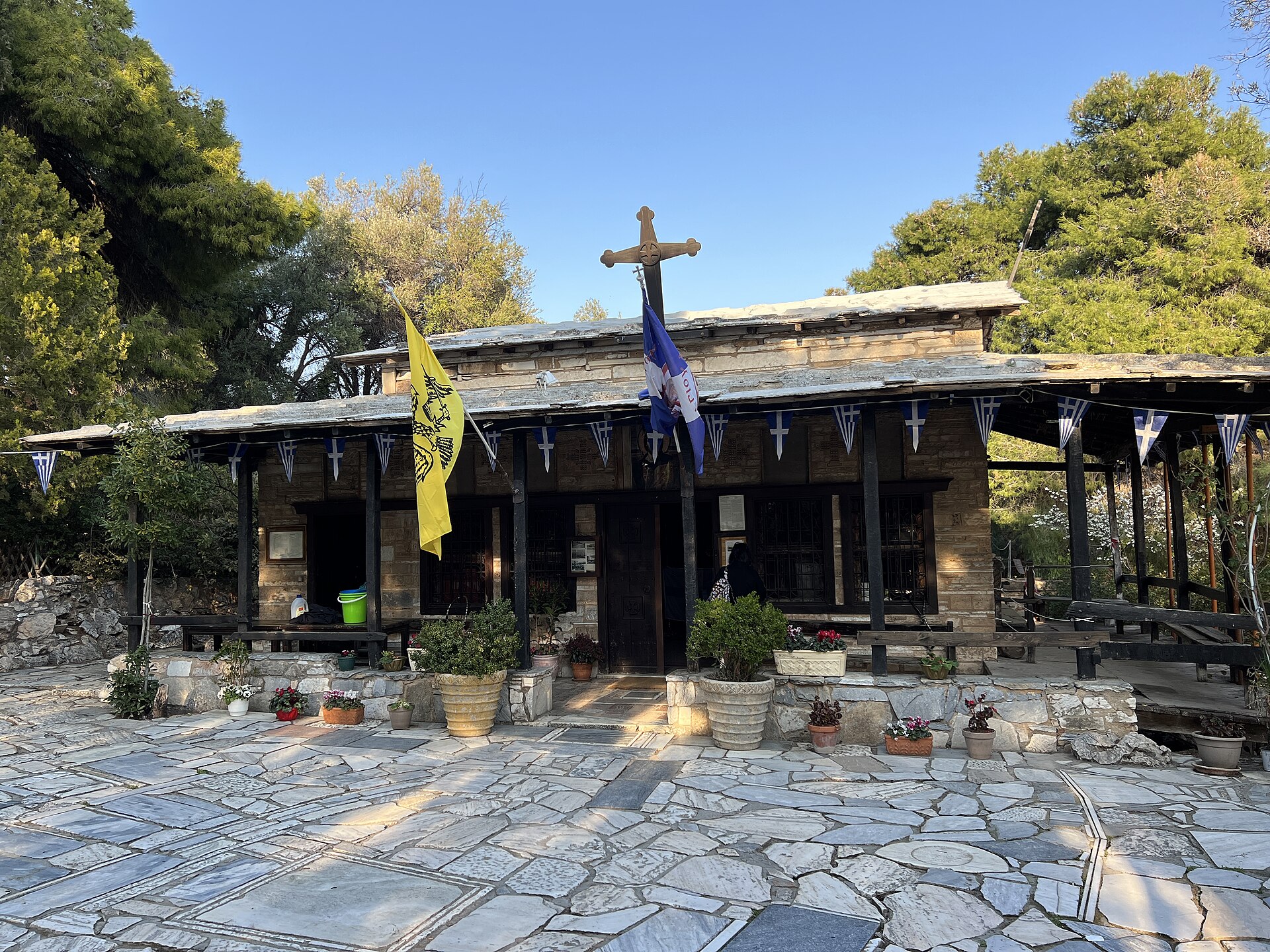
This winding stone path, and the little church and shelter along it, are the work of an architect named Dimitris Pikionis, and the path is worth looking down at, because almost nobody does. Look at the paving under your feet. No two stones are the same shape. Slabs of marble, rough chunks of rock, pieces of broken tile, a scrap of carved molding here and there. It's all fitted together like a mosaic made by somebody who refused to own a ruler.
That's deliberate, and nearly every piece came from somewhere else.
In the nineteen fifties, Athens was tearing itself down. The city was growing fast. The elegant nineteenth-century houses from its first years as a capital, with their marble doorsteps and iron balconies and painted ceilings, were coming down street after street. Pikionis hated it. He was a professor of architecture and a painter, a gentle, intense man who believed a city should feel like a landscape. He had to watch his own Athens go out in dump trucks.
The houses weren't bei
ng knocked down by the state. They were going one plot at a time, through a deal Athenians made with builders. You gave a builder your old house and your land, and he knocked it down, put up an apartment block, and paid you in apartments. It made a lot of families comfortable, and it erased most of the city Pikionis had grown up in within a couple of decades.
Then, in nineteen fifty-four, the gov