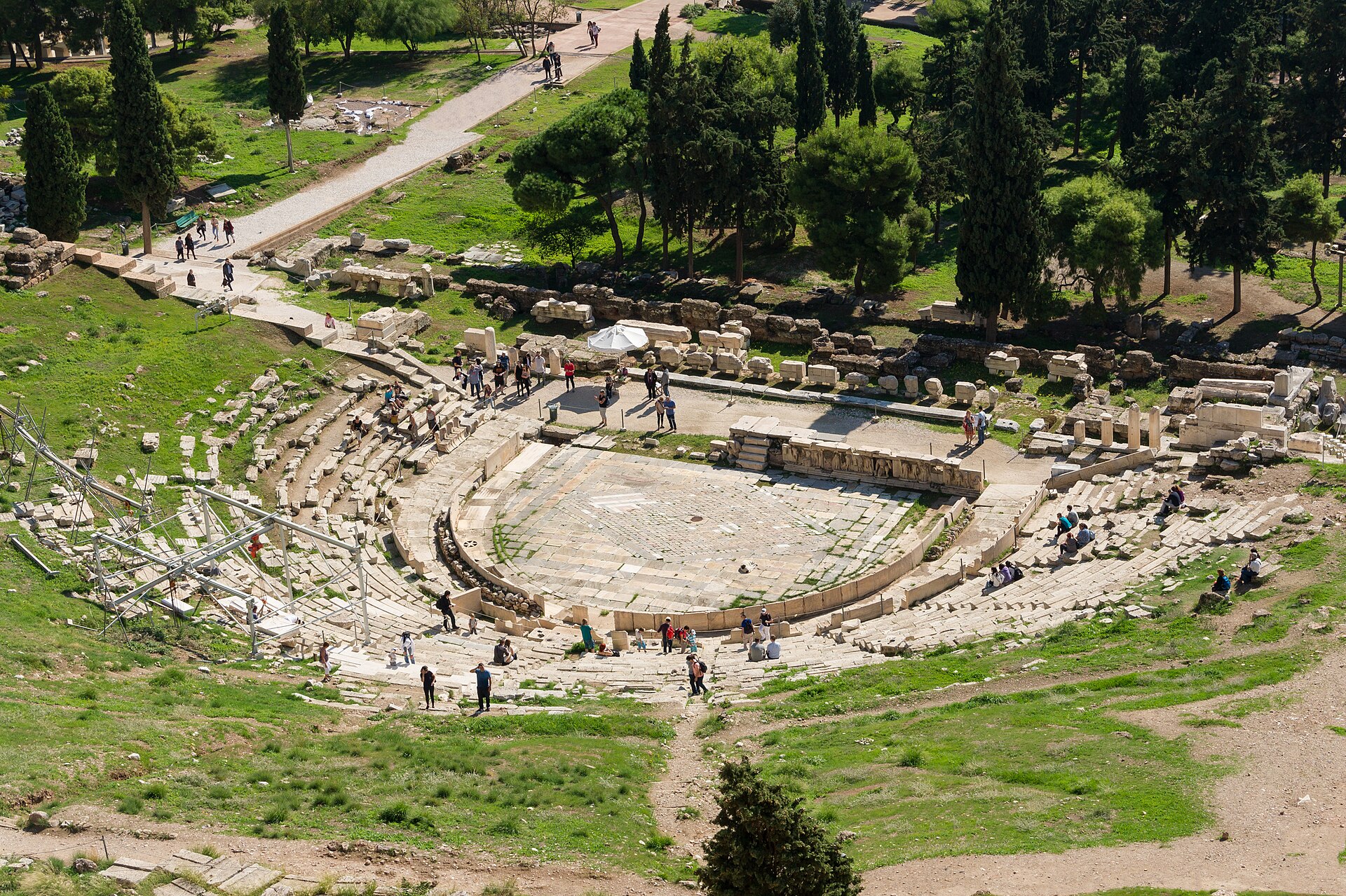
Below the south side of the Acropolis, the half-circle of stone seats climbing the slope is the Theatre of Dionysus. Look at the very front row. Instead of plain benches there's a row of carved marble armchairs, and in the middle, the grandest of them all, a throne with lion's paws for feet. That was the best seat in the house, and it was reserved for the priest of Dionysus, the god of wine and of theater.
This is where theater as we know it got going. The great tragedies, the plays of Aeschylus and Sophocles and Euripides, premiered here at the city's spring festival for Dionysus, in front of audiences that ran into the thousands. Comedy premiered here too, and that's where this gets good.
Going to the theater here was a citizen's right, almost a duty. The festival ran for days, with plays from dawn until the light went, and the stone seats, rebuilt in the three hundreds B.C., held as many as seventeen thousand people. Athens even set up a public fund so that poor citizens could be
given the price of a ticket. A citizen who couldn't afford to see the plays was missing part of his education.
The comedies of Aristophanes were a little like a late-night sketch show, only meaner. He put real, living, famous Athenians on stage, by name, and made fun of them while they sat in the audience watching. Generals, politicians, poets, nobody was safe. The most powerful politician in Ath