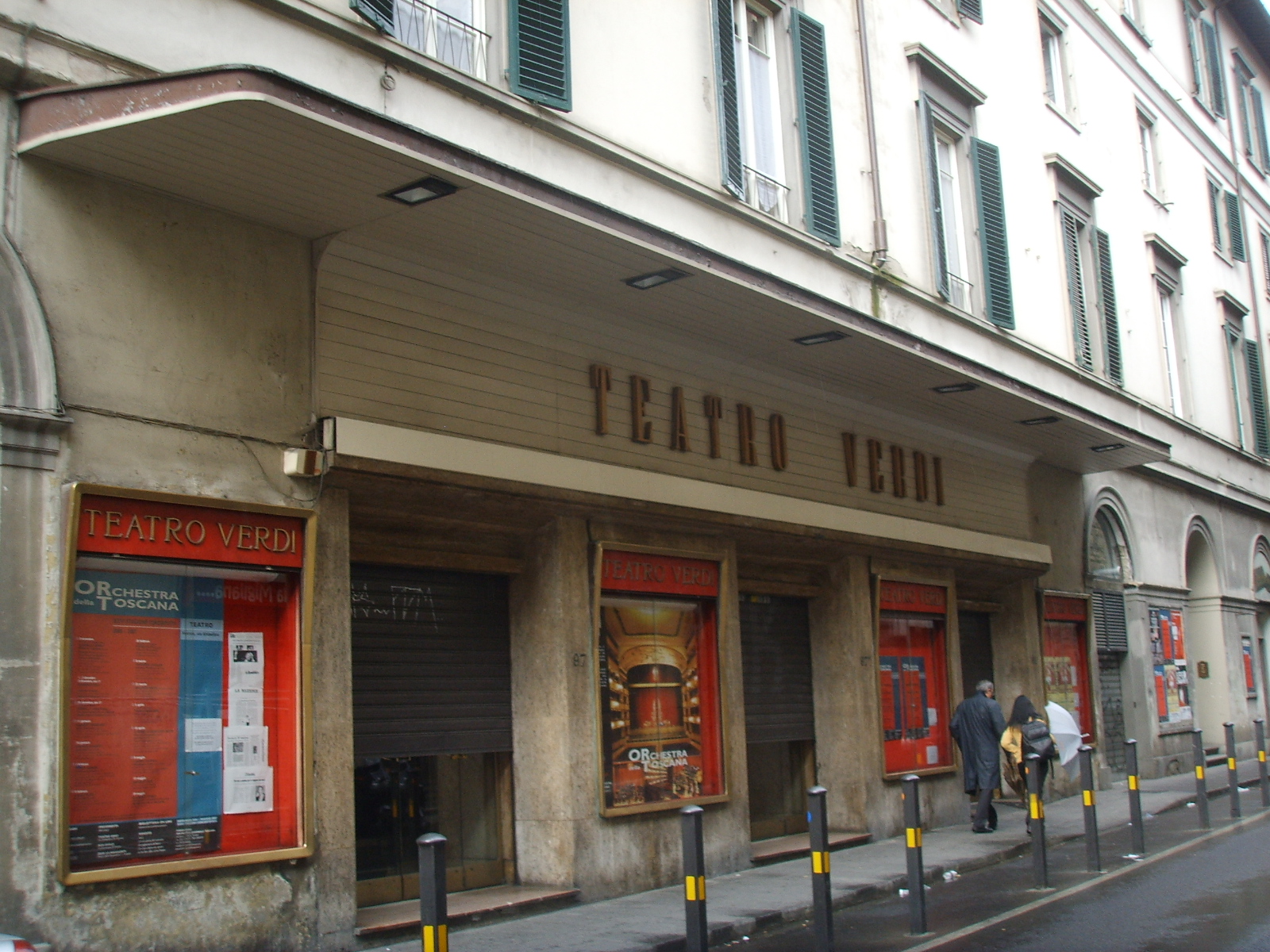
You're standing in front of the Teatro Verdi — a working opera house, where Florence stages Verdi and Puccini, tragedies sung by people in beautiful costumes. Under your feet, and under those foundations, are the bones of something much older and much sadder. This was the site of Le Stinche, Florence's central prison, and it locked people up on this ground for more than five hundred years.
Le Stinche went up around thirteen hundred, which makes it one of the earliest buildings in Europe designed from scratch to be a prison — not a repurposed tower or a castle dungeon, but a purpose-built jail, with wards and walls and a front gate. And it got its strange name from its very first inmates. Florence had captured a rival castle out in the countryside called Le Stinche, and marched its defeated defenders back here to be locked up together. The prison took the name of the fortress those first prisoners came from. It was named, in effect, after the hometown of the people it caged.
Florence,
in other words, invented one of the first true prisons in Europe and then ran it for half a millennium almost without a break — through the whole Renaissance, through the rise and fall of the Medici dukes, through plagues and floods and revolutions. While Michelangelo carved and the Medici schemed a few streets from here, this building was always right where you're standing, quietly full, keeping