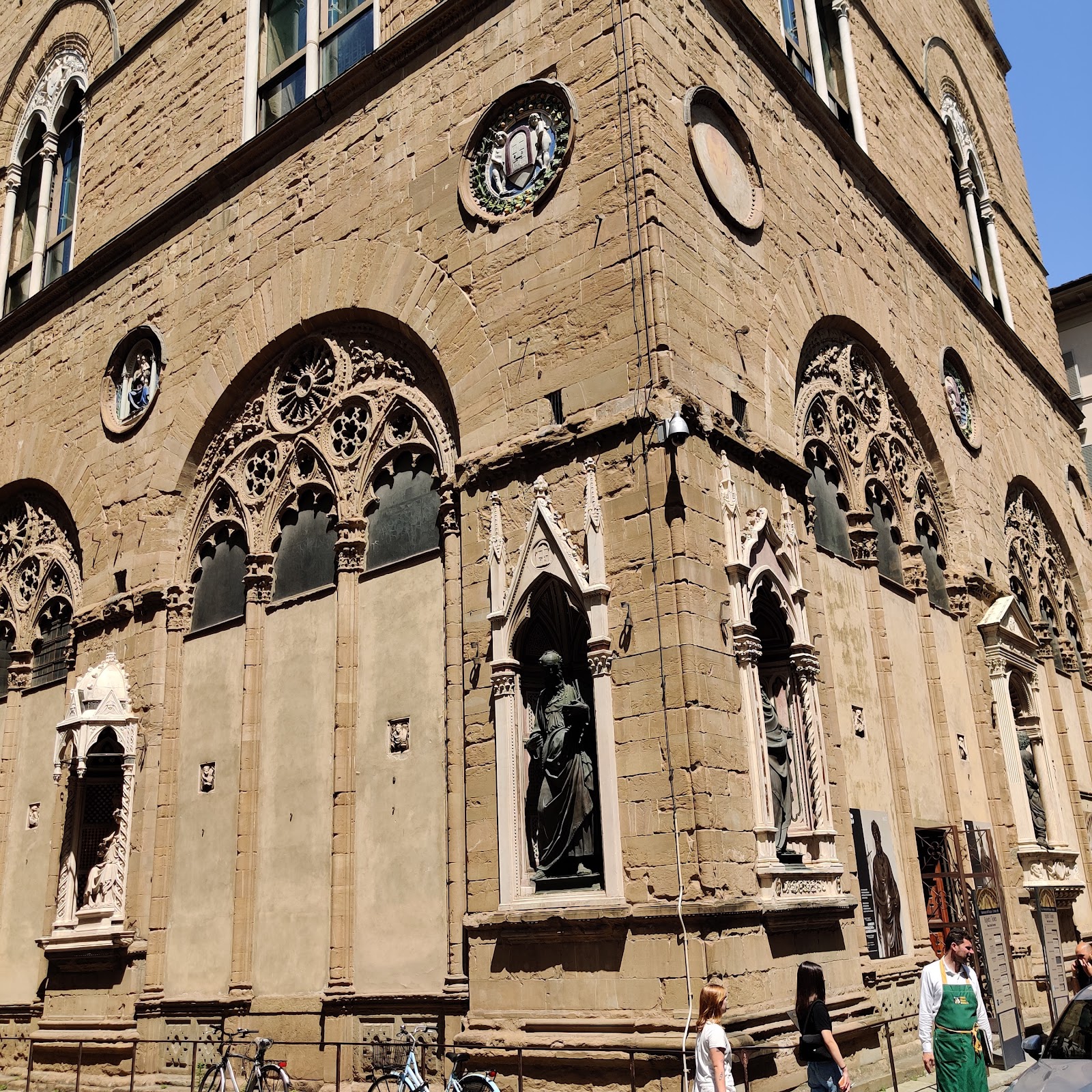
That tall, square, blank-walled building ahead of you looks like a fortress that got lost on its way to becoming a church. This is Orsanmichele, and it genuinely could not decide what it wanted to be. It began as an open grain market — arches, no walls, sacks of wheat. Then a painting of the Madonna on one of the pillars got a reputation for working miracles, worshippers crowded in among the grain, and the city eventually gave up, bricked in the arches, and turned its wheat exchange into a church — while still keeping tons of emergency grain in the floors overhead.
Go inside and look at the pillars, and you can still find the chutes. Grain was poured down from the granary through channels built into the columns, so they could refill sacks on the market floor without hauling everything down the stairs. A church with a wheat-delivery system plumbed into its bones, and a siege-proof larder on top. Nobody designed this. It just accumulated.
But the reason this building matters to a walk
about making things is on the OUTSIDE. Look at the statues standing in the niches around the walls. Florence's guilds — the wool weavers, the bankers, the armorers, the stonemasons, the silk men — were each assigned a niche and told to fill it with a statue of their patron saint. And because these guilds were the richest, proudest, most competitive organizations in the city, a religious chore beca