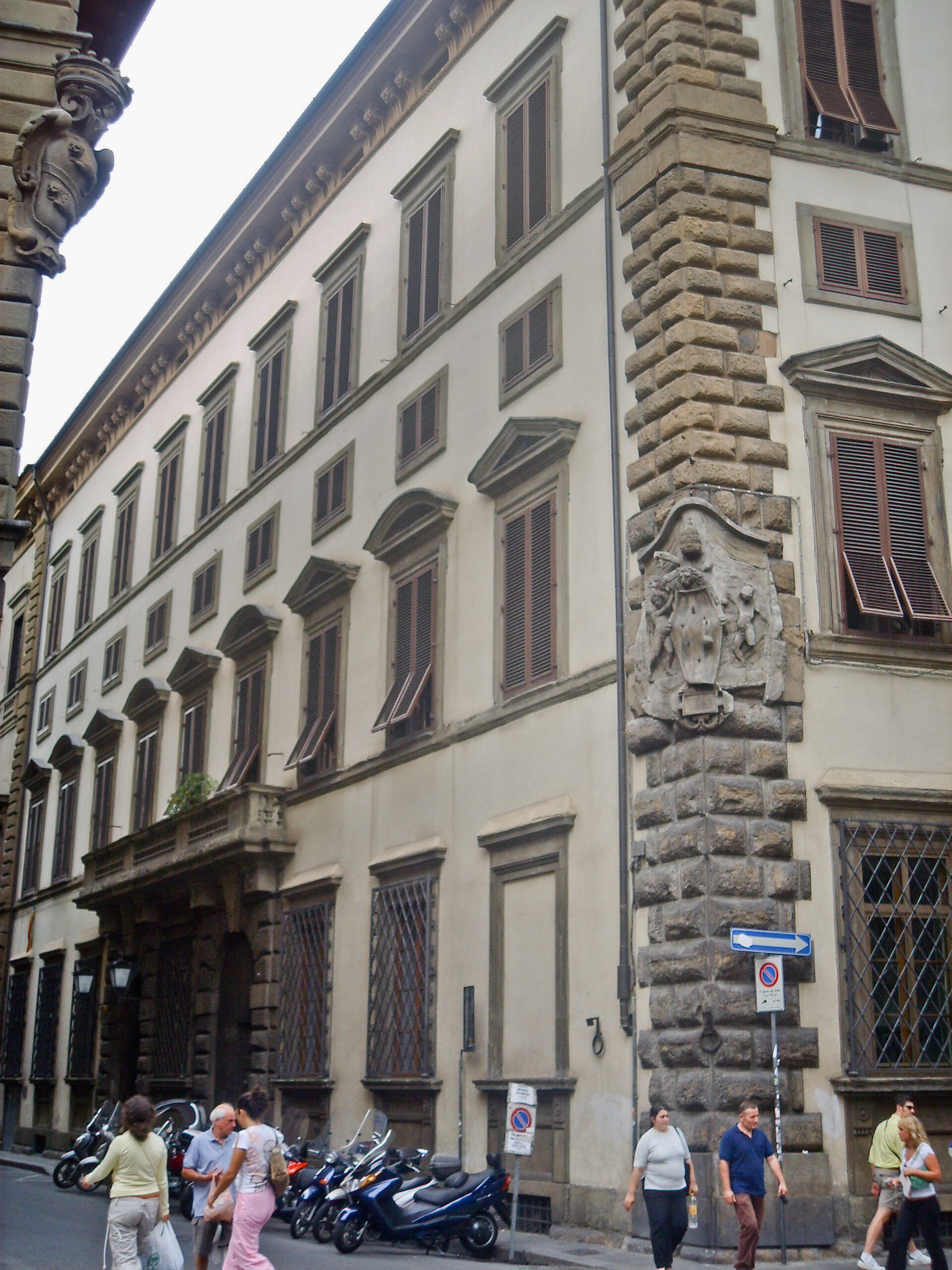
The long, dignified stone front running down this street belongs to the Palazzo Pucci — and the Pucci family has been standing on this exact spot for something like six hundred years. That's the part people miss about the man I want to tell you about. When the rest of Florence's twentieth-century fashion was built by shoemakers and shop porters clawing their way up, this one came pre-installed. Emilio Pucci was a genuine marchese — a marquis — from one of the oldest families in the city, printing his silk out of the palace his ancestors had owned since the Middle Ages.
And he did not start out wanting to be a designer at all. He started out fast. At seventeen he was on the Italian Olympic ski team. He flew fighter aircraft for the Italian air force. He was, by every account, an aristocrat with too much energy and a physics degree, and then in nineteen forty-seven he did something small that changed his whole life by accident. He designed a sleek, stretchy ski outfit — partly for himse
lf, partly for a friend — and a photographer shot it on a mountain in Switzerland for Harper's Bazaar. An American editor saw the picture and asked who made the clothes. The skiing marquis, it turned out.
So he started a fashion house, up here, in the family palace. And he found the thing he'd be remembered for. Color. Prints — swirling, electric, geometric silk in shades that looked like they'd