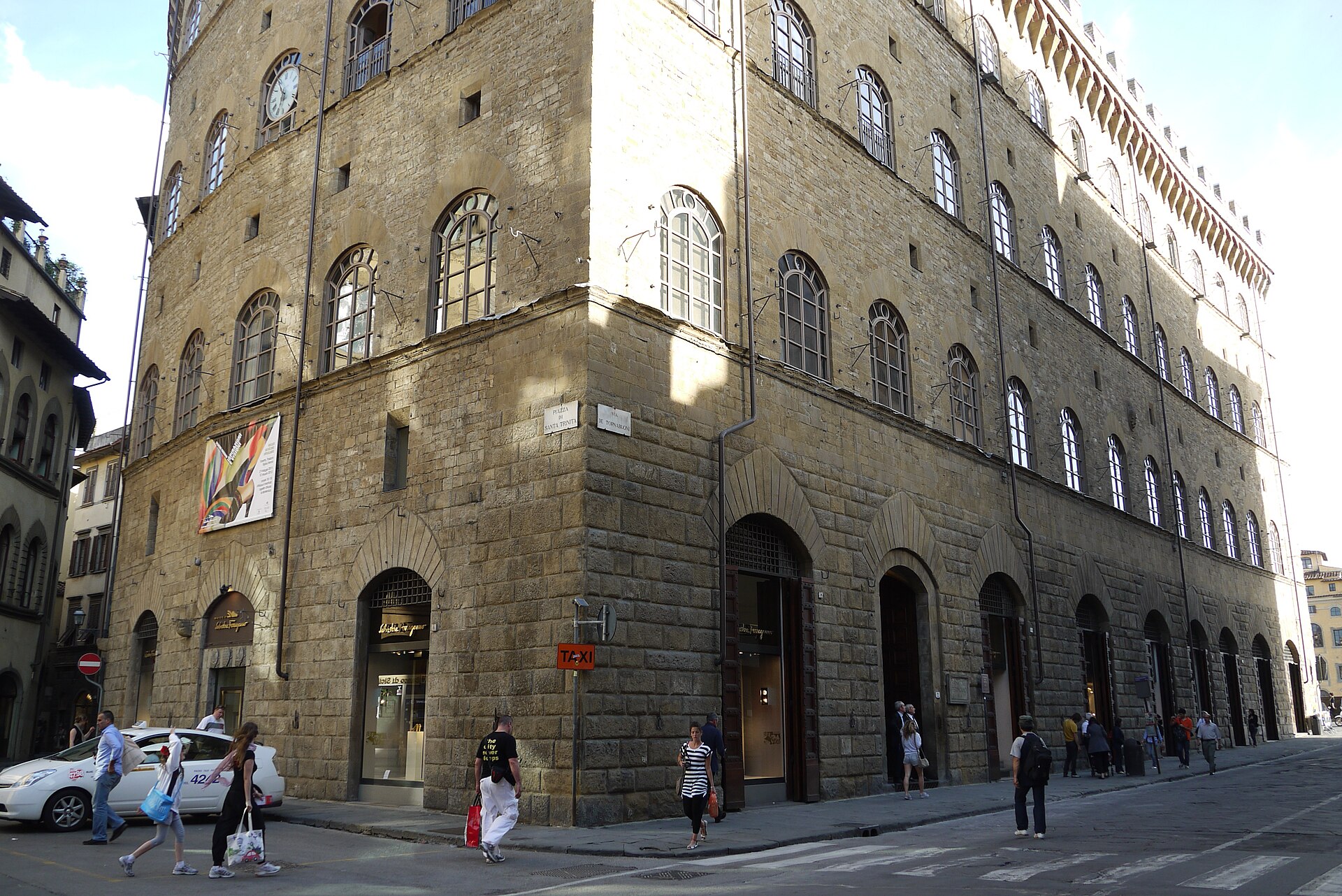
You've reached Via de' Tornabuoni, and you can feel the change in the air — this is Florence's luxury street, the one every fashion house wanted an address on, the Renaissance's answer to a row of flagship stores. And that fortress of a building on the corner, thirteenth-century stone with battlements up top, is the Palazzo Spini Feroni. It has been the home of Salvatore Ferragamo since the nineteen thirties. Shoes, in a medieval castle. There's a museum down in the basement.
The man who bought this castle was born in a poor village near Naples, one of fourteen children, and he made his first pair of shoes at nine years old — for his sisters, so they'd have something for their confirmation. Then he did what millions of poor southern Italians did in those years. He got on a boat to America. And in nineteen twenty-three, he landed in the one place on earth about to need a genius shoemaker more than anywhere else. Hollywood.
He opened a shop called the Hollywood Boot Shop, and the studi
os found him fast, because he could make a shoe that an actress could actually stand in for a fourteen-hour shoot and still smile. They called him the shoemaker to the stars, and he earned it — but he did something with the fame that tells you exactly who he was. He enrolled at the University of Southern California and studied anatomy. A grown, successful, famous shoemaker went back to school to l