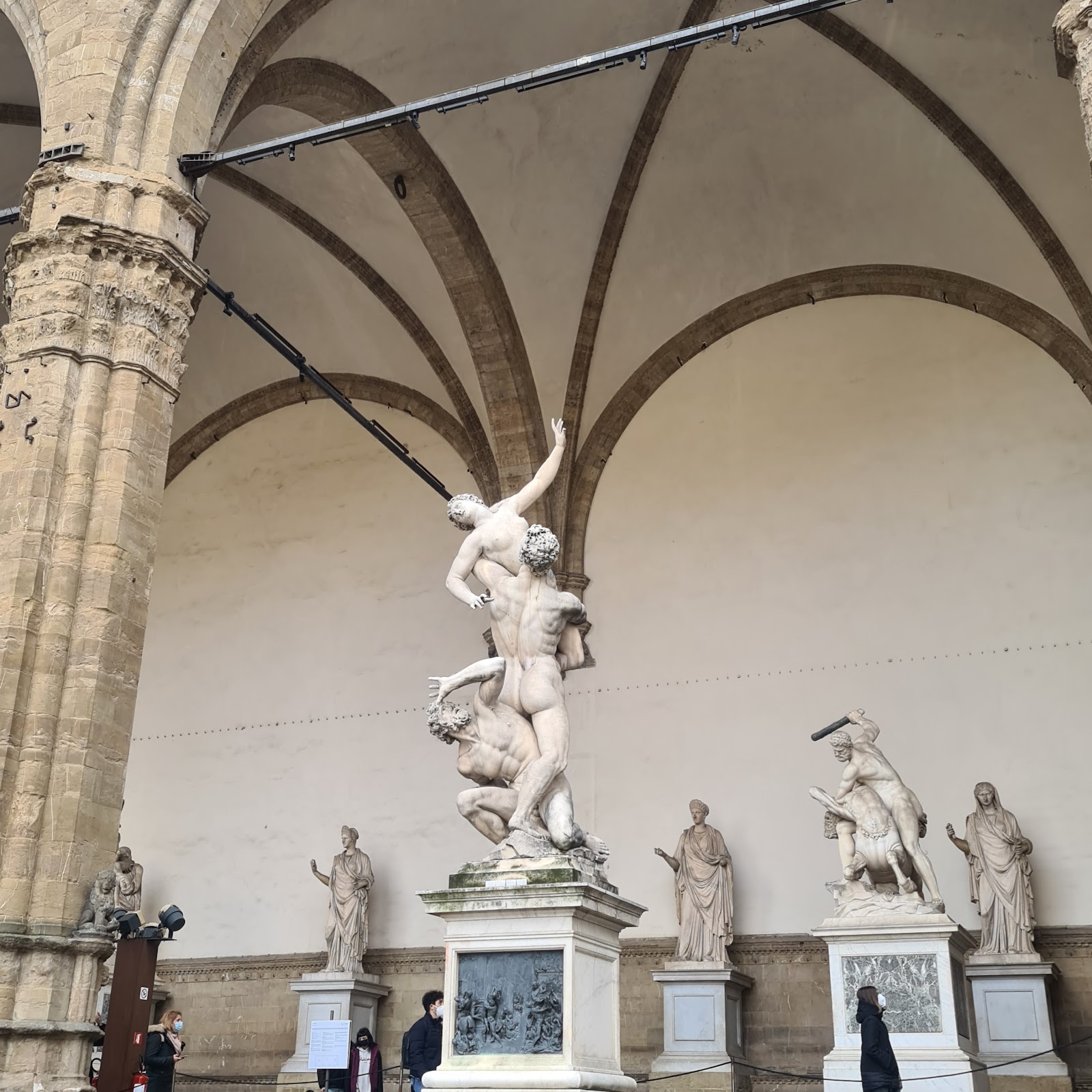
You've walked into the Piazza della Signoria — the main square, the political heart of Florence for seven hundred years, and, as a bonus, one of the finest sculpture galleries in the world, free of charge and open to the sky. Look around. There's a David at the far end, by the palace door. There's a huge white marble sea god in a fountain. And under that grand arched porch off to the side, a small crowd of statues stands around like they're waiting for a bus.
That porch is the Loggia dei Lanzi, and the statues in it are masterpieces just... standing there, in the weather, for anyone to walk up to. The bronze one — a nude man holding up a severed head — is Cellini's Perseus. The sculptor cast it in one nerve-racking pour and set it right here on purpose, facing the city's other famous statues, as a kind of dare. Mine moves. Mine has drama. Beat that.
The big pale sea god in the fountain is Neptune, and Florence has never forgiven him. When it was unveiled, the city loathed it so thoro
ughly they nicknamed it il Biancone — the big white lump — and passed around a rhyme about what beautiful marble the sculptor had ruined. It got bad enough that the city started fining people caught insulting the fountain in public. Centuries later, Florentines still call it the big white lump. The fine did not work.
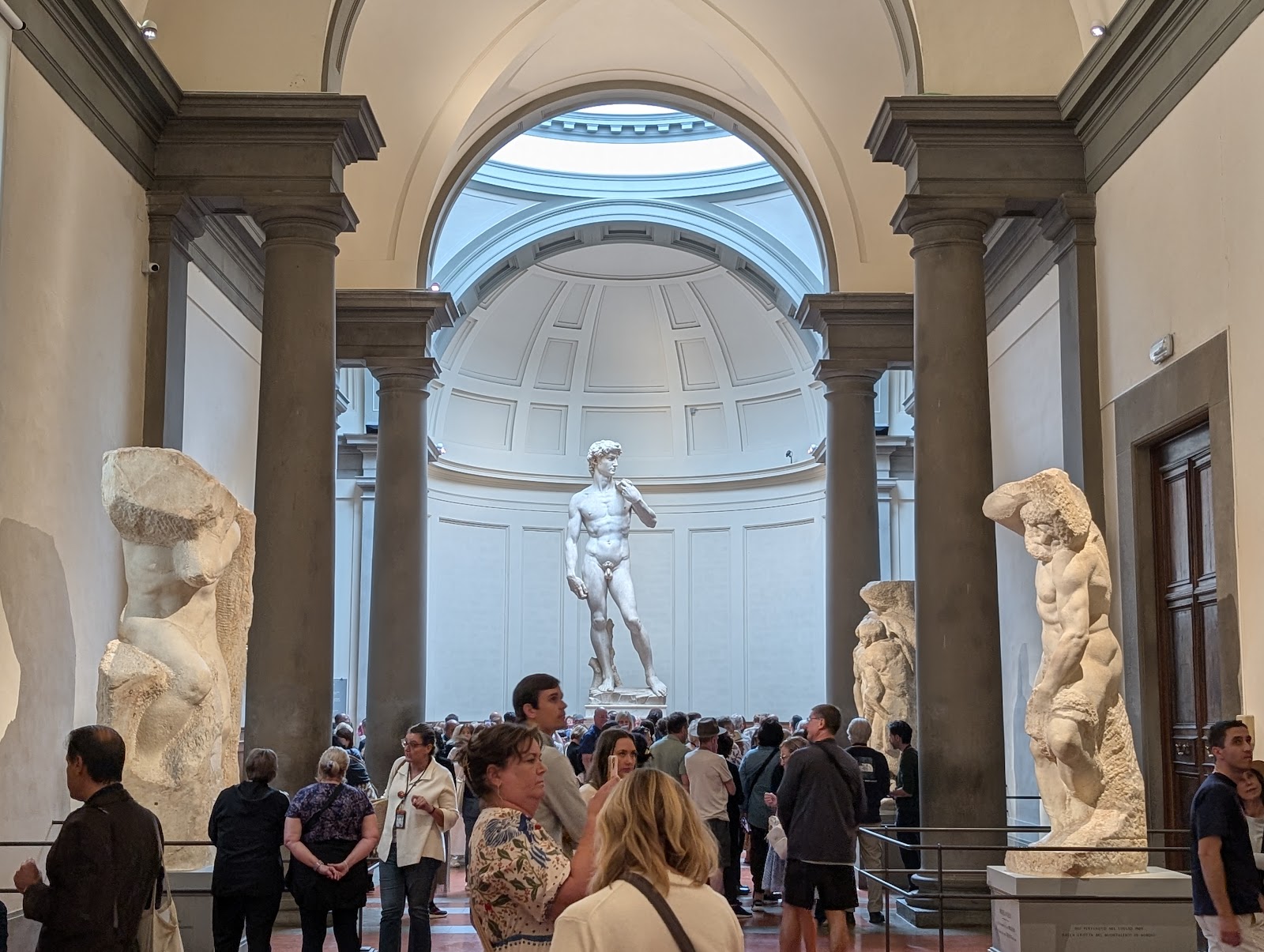
The David by the palace door is a copy. The real one stood on that exact spot fo