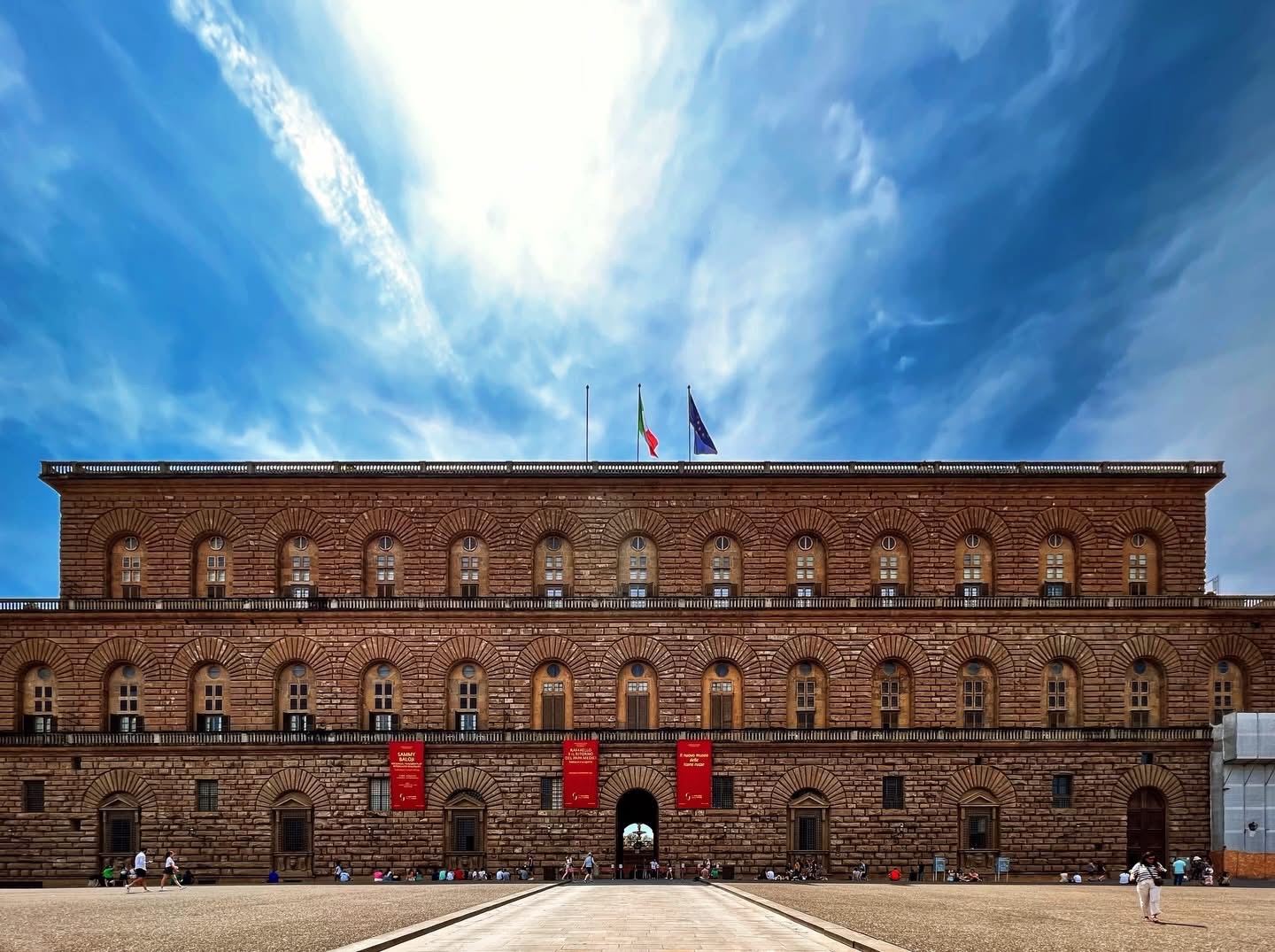
You've crossed the river, and the thing filling the square in front of you looks less like a building than a cliff face with windows. The Pitti Palace. Enormous, rusticated, deliberately overwhelming. And the beautiful thing about it — the thing that makes it the perfect end to a Medici story — is that it was built out of pure spite. Against the Medici.
The man behind it was Luca Pitti, a wealthy Florentine who had spent his life in the shadow of that banking family and could not stand it. So in the fourteen sixties he set out to build a palace that would bury them — bigger, prouder, more magnificent than anything the Medici had. The tradition goes that he wanted the windows to be as large as the doorway of the Medici palace, and the inner courtyard vast enough to swallow a rival's entire house. This was a building designed as an insult, a monument meant to make one specific family feel small every time they looked across the river.
It did not go well for Luca. He gambled his fortune
and his standing on a plot against Lorenzo the Magnificent's father, the plot failed, and Luca Pitti was ruined. His enormous palace stalled out half-finished — a giant stone monument to a man who bet everything against the Medici and lost it all. It sat there for the better part of a century, unfinished, quietly humiliating.
And then the Medici bought it. Of course they did. In fifteen fifty, E