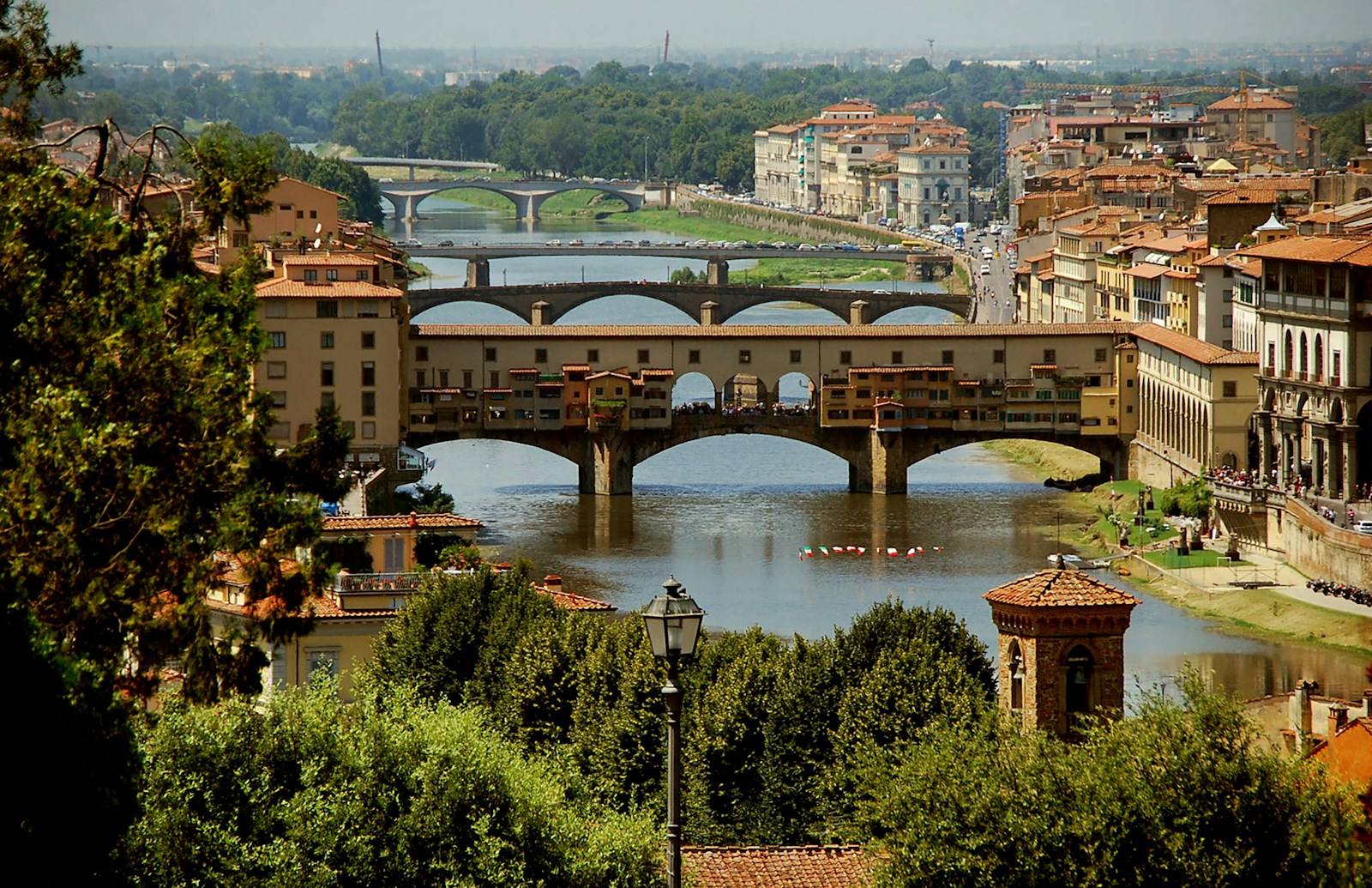
The bridge in front of you is wearing shops — the Ponte Vecchio, gold and silver glinting in every little window box that leans out over the water. It's the oldest bridge in Florence and the only one anyone ever built a shopping street across. The one under your feet is actually the third to stand here — the Romans bridged the river at this narrow pinch, the Middle Ages replaced that, and after a savage flood swept the medieval bridge away, Florence rebuilt it in thirteen forty-five on three low, wide, gently curved arches. Flatter and stronger than the usual steep stone hump, they let a swollen river shoulder through more easily, and they've held their ground for nearly seven hundred years. And the reason it sells diamonds today, instead of what it used to sell, comes straight out of the story you've been walking.
For centuries these shops were butchers and fishmongers. It made a grubby kind of sense — you're standing over a river, and a river is an extremely convenient place to thro
w the parts of an animal that nobody's going to buy. So the most famous bridge in the world was, for generations, a row of butchers hurling blood, guts, and fish heads straight into the Arno beneath their counters. It stank. Of course it stank.
Then the family built a private hallway directly over the top of it. And once the Grand Duke started using his beautiful new corridor to glide across the