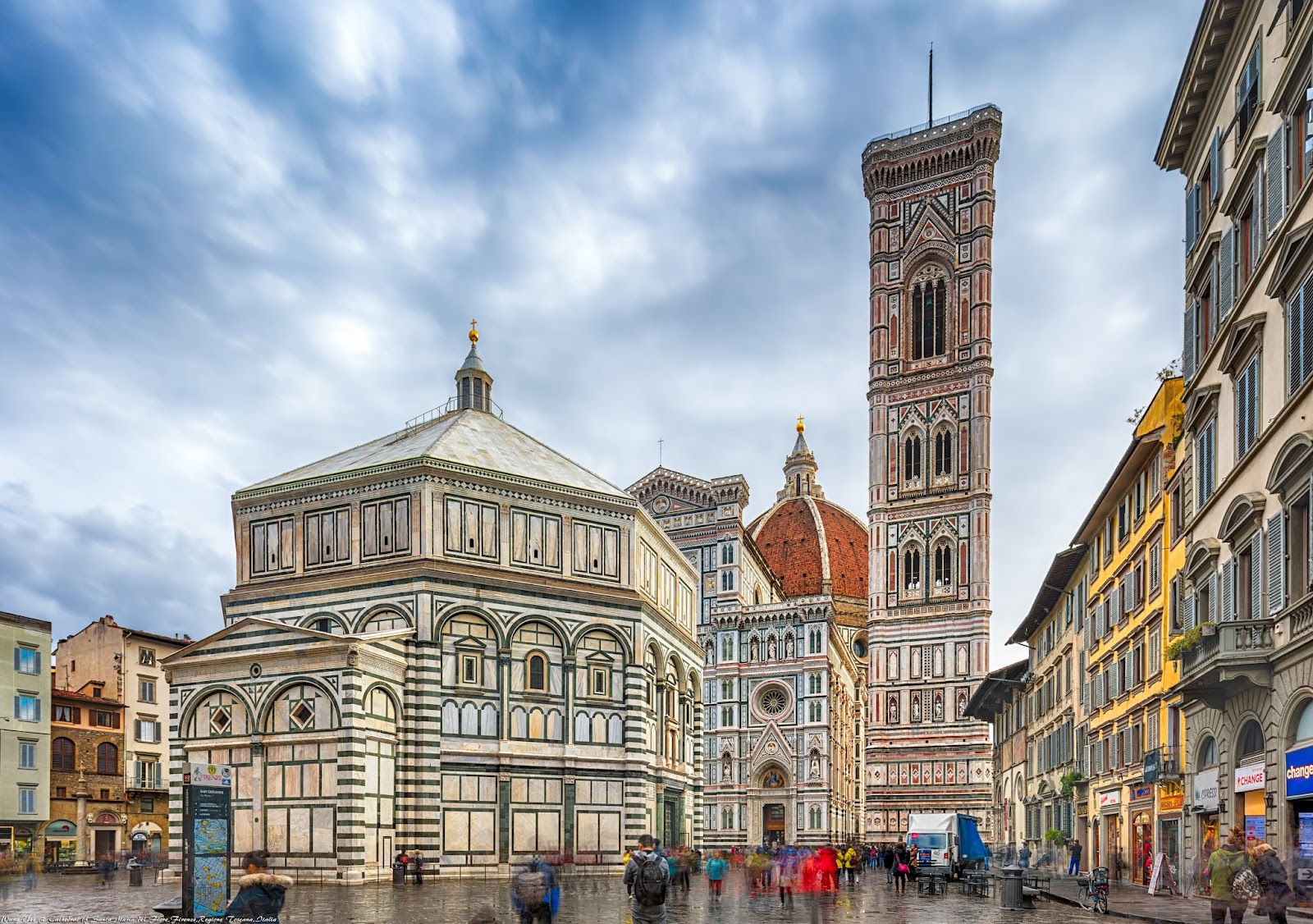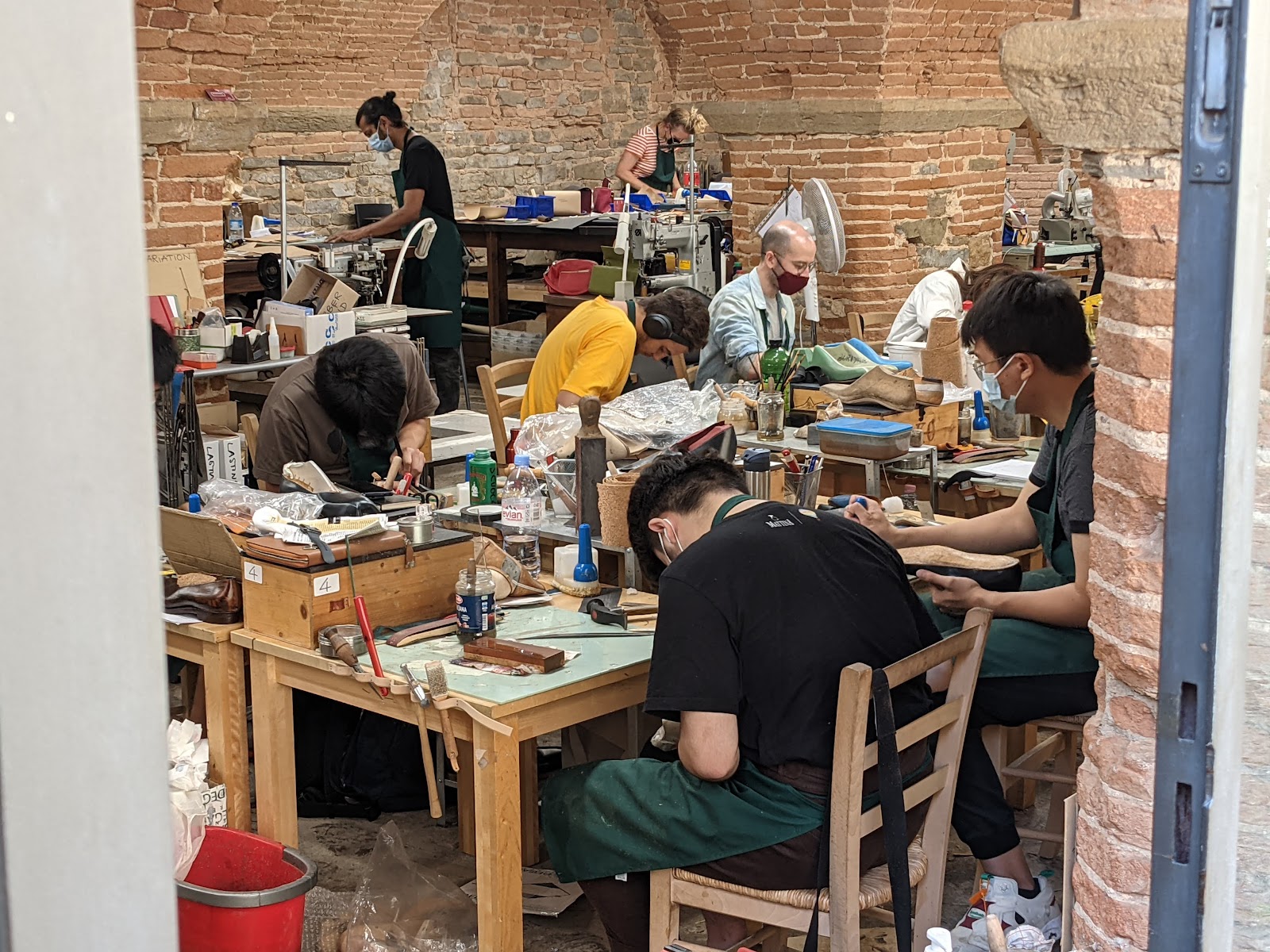
Behind the great church of Santa Croce, through a passage most tourists never take, there's a long, light-filled room inside the old monastery where people are, right now, bent over benches, cutting and stitching and pressing gold leaf into leather by hand. This is the Scuola del Cuoio — the Leather School — and to understand why it's here, you have to picture Florence at the worst moment of the last century, not the best.
The Second World War had just ended. The city was battered. The Germans had blown the bridges, the river would flood catastrophically twenty years later, and the streets were full of children who had lost their parents. War orphans, with no family, no money, and no way to make a living once they grew.
And the Franciscan friars of Santa Croce, who'd been in this monastery for seven hundred years, made a decision that was as practical as it was kind. They teamed up with two families of Florentine leather artisans — the Gori and the Casini — and in nineteen fifty they
opened a school, right here in the friary, to teach those orphaned boys a trade. Not charity you hand out once. A skill. Leatherwork, the oldest craft in this city, the guild trade the wool men would have recognized, taught to kids who had nothing, so that they'd have their own two hands to earn with for the rest of their lives.
Think about the timing. This is happening at the exact moment, in t