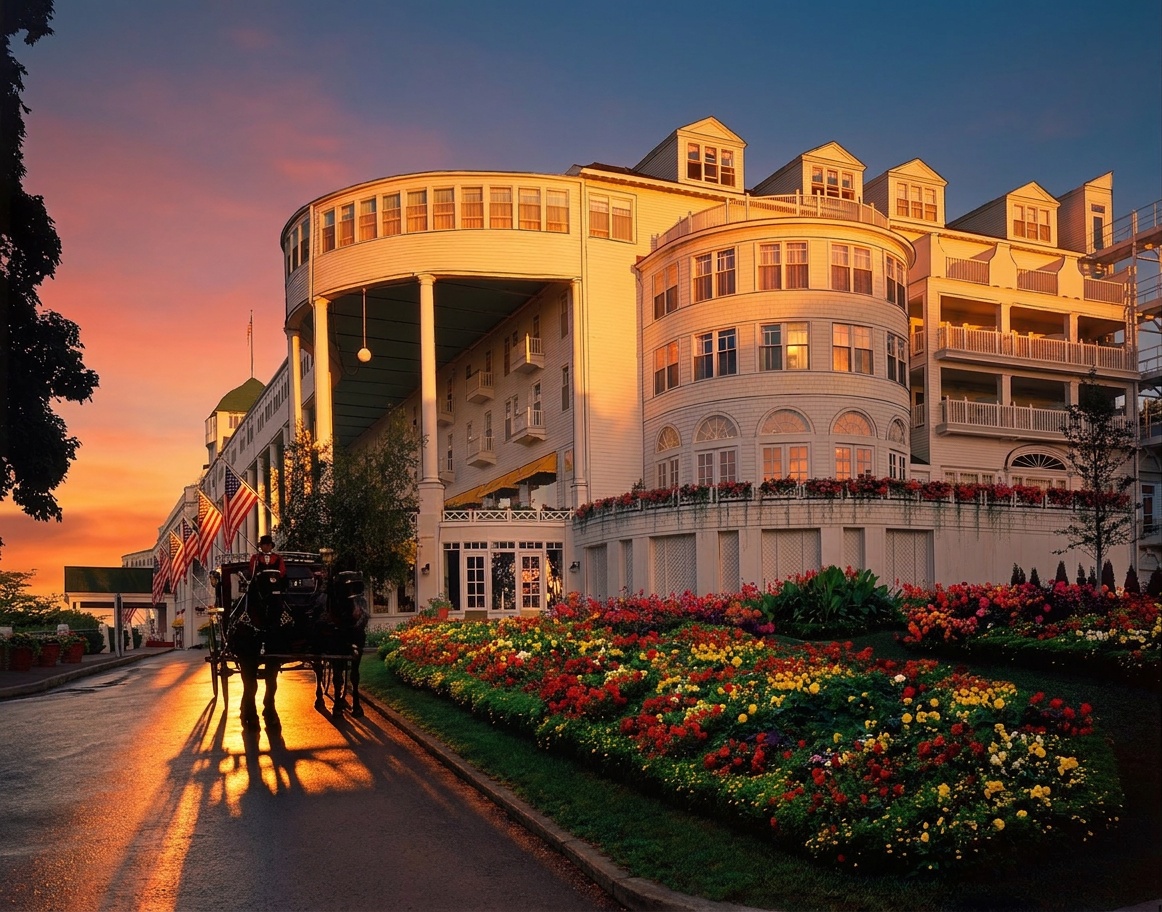
You climbed the bluff again, and there it is: the Grand Hotel. That impossibly long white front with the row of columns and the flags snapping along the top — that porch running the entire length of the building is six hundred and sixty feet long, and it is the longest porch in the world. Rows of rocking chairs, geraniums in red boxes, the whole straits spread out below. It looks like it has always been here, serene and permanent. It was thrown up, in a panic, in ninety-three days.
Start with why it exists, because it's pure cynicism and I love it. In the eighteen eighties, the people who owned the railroads and the steamship lines had a problem: they had trains and boats running up toward these straits, and not nearly enough reasons for anyone to buy a ticket and ride them all the way out here. So a consortium of those railroad and steamship men got together and solved it the way you'd solve any demand problem. They built a reason. If there were a spectacular hotel at the end of the
line, people would buy tickets to reach it. The Grand Hotel is, at its heart, a marketing expense with four hundred rooms.
And then they nearly blew it, because they sold the rooms before they built them. Somebody realized, late, that they had guests booked for the coming summer and no hotel to put them in. So they handed the job to a contractor named Charles Caskey, who had mostly built cottages