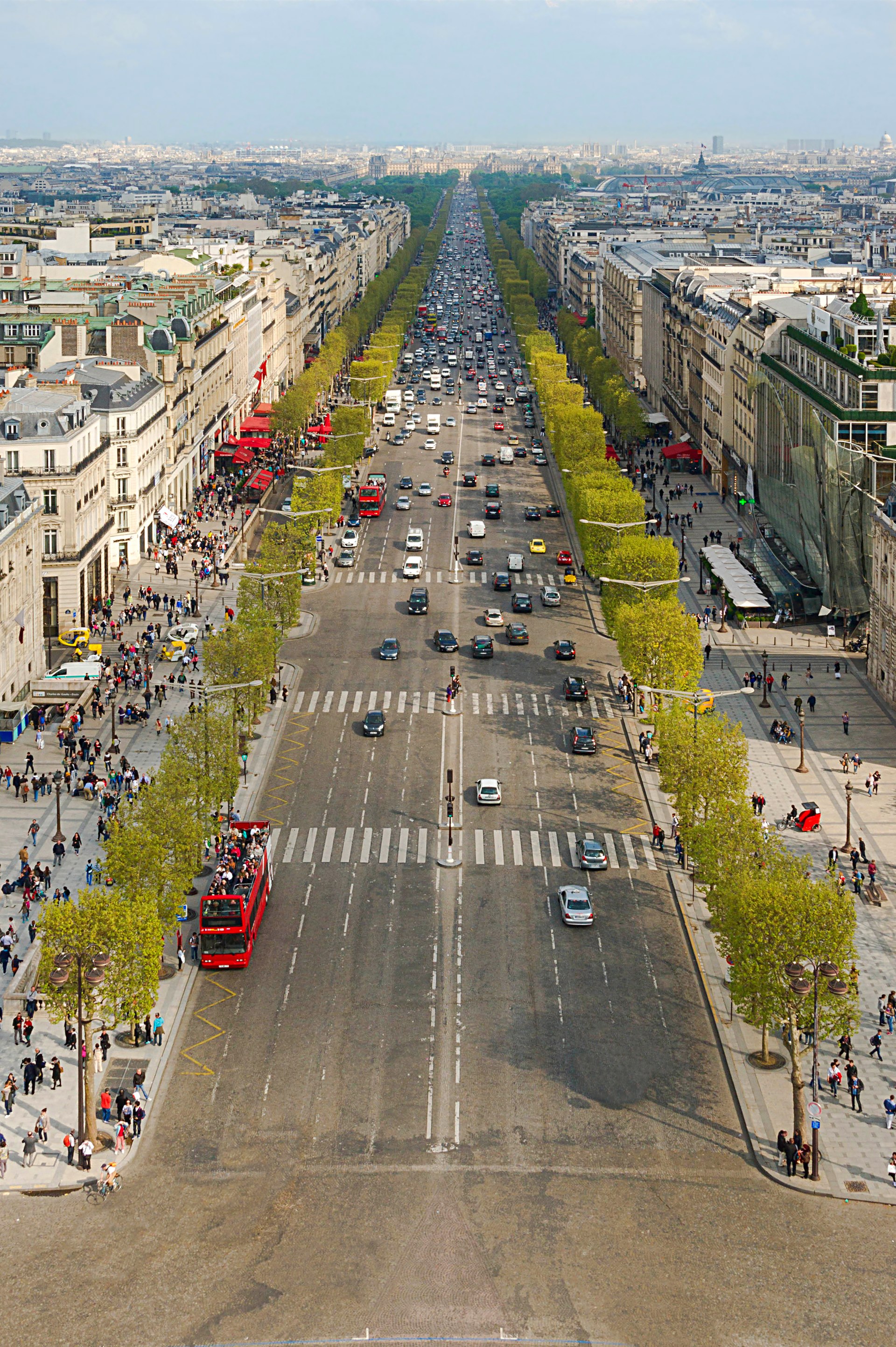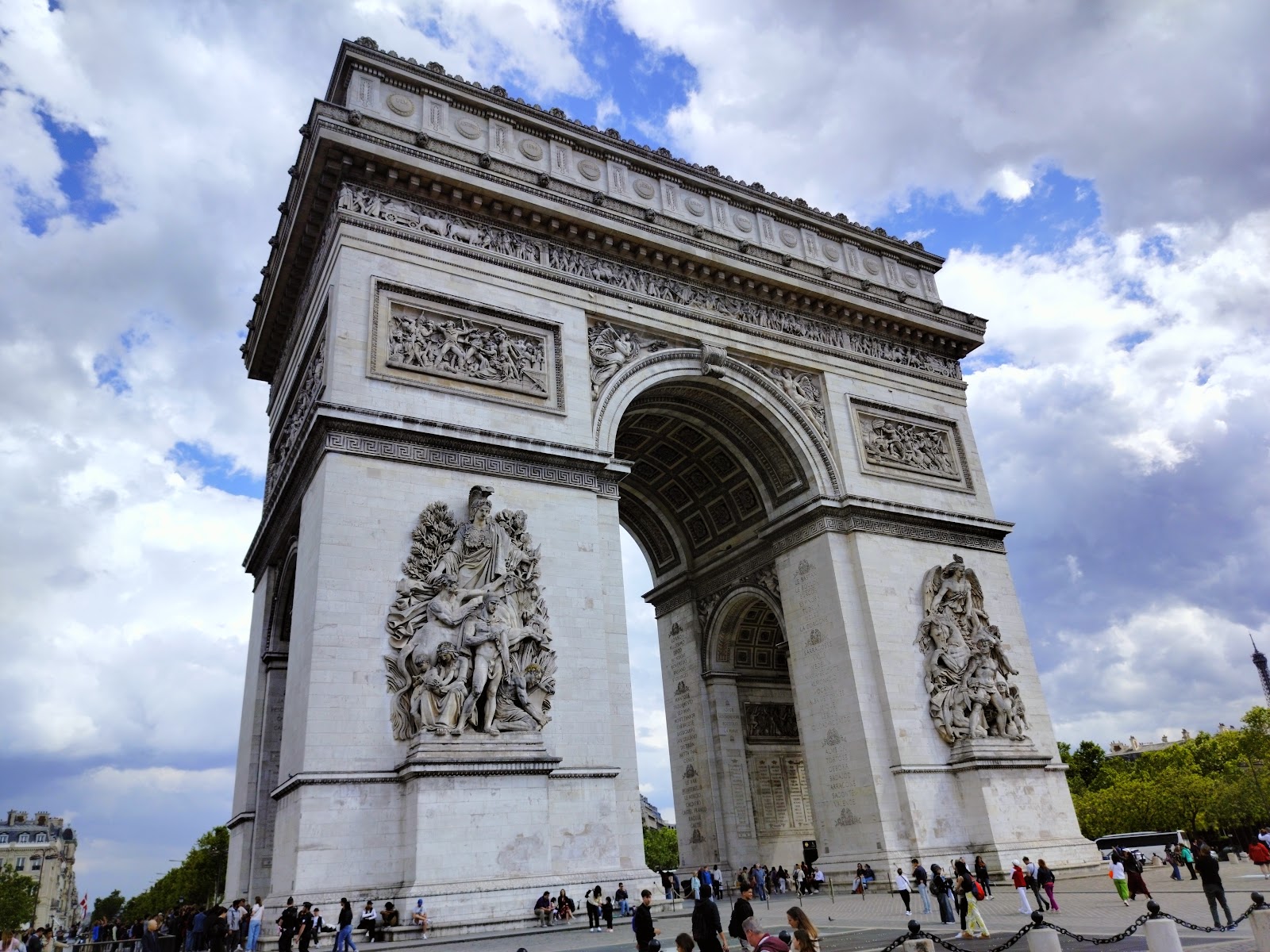
The Arc de Triomphe. Fifty meters of stone triumph, standing in the middle of the busiest roundabout in Europe. Twelve avenues pour into this circle, and French drivers negotiate it on instinct and nerve. Napoleon ordered the arch in eighteen oh-six, after Austerlitz, and promised his soldiers they would march home through it. Then it took thirty years to build. Napoleon died in exile with the arch barely out of the ground, fifteen years before it was finished. He promised his army a victory gate and delivered a construction site.
Look at the sculpture on the right pillar, facing the Champs-Élysées — a winged woman howling over a surge of volunteer soldiers. That's the Marseillaise, the national anthem in stone, and she once starred in the eeriest coincidence in this city. In February nineteen sixteen, her stone sword snapped off and fell. It happened on the day the Battle of Verdun began — the longest, most devouring battle France ever fought. The authorities took one look at the sym
bolism and panicked. They covered the entire sculpture with tarps, so nobody would see the anthem holding a broken sword while the country bled. The war ran another two and a half years. The tarps stayed up.
France survived, and won, and in July nineteen nineteen held its victory parade down the Champs-Élysées, right past this arch. Which brings us to the flying. The parade organizers ordered the